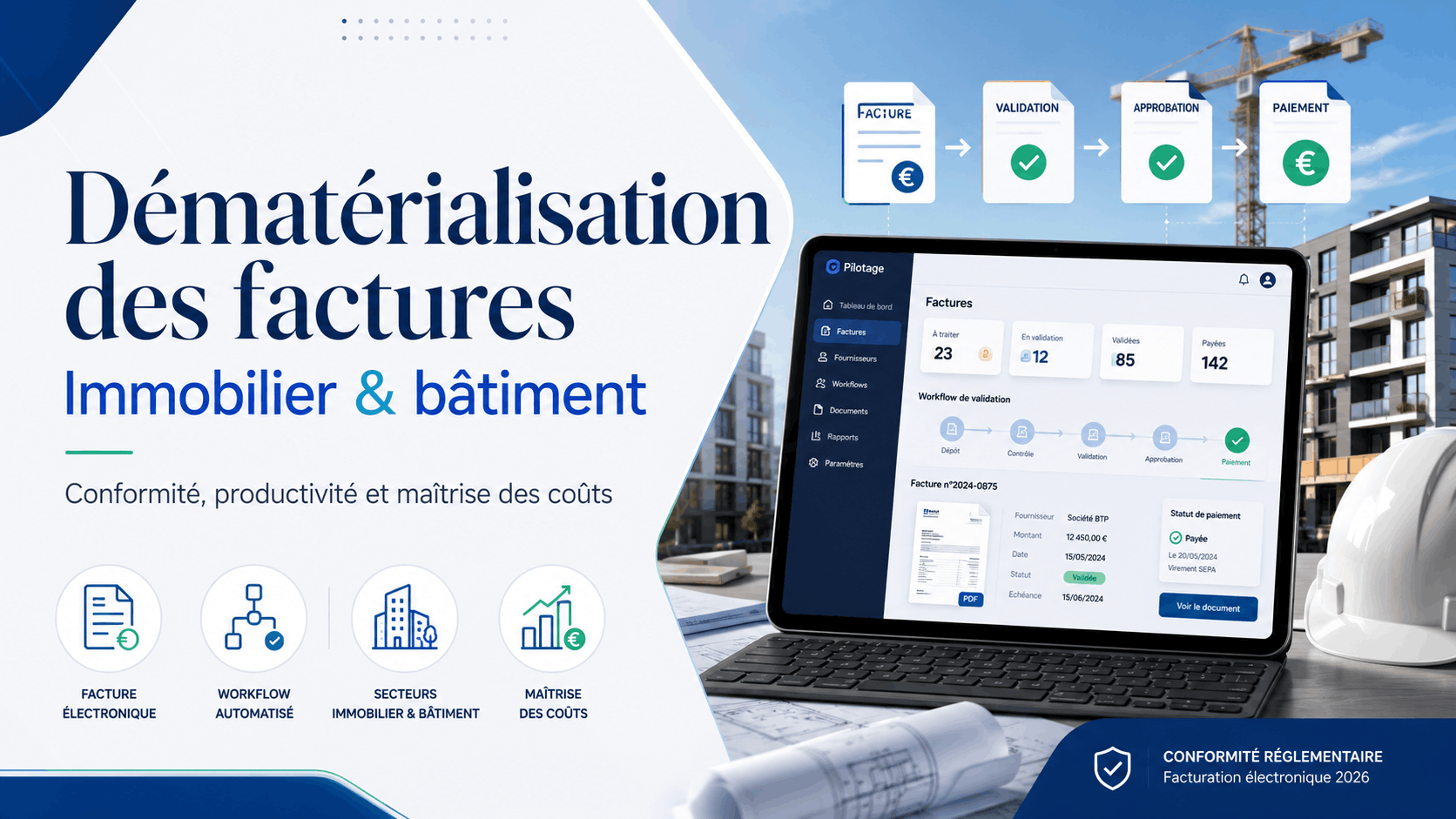
Needs analysis

Digitalization of Purchasing: Keys to Optimized Management

Published By
Olivier Audino
Tags
Sourcing
In an increasingly digitized economic environment, the digitization of purchases has become a central hub for the optimized management of a company's resources.

This process is not limited to simply automating purchasing workflows; it involves a profound transformation that impacts both long-term sourcing strategies and overall financial performance.

1. Unlocking Enterprise Performance & Transparency

Exploring the core pillars of digital procurement enables organizations to maintain a decisive competitive edge while significantly improving transparency, compliance, and speed across all procurement operations.

Transitioning from legacy manual tasks to an integrated digital ecosystem converts purchasing from a tactical administrative cost center into a primary driver of strategic value creation.

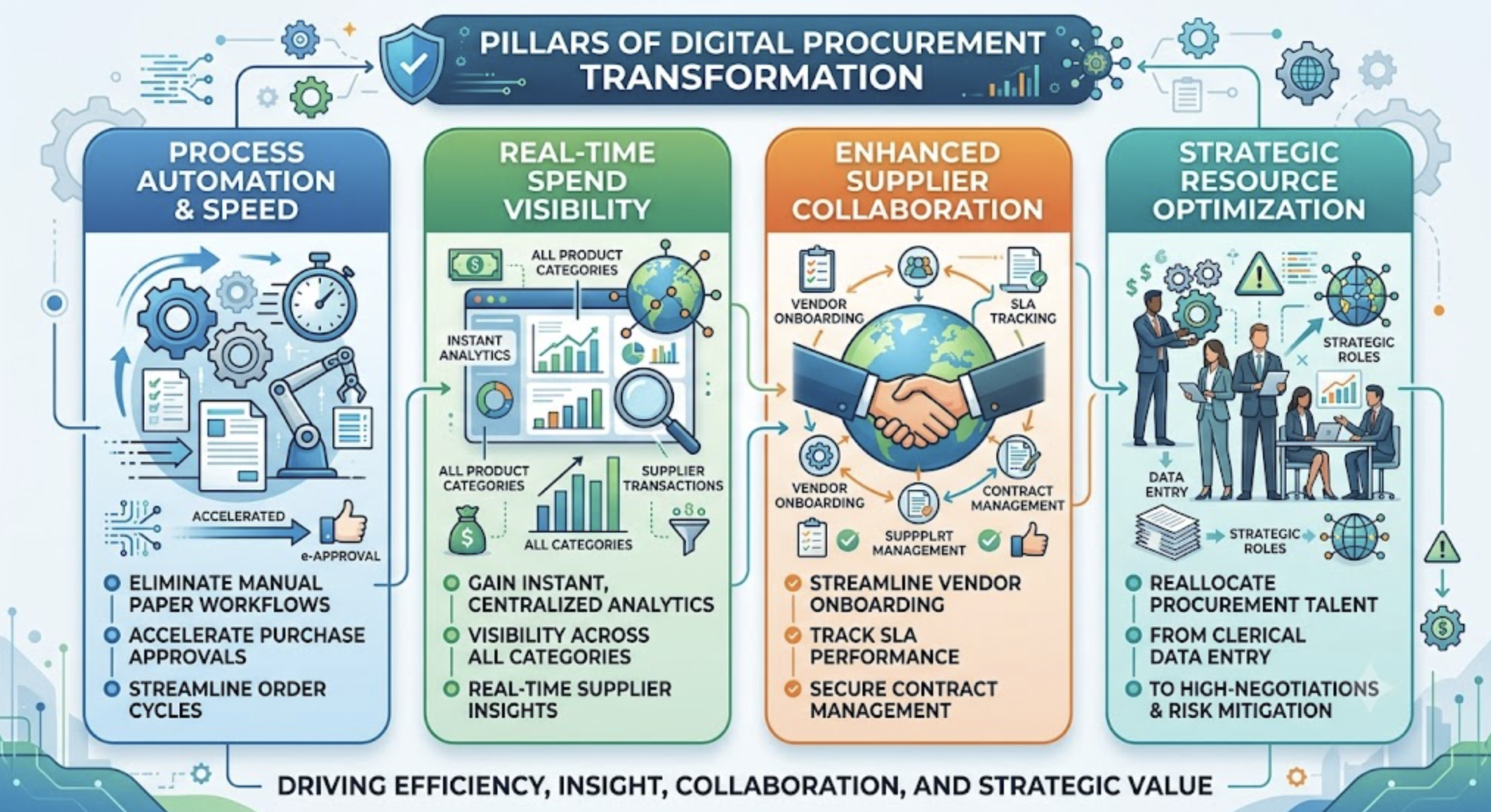
Pillars of Digital Procurement Transformation

  • Process Automation & Speed: Eliminate manual paper workflows to accelerate purchase approvals and order cycles.
  • Real-Time Spend Visibility: Gain instant, centralized analytics across all product categories and supplier transactions.
  • Enhanced Supplier Collaboration: Streamline vendor onboarding, SLA tracking, and contract management.
  • Strategic Resource Optimization: Reallocate procurement talent from clerical data entry to high-value negotiations and risk mitigation.

2. Building a Future-Ready Procurement Engine

Effectively integrating digital innovations guarantees that your enterprise adapts seamlessly to changing market conditions.

By establishing clear governance, leveraging modern cloud analytics, and supporting continuous team upskilling, your purchasing department becomes a resilient pillar for sustainable business growth.

Conclusion: Shape the Future of Your Sourcing Strategy

Accelerate Your Procurement Transformation Today

Integrating modern digital tools, real-time analytics, and automated workflows transforms your purchasing function into an agile, highly competitive advantage.

Optimize company resources, ensure complete spend transparency, and elevate your procurement operations today.

Analysis of Needs and Objectives

Laying a solid foundation before digitizing your procurement function is essential for long-term project success.

Conducting a thorough needs assessment, defining measurable objectives, and performing a comprehensive audit ensures that your digital transformation directly addresses operational pain points while creating lasting business value.

1. How to Assess Your Needs Before Digitizing Purchases

Before launching the digitalization of your purchasing process, you must accurately map your current operational landscape.

Process Mapping & Bottleneck Identification: Analyze existing procurement workflows to pinpoint inefficiencies, unnecessary overhead, and delayed approval chains.
Stakeholder Engagement: Involve cross-departmental users—from buyers to finance managers—to establish a comprehensive and accurate set of functional requirements.
Technical Infrastructure Assessment: Evaluate the readiness of your IT ecosystem to ensure smooth integration with new cloud-based procurement solutions.

2. Key Objectives to Define Before Launching Digitalization

Setting clear, measurable targets is critical to driving adoption and quantifying project ROI.

Digital procurement goals must follow the SMART framework (Specific, Measurable, Achievable, Realistic, and Time-bound). Whether your focus is on driving down direct purchasing costs, accelerating cycle times, or elevating supplier compliance, every objective should directly support macro corporate strategy.

3. Auditing the Purchasing Function: The Essential First Step

A preliminary audit provides the empirical baseline needed to design a tailored digital roadmap.

This evaluation examines key operational dimensions—including order-to-pay workflows, contract lifecycle management, spend visibility, and vendor performance metrics. Audit findings prevent software misalignment by ensuring chosen technologies directly fix demonstrated operational gaps.

Core Requirements for Procurement Digitalization

  • Task Automation: Automate repetitive administrative tasks to eliminate manual keying errors.
  • Data Centralization: Unify spend data into a single source of truth for full transparency and control.
  • System Interoperability: Ensure seamless integration with existing ERP, accounting, and SCM platforms.
  • Secure Role-Based Access: Provide intuitive, secure access for all internal buyers and external suppliers.

4. Summary of Key Digitalization Goals & Impact Timeline

Strategic Goal Expected Operational Impact Target Timeline
Reduction in Operational Costs Reduce overall process expenses by 20% 6 months post-implementation
Increase in Operational Efficiency Accelerate procurement cycles by 30% 1 year
Improvement in Compliance Achieve 100% compliance with internal standards 9 months

Conclusion: Build Your Digital Procurement Strategy Today

Transform Procurement Planning into Measurable Results

By combining rigorous needs mapping, SMART goal setting, comprehensive process auditing, and seamless system integration, your business builds an agile, data-driven procurement hub.

Eliminate procurement bottlenecks, reduce operational overhead, and secure maximum return on investment today.

Selection of Tools and Technologies for Procurement Digitalization

Selecting the right technology stack is a critical milestone in digitizing the purchasing process.

The ideal procurement platform must balance user-friendly operational workflows with advanced analytical capabilities, integrating seamlessly into your IT infrastructure while scaling to support future organizational growth.

1. Essential Criteria for Choosing Purchasing Management Software

When evaluating procurement software, organizations should look beyond basic feature checklists to evaluate long-term adaptability:

System Interoperability: Seamless compatibility with legacy ERP systems, accounting software, and supply chain tools.
Data Security & Compliance: High security standards to protect sensitive spend data against breach or leak vulnerabilities.
Interface Usability & Customizability: Simple user ergonomics paired with flexible workflows tailored to specific business logic.
Scalability & Support: Responsive technical support and modern cloud infrastructure capable of evolving without costly future software overhauls.

2. Comparison of Leading Digital Procurement Platforms

Industry-leading platforms distinguish themselves through operational efficiency, automation, and workflow adaptability:

SAP Ariba: Comprehensive end-to-end purchasing capabilities, global supplier network connectivity, and deep enterprise integration.
Coupa: Market-leading Business Spend Management (BSM) focusing on spend visibility, user adoption, and workflow control.
Oracle Procurement Cloud: Enterprise-grade analytics, integrated AI capabilities, and robust contract lifecycle management.

Most Influential Procurement AI Technologies

  • AI Spend Analysis Tools: Expense forecasting, anomaly detection, and spend categorization.
  • AI Procurement Bots: Automated purchasing workflows, requisition processing, and order routing.
  • Supplier Risk Management AI: Continuous monitoring of vendor reliability, compliance, and supply disruption risks.

3. Integrating Artificial Intelligence into Purchasing Processes

Integrating artificial intelligence into procurement converts manual processes into dynamic, data-driven strategies.

AI algorithms automate complex tasks, predict raw material price shifts, optimize safety stock levels, and evaluate supplier suitability using holistic metrics balancing cost efficiency with corporate sustainability standards.

Conclusion: Build an Agile, Future-Proof Procurement Architecture

Accelerate Your Digital Procurement Transformation

Combining robust software criteria, industry-leading platforms, and specialized AI tools creates a resilient, high-performing procurement engine.

Eliminate manual friction, maximize spend visibility, and elevate your procurement strategy today.

Change Management and Team Training

Digitalization represents a major operational transformation for any purchasing department.

The ultimate success of a digital procurement project hinges not just on technological deployment, but on how effectively teams are prepared, trained, and supported throughout the organizational transition.

1. Preparing for the Digitalization of the Purchasing Process

Preparing team mindsets and adaptability is the foundational step when introducing new digital workflows:

Mindset & Adaptability Assessment: Evaluate employee readiness, identify potential sources of friction, and address apprehensions early in the timeline.
Clear & Constant Communication: Transparently articulate project objectives, emphasizing how software automation eliminates repetitive administrative friction.
Initial Orientation Sessions: Host introductory discovery workshops to familiarize personnel with upcoming software interfaces, tools, and user environments.

2. Effective Change Strategies & Adoption Frameworks

Facilitating organizational buy-in requires a structured strategy that combines peer leadership, hands-on practice, and continuous feedback:

Empowering Change Champions: Engage internal thought leaders and enthusiastic team members to advocate for the digital shift across departments.
Practical Interactive Workshops: Organize hands-on training sessions to alleviate software apprehensions through guided practice.
Pilot Project Deployment: Roll out initial pilot phases to demonstrate tangible time savings and quick wins, accelerating broader staff buy-in.
Active Feedback Loops: Create transparent communication channels to gather user feedback and refine system configurations rapidly.

Pillars of Sustainable Procurement Adoption

  • Change Champions Network: Leverage peer leaders to drive grass-roots enthusiasm and software buy-in.
  • Phased Training Architecture: Progress teams logically from basic navigation to full operational autonomy.
  • Psychological & Mentorship Support: Alleviate transition anxiety through open forums, user guides, and dedicated mentors.
  • Milestone Recognition: Celebrate adoption milestones to maintain high team morale and engagement.

3. Structured Training Program Phases

Training Phase Core Objective Detailed Curriculum Focus
Phase 1: Initiation Familiarization with digital tools Introduction to procurement management software, basic navigation, UI customization, and essential features.
Phase 2: Deepening Mastery of core functional capabilities Advanced module training on spend data analysis, custom report generation, and automated procurement workflow optimization.
Phase 3: Advanced Full operational autonomy Complex problem-solving exercises, real-life scenario simulations, edge-case troubleshooting, and competency evaluations.

4. Psychological Support & Continuous Adoption Management

In addition to technical skill development, supporting teams psychologically is critical to sustaining long-term morale:

Regular Progress Check-ins: Hold open team meetings to discuss transition challenges, address concerns, and highlight ongoing operational progress.
Continuous Learning Support: Provide accessible digital resource hubs, documentation libraries, and peer mentorship structures.
Recognizing & Rewarding Milestones: Celebrate team achievements across key project implementation phases to maintain high motivation and achieve full organizational adoption.

Conclusion: Empower Your Team for Digital Procurement Success

Transform Change Management into Strategic Growth

Combining proactive communication, phased training programs, peer change champions, and ongoing psychological support turns procurement digitalization into an empowering success story.

Empower your workforce, eliminate operational anxiety, and secure full system adoption today.
Implementation and Monitoring of the Procurement Digitization Project

Executing a successful procurement digitization deployment requires a structured rollout, rigorous testing, and continuous performance tracking.

Careful deployment planning minimizes operational disruptions, guarantees seamless data migration, and establishes real-time oversight to ensure long-term efficiency and strategic alignment.

1. Digitalization Planning, Deployment & User Upskilling

Structured Rollout Schedule: Establish clear execution timelines respecting enterprise priorities. Key milestones must cover system configuration, legacy data migration, automated workflow validation, and rigorous pre-launch user acceptance testing (UAT).

Blended Learning Models: Implement comprehensive user training combining digital e-learning sessions and interactive in-person workshops to accommodate diverse learning styles, master system workflows, and resolve operational bottlenecks quickly.

Essential Deployment & Oversight Checklist

  • Software Installation & Config: Complete system setup, user permissions, and custom workflow validation.
  • Legacy Data Migration: Cleanse, transfer, and secure historical spend and vendor data.
  • Comprehensive Blended Training: Deliver interactive online modules and hands-on workshops for end-users.
  • Auditability & Documentation: Document every deployment phase to maintain full process traceability.
  • Real-Time KPI Dashboards: Track order cycle times, vendor compliance rates, and cost savings in real time.

2. Performance Monitoring & Strategy Adjustment

Continuous performance evaluation determines the exact operational contribution of digital procurement tools.

Key Performance Indicators (KPIs): Monitor core operational metrics—such as order processing turnaround times, supplier contract compliance rates, and total cost savings realized.

Real-Time Monitoring Dashboards: Develop centralized executive dashboards updated in real time to offer instant spend visibility. Integrated automated alerts flag performance variances immediately, triggering timely corrective interventions.

3. Continuous Process Adjustment & Refinement

Initial software deployments rarely fulfill 100% of organizational requirements out of the box.

Establishing an iterative continuous improvement cycle—combining ongoing performance analytics with direct end-user feedback—refines automated workflows over time, ensuring your digital procurement engine continuously evolves alongside changing enterprise goals.

Conclusion: Maximize Long-Term Procurement ROI

Ensure a Resilient, High-Performance Digital System

Executing every phase with precision—from deployment planning and blended training to real-time KPI tracking and continuous system refinement—guarantees maximum project success.

Eliminate operational friction, maintain complete process auditability, and ensure long-term procurement efficiency today.

Continuous Optimization and Future Improvements

Post-digitalization success relies on a commitment to continuous optimization, technology monitoring, and progressive automation.

Moving toward a hyper-automated purchasing function enables procurement departments to consistently lower operational overhead, eliminate manual errors, and extract long-term strategic value from digitized spend data.

1. Evolution Towards Full Automation & Technology Intelligence

Automated Purchasing Workflows: Advanced automation protocols leveraging Artificial Intelligence and Machine Learning increase speed, minimize operational costs, and boost overall procurement precision.

Monitoring Emerging Technologies: Stay ahead of market trends by evaluating cutting-edge innovations—such as Blockchain for secure transactions, APIs for direct supplier system integration, and AR/VR for simulated supplier audits and interactive team training.

Post-Digitalization Optimization: Continuously analyze live spend analytics to identify operational bottlenecks, refine algorithmic rules, and align purchasing workflows with changing market conditions.

Pillars of Successful Procurement Optimization

  • Automation Strategy: Define clear roadmap milestones for hyper-automated procurement workflows.
  • Ongoing Skill Upskilling: Train teams continuously on modern AI and data analytics platforms.
  • Periodic System Audits: Conduct structured performance reviews to re-align software setups with enterprise goals.
  • Culture of Innovation: Adopt emerging technologies early to maintain a sustainable competitive edge.

2. Technology & Action Plan Summary

Emerging Technology Expected Strategic Impact Recommended Action Plan
Artificial Intelligence Dramatic improvement in procurement data analysis & decision accuracy Conduct ongoing training workshops for internal purchasing teams
Blockchain Ledger Increased transaction security, fraud reduction, & cryptographic auditability Integrate technology into targeted pilot project test phases
API System Connectors Smoother, real-time data integration with supplier ERP systems Review and optimize integration interfaces every six months

Impact of Digitalization on Cost Reduction

Streamlining procurement operations yields measurable direct and indirect cost savings across every stage of the purchasing cycle.

3. Operational Savings, Material Reduction & Contract Negotiations

Process Optimization & Resource Savings: Automating orders, invoicing, and vendor tracking accelerates approval speed while eliminating costly human keying errors, freeing talent for strategic initiatives.

Dematerialization & Inventory Control: Going paperless eliminates physical storage, printing, and shipping costs. Automated supply tracking secures safety stock levels, preventing overstocking expenses or production-halting stockouts.

Enhanced Supplier Contract Negotiations: Centralized supplier data provides full visibility into past vendor performance and pricing metrics, giving buyers powerful, data-backed leverage to secure better pricing, payment terms, and delivery schedules.

Conclusion: Build a Scalable, Low-Cost Procurement Engine

Maximize Long-Term Procurement ROI

Combining hyper-automation, emerging technology monitoring, paperless workflows, and data-backed supplier negotiations transforms your purchasing function into an efficient profit driver.

Eliminate unnecessary material costs, streamline contract negotiations, and drive strategic growth today.

Strengthening Security and Compliance in Procurement Digitalization

The digitalization of the purchasing process significantly reinforces data security while establishing rigorous regulatory compliance.

Transitioning to electronic purchasing systems safeguards sensitive commercial data through advanced encryption and strict access controls, minimizing cyber risks and guaranteeing full auditability across your procurement ecosystem.

1. Improving Data Security & Key Adopted Technologies

Electronic purchasing systems store sensitive transactional information securely using robust encryption protocols and granular access governance.

By minimizing data leak vectors and unauthorized access, these solutions offer real-time visibility into system usage—enhancing process traceability and organizational transparency.

Core Security Technologies Adopted

  • Multi-Factor Authentication (MFA): Enforce strict identity verification protocols for system access.
  • Data Encryption: Protect critical spend and vendor data both in transit and at rest.
  • API & Data Exchange Security: Safeguard integrations and endpoints connecting external systems.
  • Secure Virtual Private Networks (VPNs): Secure remote connections for distributed procurement teams.

2. Data Security Benefits & Procurement Impact

Security Advantage Direct Impact on Procurement Operations
Reduction in Cybersecurity Risks Increased trust from commercial partners and key suppliers
Improved Regulatory Compliance Significant reduction of legal exposures and financial risks
Optimization of Access Management Enhanced, granular control over internal procurement processes

Regulatory and Normative Compliance

Deploying digital procurement platforms ensures automatic adherence to evolving legal, legislative, and industry standards.

Digital purchasing tools incorporate regulatory updates dynamically—covering accounting standards, regional data privacy frameworks (such as GDPR in Europe), and industry-specific mandates—simplifying internal controls and official audits.

3. Checklist for Regulatory Compliance in Digital Procurement

Compliance Management Action Checklist

  • Periodic Legal Reviews: Audit system compliance against updated legal standards regularly.
  • Automated Regulatory Updates: Integrate regulatory modifications directly into active purchasing workflows.
  • Continuous Team Upskilling: Provide ongoing employee training on legislative and compliance changes.
  • Automated Reporting & Auditing: Streamline documentation and reporting for friction-free compliance audits.

4. Impact of Compliance on Operational Efficiency

Compliance Aspect Measured Operational Benefit
Compliance with Accounting Standards Reduction in reporting errors and reconciliation delays
Adherence to Data Regulations (e.g., GDPR) Robust protection against regulatory fines and financial sanctions
Compliance with Industry Requirements Improved corporate reputation and trust with regulatory bodies

Conclusion: Build a Secure & Compliant Procurement Engine

Safeguard Your Procurement Transformation

Combining end-to-end data encryption, multi-factor access control, automated regulatory tracking, and audit-ready reporting turns digital procurement into a secure, highly resilient operational asset.

Protect sensitive procurement data, prevent compliance sanctions, and secure your supply chain today.

Cross-cutting Collaborations and Synergies in Procurement Digitalization

The digitalization of the purchasing process extends far beyond technology adoption—it fundamentally transforms how internal departments collaborate.

Breaking down organizational silos between finance, legal, operations, and R&D fosters cross-cutting synergies, unlocks powerful spend analytics, and accelerates enterprise-wide innovation.

1. Importance of Cross-Departmental Collaboration

Cross-cutting collaboration unites key functional areas—including finance, legal, and operational leadership—to build a unified, holistic vision of the purchasing lifecycle.

Integrating these diverse perspectives maximizes the value of spend data analytics, strengthens contract monitoring, improves risk management, and guarantees strategic consistency across all procurement operations.

2. The Strategic Role of Collaborative Technologies

Modern collaborative tools form the backbone of a connected digital procurement ecosystem:

Total Transparency & Real-Time Communication: Integrated enterprise software connects internal stakeholders with external suppliers in a secure, transparent environment.

Standardization & Error Elimination: Automated workflow solutions minimize manual keying mistakes, standardize approval chains, and streamline operations across departments.

Key Collaborative Technologies for Digital Procurement

  • Enterprise Resource Planning (ERP) Systems: Integrated platforms unifying finance, inventory, and procurement data.
  • Online Supplier Management Platforms: Centralized portals for vendor onboarding, SLA tracking, and collaboration.
  • Communication & Document Sharing Tools: Systems ensuring secure, instant data exchange among all partners.
  • Automated Workflow Solutions: Standardized, error-free approval pipelines spanning multiple departments.

3. Value Creation Through Inter-Departmental Synergies

Forging inter-departmental synergies reveals new opportunities for cost optimization and operational excellence.

For example, aligning procurement closely with R&D integrates key suppliers into early product development cycles. This collaborative synergy secures superior pricing negotiations while accelerating product innovation, enhancing quality, and shortening time to market.

4. Summary of Benefits from Inter-Departmental Synergies

Synergy Advantage Direct Impact on the Procurement Process
Cost Optimization Substantial reduction in overall organizational spend and administrative overhead
Quality Improvement Enhancement of product and service standards through aligned vendor expectations
Acceleration of Innovation Direct integration of strategic suppliers into early R&D and design phases

Conclusion: Drive Business Growth with Cross-Departmental Collaboration

Unlock Strategic Value Across Every Department

Combining cross-functional teamwork, integrated ERP solutions, automated workflows, and early supplier integration turns procurement into a collaborative driver of enterprise innovation.

Break down departmental silos, optimize overall acquisition costs, and accelerate product development today.
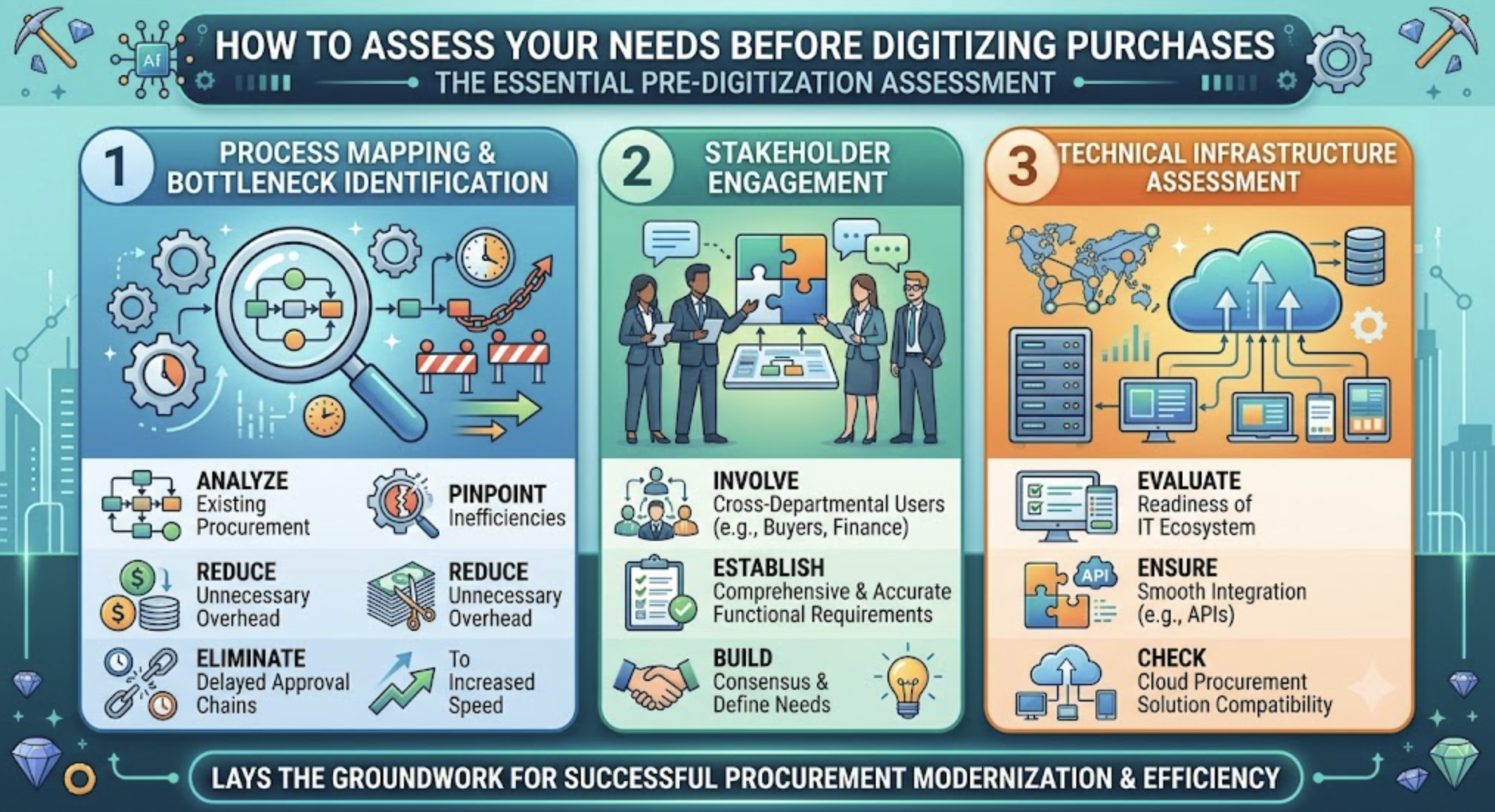
A modern infographic titled "HOW TO ASSESS YOUR NEEDS BEFORE DIGITIZING PURCHASES". It has three numbered columns: 1. PROCESS MAPPING & BOTTLENECK IDENTIFICATION (analyze workflows, pinpoint inefficiencies, eliminate delays); 2. STAKEHOLDER ENGAGEMENT (involve users, establish requirements, build consensus); 3. TECHNICAL INFRASTRUCTURE ASSESSMENT (evaluate IT readiness, ensure API integration, check cloud compatibility). The style is modern vector art with data flows and a futuristic cityscape background.

Customizing the Purchasing Experience in Digital Procurement

Customizing the purchasing experience is a transformative pillar within the digitalization of the purchasing process.

By tailoring workflows, recommendations, and user interfaces to individual buyer behaviors, organizations boost user engagement, drive customer loyalty, and maximize operational satisfaction.

1. Creating Advanced User Profiles

Creating personalized user profiles is fundamental to modern digital procurement.

These profiles capture the preferences and purchasing habits of individual buyers, enabling platforms to serve targeted products and services. Personalization begins with collecting and analyzing granular shopping data, which is then leveraged to refine specific recommendations and commercial offers.

2. AI Integration for Customized Recommendations

Integrating artificial intelligence (AI) into the digitization of the purchasing process revolutionizes how users interact with procurement portals.

AI evaluates massive volumes of transactional data in real time to generate highly accurate, personalized recommendations. Algorithms predict which products a user will need based on historical purchasing patterns and current market trends, establishing a proactive personalization strategy that perfectly aligns with buyer preferences.

Pillars of Experience Personalization

  • Advanced User Profiling: Track individual buyer habits and preferences to tailor commercial offers.
  • Real-Time AI Recommendations: Leverage machine learning to predict product needs and market demand accurately.
  • Proactive Personalization: Deliver tailored purchasing journeys that stand out through precision.
  • Intuitive Interface Customization: Adapt navigation, layout, and language to user demographics and behavior.

3. Optimizing the User Interface for a Seamless Experience

A well-designed, optimized user interface is crucial for successful personalization within digital procurement.

Intuitive navigation ensures a pleasant shopping experience. Interface customization can incorporate localized languages, dynamic product presentations based on user preferences, and aesthetic adjustments reflecting user demographics and behavior—ultimately increasing conversion rates and platform stickiness.

Conclusion: Elevate Your Digital Procurement Experience

Deliver Tailored Purchasing Journeys Today

Combining advanced user profiling, real-time AI recommendations, and optimized, intuitive user interfaces transforms standard procurement into a highly engaging, personalized experience.

Boost conversion rates, build lasting customer loyalty, and shape the future of your purchasing management today.

FAQ - Frequently Asked Questions about Digitizing Purchasing

The digitalization of procurement transforms organizational efficiency, strengthens supplier relationships, and provides proactive control over supply chain risks.

Below are expert answers to critical questions regarding supplier collaboration, predictive risk management, team performance gains, AI integration, and implementation best practices.

1. What are the impacts of digitalization on suppliers?

Enhanced Collaboration & Real-Time Transparency: The digitalization of procurement facilitates seamless collaboration with suppliers through centralized online platforms, dramatically improving communication speed and process transparency.

For example, adopting modern e-procurement systems allows suppliers to track order statuses, delivery milestones, and payment processing in real time.

2. How does technology influence risk management in procurement?

Proactive Predictive Analytics: Modern technological tools leverage predictive analytics to identify and manage potential risks before they cause operational disruptions.

By forecasting potential supply chain bottlenecks early, businesses can deploy timely mitigation strategies—such as proactively diversifying supply sources or adjusting inventory buffers.

Pillars of Digital Purchasing Optimization

  • Supplier Portal Transparency: Enable real-time tracking of orders, invoicing, and payments.
  • Predictive Risk Mitigation: Forecast supply disruptions to execute proactive sourcing strategies.
  • Operational Talent Reallocation: Automate repetitive clerical tasks to focus buyers on high-stakes negotiations.
  • Intelligent Sourcing Recommendations: Deploy AI algorithms to uncover alternative suppliers and cost-saving opportunities.
  • Phased Implementation Roadmap: Roll out critical modules systematically to manage change effectively.

3. How does digitalization improve the performance of the purchasing team?

Centralization & Strategic Focus: Digitalization centralizes procurement data into a single source of truth, minimizing manual administrative tasks and leaving more time for value-added strategic initiatives.

Automating order processing frees purchasing professionals from routine clerical tasks, allowing them to focus on supplier negotiations, market research, and long-term sourcing strategy.

4. What role does artificial intelligence play in digital procurement?

Complex Process Automation & Smart Optimization: Artificial intelligence automates complex workflows—such as parsing massive datasets to identify buying trends, evaluate supplier performance, and optimize stock levels.

Intelligent systems proactively recommend alternative suppliers or point out cost-saving opportunities based on historical purchasing behaviors and real-time market data.

5. What are the best practices for implementing a digital purchasing solution?

Strategic Planning & Phased Deployment: Successful implementation requires rigorous strategic planning, clear identification of specific business needs, and comprehensive user training.

Adopting a phased deployment strategy—starting with the most critical core functions—allows teams to address operational challenges, incorporate user feedback, and adjust the system gradually for maximum adoption.

Conclusion: Transform Your Procurement Ecosystem Today

Accelerate Your Digital Procurement Journey

Combining e-procurement supplier platforms, AI-driven predictive risk analytics, automated workflows, and a phased deployment strategy turns purchasing into a powerful competitive advantage.

Empower your buyers, strengthen vendor partnerships, and shape the future of your procurement management today.

Conclusion: Navigating Digital Transformation in Procurement

In the current context of digital transformation, the digitization of purchases is no longer optional—it is essential.

Adopting modern technologies guarantees optimized management, increased operational performance, and long-term organizational agility in an ever-evolving economic landscape.

1. Key Drivers for Procurement Success

Navigating this strategic change successfully requires a focused commitment to workflow automation and system integration:

Process Refinement: Automating repetitive purchasing procedures eliminates manual friction and cycle time delays.
Enhanced Decision-Making: Modern tech integrations unlock real-time spend visibility and accurate data-backed insights.
Strategic Transformation: Elevating procurement from an administrative cost center to a core value driver.

Core Pillars of the Digital Transition

  • End-to-End Workflow Automation: Streamline requisitions, approvals, and order placements effortlessly.
  • Integration of Modern Technologies: Deploy AI and cloud tools to refine data accuracy and predictive capabilities.
  • Revolutionized Sourcing Strategy: Transform supplier relationships, risk management, and spend management.

Revolutionize Your Purchasing Function Today

Ensure a Smooth & Effective Digital Transition

Adopting digital innovations can revolutionize your company's procurement function, ensuring maximum cost control, complete transparency, and long-term market competitiveness.

Stay connected to explore expert insights, refine your purchasing processes, and master digital transformation today.

Line
Featured Post

Popular posts