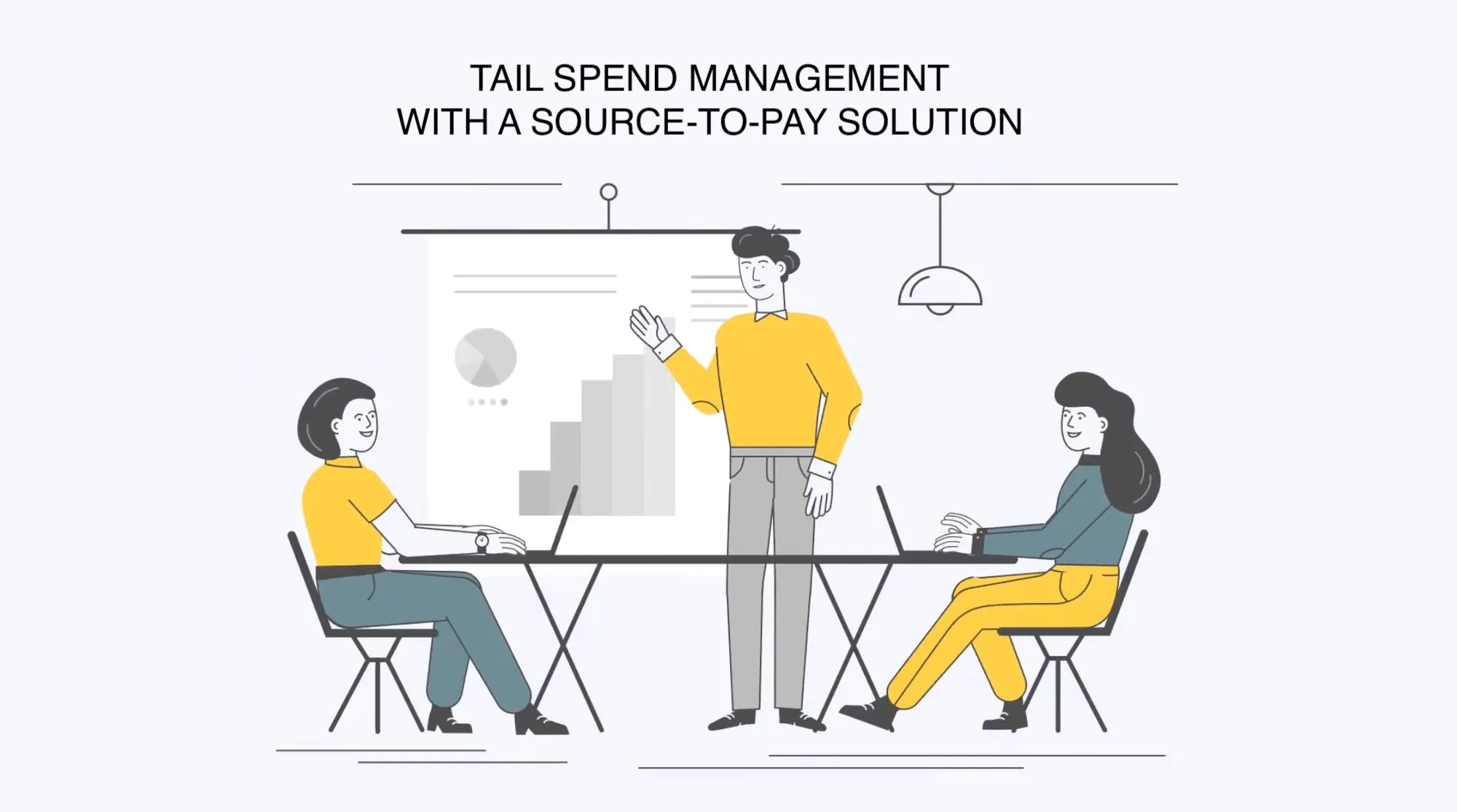
Line
Procurement Outsourcing

Say stop to spot buys.

Sourcing Force lets you outsource your off-panel purchases (tail spend) with absolute simplicity and transparent pricing — centralised through a single master vendor.

Check
Procurement Outsourcing
Check
Real-time Tracking
Check
360° Visibility
Check
Dedicated Partnership
Join more than 400 companies that optimize their spot purchases
Line
Definition

What does 'tail spend' mean?

Also known as maverick purchases or spot buys.

Check
Off-panel, non-strategic purchases

Tail spend covers all purchases made outside your regular suppliers — non-recurring, outside the standard ordering process.

Check
Time-consuming Spot Purchase Management

They consume precious time in your procurement function due to the administrative burden: sourcing, purchase requests, validation, supplier creation, ordering, etc.

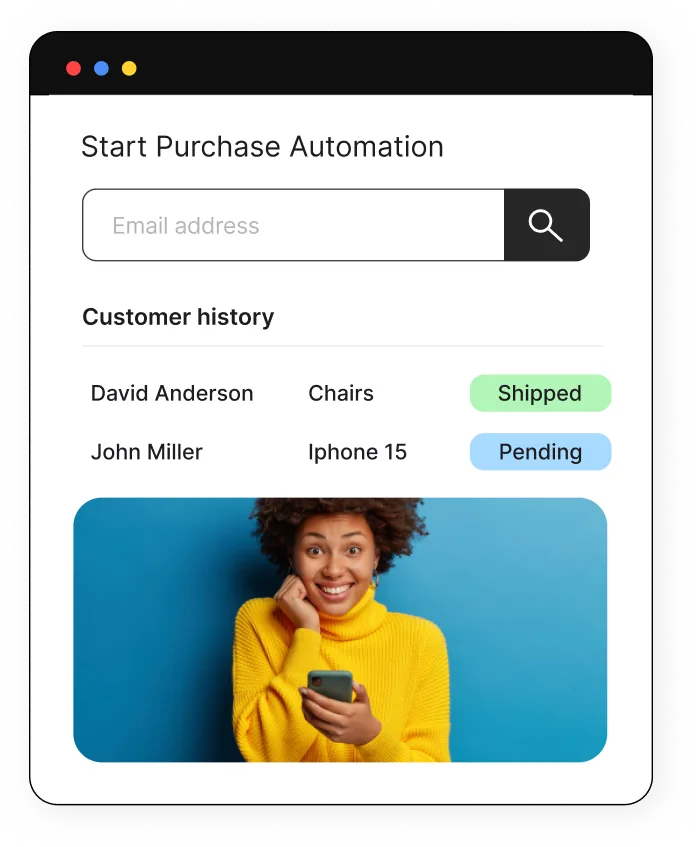
Start purchase automationOutsource your tail spend
Line
Spot Purchase Outsourcing

Take control of your tail spend

Buy Made Easy offers a complete ecosystem for enterprises to outsource the management of their tail spend.

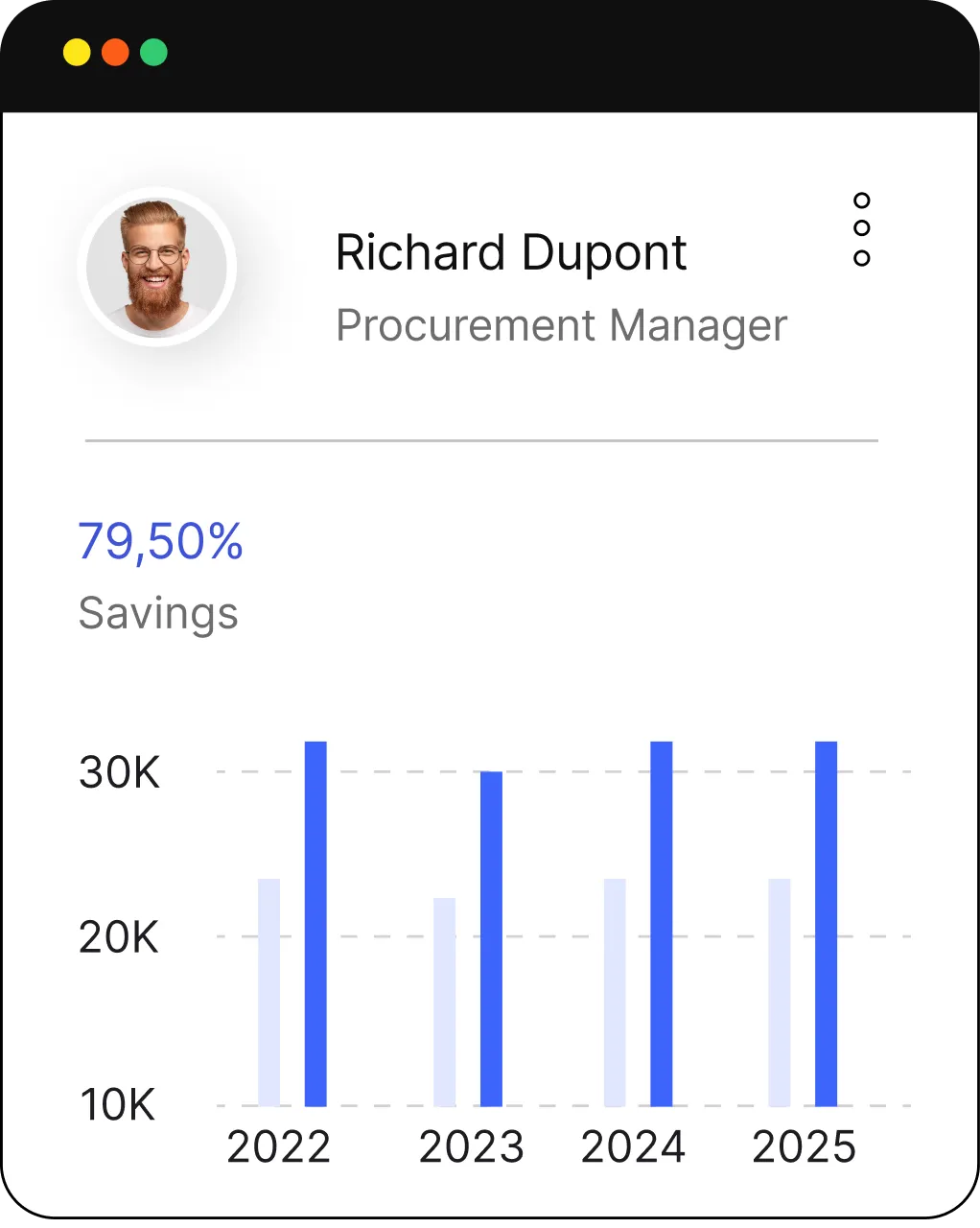
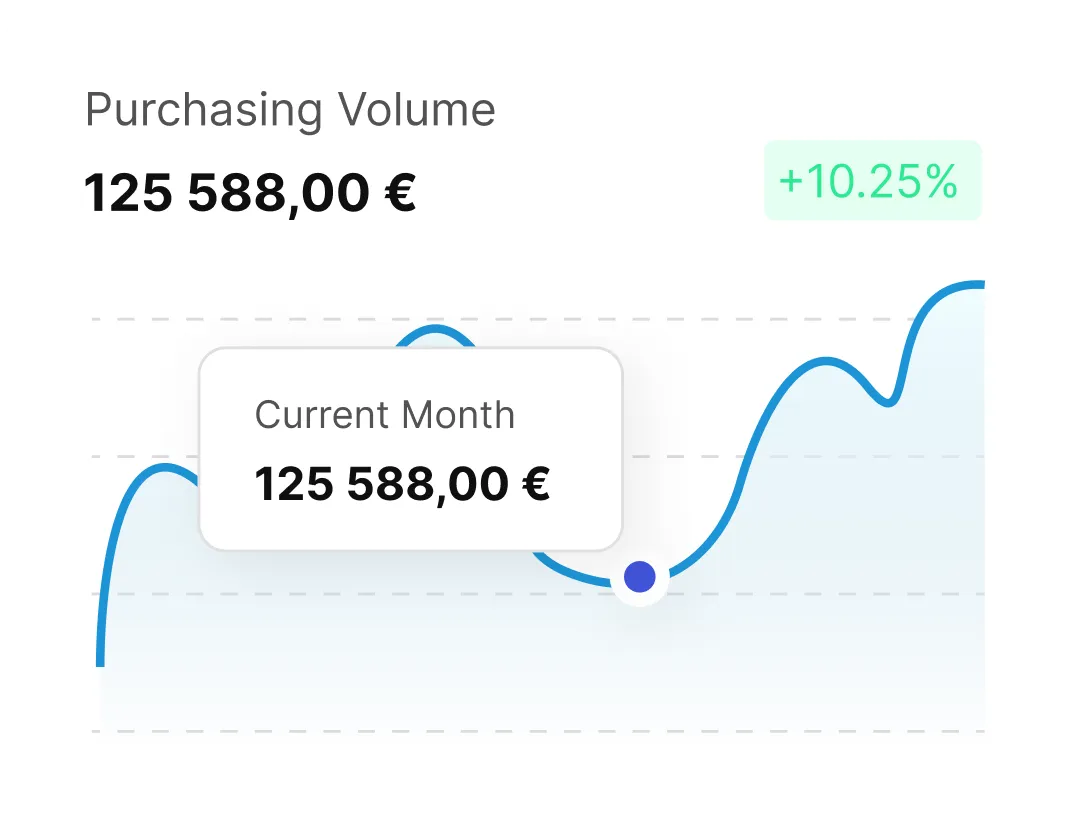
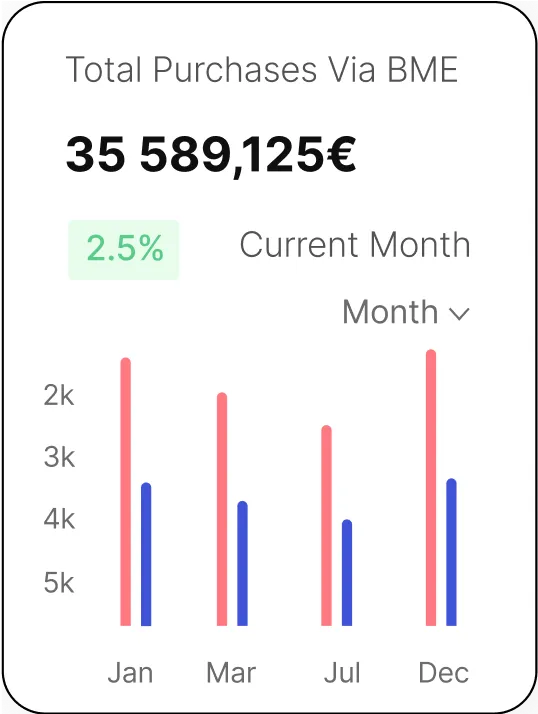
Image BackgroundRichard Dupont BuyerTail Spend Purchasing Volume
Icon
Outsourcing

Outsource the administrative management of your procurement and supply operations.

Icon
Procurement Tracking

Benefit from 100% digital tracking tools for faster operations.

Icon
100% Transparent

View a complete spending report on demand.

Icon
Dedicated Team

Collaborate directly with our procurement buyers and managers.

Line
Testimonies

What our customers think

We've helped companies like yours transform their purchasing processes and achieve significant optimizations. Our customer testimonials offer an insight into the benefits you can expect from outsourcing your purchasing to BME.

Buyer
LEM

"We are fully satisfied with the Source-to-Pay suite that BME provides. The solution has met our expectations and continues to evolve positively."

e-Procurement Director
EIMI

"Before BME, our contracts were managed manually in Excel, which was totally counterproductive for us. Now, everything is automated with BME."

Procurement Manager
Cenexi

"Simplified supplier contract management ordering processes have lowered costs and are driving investment in more strategic actions."

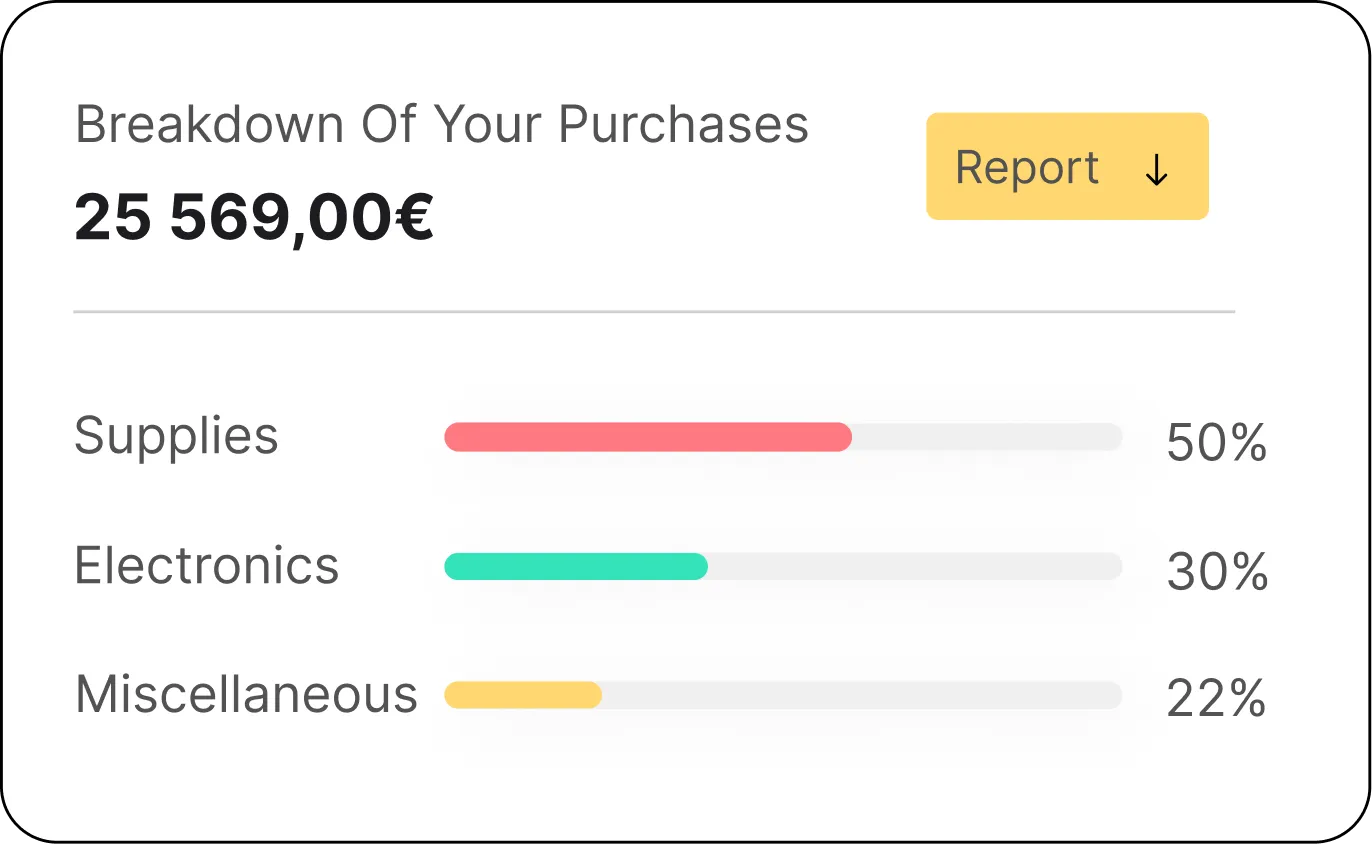
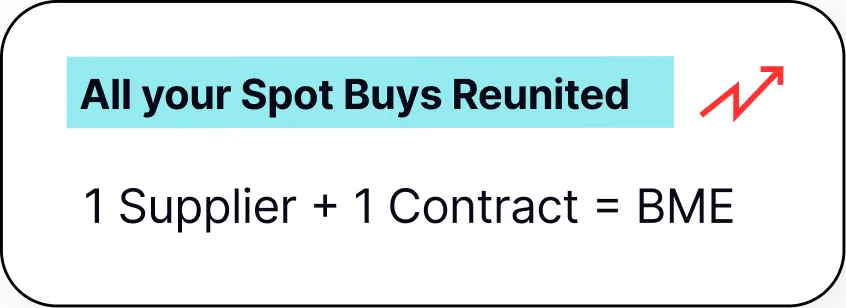
Boy ImageBreakdown of you tail spend purchasesAll you Spot Buy Reunited

Simplified Tail Spend Management

Our tail spend outsourcing service handles all administrative management end to end.

Icon

Full Administrative Management: Our outsourcing service covers the entire procurement cycle — supplier selection, dispute management, invoicing, and payment.

Icon

Sourcing & Supplier Relations: We handle supplier sourcing and maintain supplier relationships for a smooth, efficient supply chain.

Icon

Process Optimisation: Our service streamlines procurement procedures outside your regular panel — freeing internal resources for strategic activities.

Line
Procurement Automation

Optimise your Tail Spend
and your Accounting

We optimise your direct and indirect spend with our outsourcing solution

Centralisation
& Automation

We automate your orders via our eProcurement and eCatalogues solution.

Cost
optimisation

We reduce the number of suppliers and negotiate better prices.

Improving
Productivity

We take the administrative and management work out of your hands.

Line
Let's talk

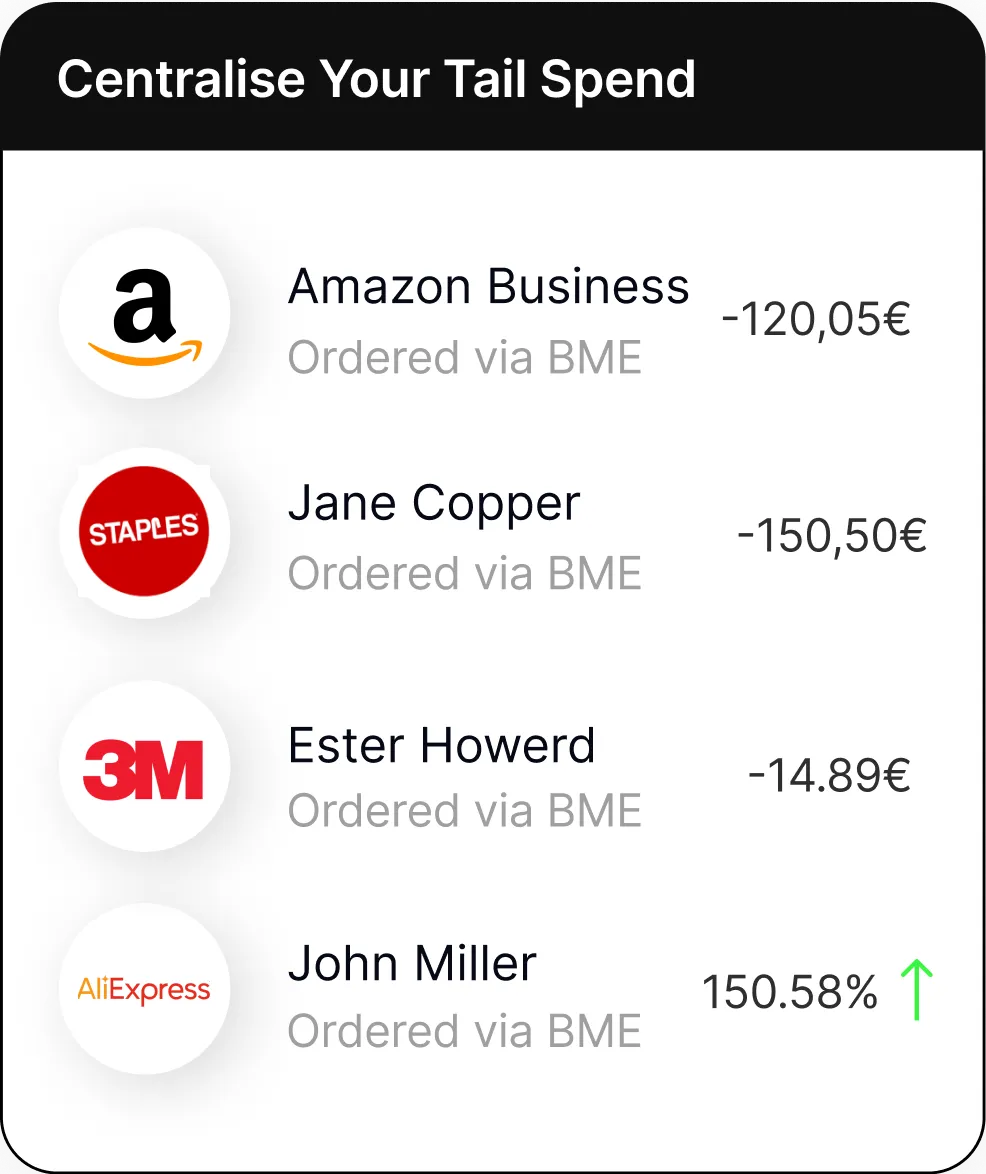
Centralise your Tail Spend today!

Optimise your costs and gain in efficiency
by choosing the simplicity and expertise we offer.

Image Background
Line
FAQ

Frequently
Asked Questions

What is the definition of tail spend?
Maverick purchases — also called spot buys — cover all products and services that companies need on an ad hoc, non-recurring basis to keep their operations running. Buy Made Easy (BME) acts as your single supplier for all purchases outside your regular supplier panel.

Example: during a heavy snowfall, this might mean buying rock salt for de-icing; when organising a corporate seminar, it could mean sourcing chairs; or in anticipation of an epidemic risk, it might involve PPE — gloves, masks, and similar protective equipment.

These maverick purchases are made outside the established procurement policy in most cases, which works against a TCO (Total Cost of Ownership) approach.
What is a TCO approach?
TCO (Total Cost of Ownership) analyses the true cost of purchasing a product from a supplier — looking beyond the purchase price alone. TCO aggregates all costs across the product lifecycle, combining direct costs and, crucially, indirect or "hidden" costs.
How do you estimate the cost of a digitised transaction?
Digitising the procurement process covers product selection, order transmission, invoice processing, and electronic payment. The purchase request and approval are handled directly in the digital solution (via Punchout), eliminating manual order creation. Orders transmit immediately after hierarchical approval. Invoices are collected online via a supplier portal or EDI. Payment is triggered automatically at due date when compliant. Through this optimised process, the average cost per transaction drops from approximately €120 to €26.
What do you think of counter purchases (cash-and-carry buying)?
Counter purchases can be useful in extreme urgency situations on a project site. However, in tail spend, urgency criteria should be viewed with scepticism — most are caused by a lack of anticipation resolvable through a solid procurement strategy. BME does offer an Emergency Service enabling real-time remote payment to a counter supplier when project deadlines are genuinely at risk.
How do you break down a supplier management cost of €1,000 per supplier?
This figure breaks down into four main cost components: (1) Initial supplier onboarding cost — sourcing, profile analysis, administrative information collection, and financial risk assessment. (2) Supplier database maintenance — annual status review (active, dormant, etc.), ERP system costs, and external compliance providers. (3) Administrative management imposed by regulations — legal documentation, solvency checks, CSR compliance, and subcontracting requirements. (4) Dispute management — covering product returns and credit notes.
Is procurement outsourcing suitable for an SME?
Yes — this approach applies equally to an SME and a large enterprise. The cost can be adjusted downward depending on the company's size, overhead structure, and sector. An SME operating in a highly regulated sector may incur additional administrative costs due to compliance requirements. In every case, centralising spot transactions with a single supplier generates smoother operations and sustainable savings.
What are the different types of procurement classification?
Procurement departments most commonly use their own internal classifications (commodities/purchasing categories). Where no internal system exists, they can reference widely used generic classifications such as UNSPSC or eCl@ss. UNSPSC — the United Nations Standard Products and Services Code — is a taxonomy of more than 20,000 categories with a four-level hierarchy: Segment, Family, Class, and Commodity.
How do you digitise supplier catalogue management?
We recommend working with a Punchout digital solution, which provides real-time product catalogue updates (live stock availability, product data sheets, etc.) and a far more intuitive user experience. In the context of tail spend, this also prevents maverick buying by giving users easy access to hundreds of thousands of product references.
How do you calculate your own cost per transaction (TCO)?
Start by mapping each step of your ordering process. For each step, identify team members involved, time spent, and the cost to the business. Adding all these costs gives you an estimate of your cost per transaction. Download our White Paper on this topic for a detailed methodology.
Doesn't implementing a Punchout solution tend to increase the number of orders?
This can happen in certain cases — particularly when no minimum order value is specified. The goal is to avoid processing orders where the handling cost exceeds the value of the items ordered. The Sourcing Force solution integrates approval workflows and budget controls to prevent any consumption drift.
Why is the cost per transaction typically estimated at €150–€250?
Literature reports various estimates of traditional transaction costs ranging from €150 to €250. At Buy Made Easy, we baselined our figure from real-world consulting missions in French companies. We believe a cost per transaction closer to €120 more accurately reflects companies that have already optimised part of their procurement procedures. This remains an estimate that varies by organisational structure.
Are you able to reference any product through BME?
We have expanded our offering to cover more than 5,000,000 references for businesses of all sizes. Our B2B marketplace covers the full range of business needs: tooling, packaging, handling products, office supplies, office furniture, and more. We also handle all types of off-catalogue references, including services, corporate seminars, and custom fabrication.
What do you think of small purchases made by corporate card online?
Many procurement departments issue corporate cards as a spend-control measure. This seems to simplify employees' lives and contain overall spend. However, to truly optimise tail spend, you need to analyse expenditure by category — by supplier and by product — not just as a global total. Using purchasing cards increases the number of suppliers and works against supplier panel rationalisation.
Do you have predefined communication plans or best practices for outsourcing tail spend?
No — the €26 per-transaction estimate for digitised procurement does not include the initial investment cost of the e-procurement solution. Sourcing Force provides consulting and support for implementing Punchout or hosted catalogue solutions. Unless specific custom development is requested, implementation costs are negligible relative to the per-transaction saving.
Incluez-vous le coût d'installation d'une solution d'e-procurement dans l'estimation des transactions digitalisées ?
Absolutely — communication is critical when implementing a procurement outsourcing action plan. The key is to coordinate a shared communication strategy between the procurement department, Buy Made Easy, the Tier 2 supplier, and end users. The critical point is to anticipate employee resistance to supplier changes — by explaining clearly how the change is being made and why Buy Made Easy is the right answer.
Does replacing multiple suppliers with a single supplier centralise both sourcing and ordering functions?
In practice, yes — this is what is commonly referred to as "outsourcing" or externalised referencing. Where the substituted suppliers are existing regular suppliers, BME Consulting's product managers will engage directly with them and onboard them if not already referenced. For order placement, the process remains centralised through BME — giving you a single supplier account for all your spot purchases.