Spot Buys

Optimization and Benefits of Electronic Purchasing Groups

Published By
Olivier Audino
Tags
Sourcing
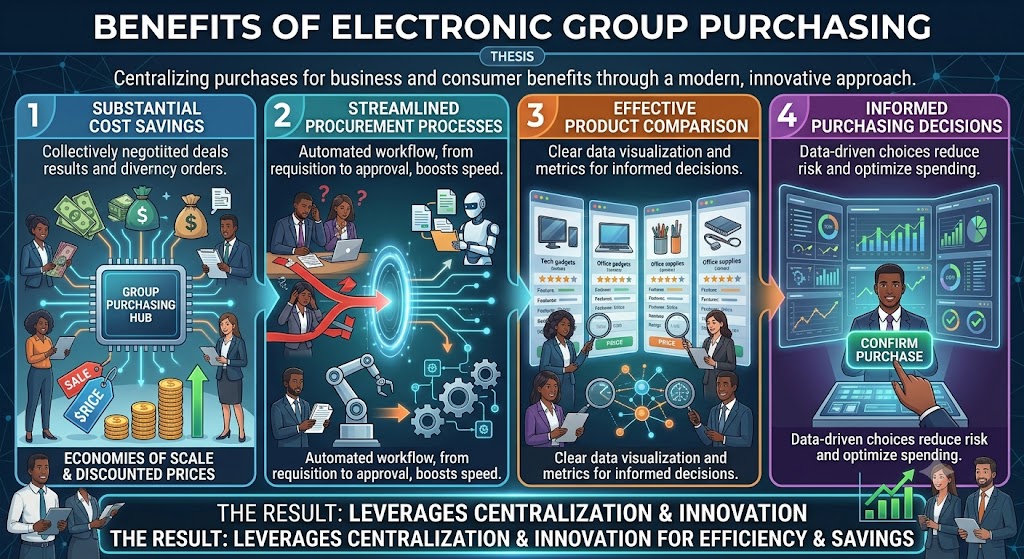
Electronic group purchasing offers numerous benefits for both businesses and consumers. By centralizing purchases, this modern approach enables substantial cost savings and streamlines procurement processes. It also promotes effective comparison of available products, leading to more informed purchasing decisions. This article explores in depth the mechanisms, benefits, and strategies associated with this innovative approach, providing a comprehensive guide for those seeking to make the most of it.

Strategies and advantages of electronics group purchasing

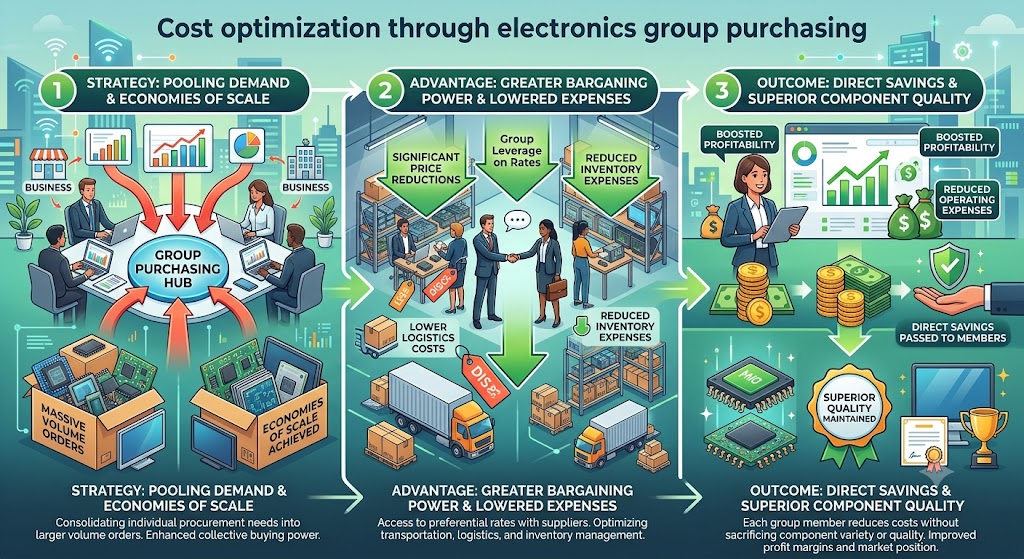
Cost optimization through electronics group purchasing

One of the major benefits of group purchasing in electronics lies in significant cost optimization. By pooling the procurement needs of multiple entities, the group gains greater bargaining power, leading to notable cost reductions on electronic components. This system provides access to preferential rates and lowers expenses associated with inventory management, transportation, and logistics. Consequently, each group member can reduce operating expenses while maintaining superior electronic component quality.

Improved access to high-quality suppliers

Electronics group purchasing also grants privileged access to a diversified network of reliable, pre-qualified suppliers. This strategy ensures a more secure and lower-risk supply chain by reducing dependence on any single supplier. Furthermore, centralized purchasing enables better management of quality and compliance standards, ensuring that all products acquired through the group meet the stringent requirements of the electronics sector.

Boosting innovation and competitiveness

Participating in an electronics group purchasing organization means easier access to the latest technological innovations on the market. Through this approach, small and medium-sized enterprises can access technologies that were previously out of reach due to budget constraints or limited access to strategic suppliers. This increased availability of advanced technologies allows group members to maintain their competitiveness and continuously innovate across their processes and end products.

Key benefits of electronics group purchasing

  • Significant reduction in procurement costs
  • Access to an expanded network of reliable and certified suppliers
  • Enhanced supply chain risk management
  • Stimulated innovation through facilitated access to cutting-edge technologies
  • Optimization of inventory management and logistical flows

Summary table of benefits

Advantage Impact Description
Cost Reduction Reduces operating expenses and increases profitability Lower operational costs achieved through improved resource management and process optimization, leading to an increase in overall profitability.
Quality and Compliance Ensures adherence to industry standards, increasing product reliability Guarantees that products meet established quality and safety standards, strengthening customer trust and minimizing non-compliance risks.
Access to Innovation Enables rapid adoption of new technologies, boosting competitiveness Facilitates the integration of new technologies and innovative methods into production and management processes, thereby enhancing market competitiveness.

Importance of quality management in purchasing groups

Guaranteeing compliance and quality standards

In the context of electronics group purchasing, guaranteeing compliance with quality standards is paramount. Companies participating in these groups must ensure that the electronic components purchased meet strict standards, such as ISO standards or specific industry specifications. This prevents final product failures that could result from non-compliant components, thereby preserving brand reputation and market competitiveness.

Impact of quality on product durability

The durability of electronic products is directly linked to the quality of the components used. In an electronics group purchasing organization, rigorous quality management ensures that every purchased component extends the lifespan of the finished product. This translates to fewer product returns, higher customer satisfaction, and a reduced environmental impact, as the need to replace devices frequently is minimized.

Benefits of quality certification for purchasing groups

Quality certifications, such as ISO 9001, play a crucial role in electronics group purchasing. They provide not only a framework for systematic and traceable quality management but also a competitive advantage. Suppliers who can prove compliance with these standards are often prioritized in the selection process, as they are considered more reliable and likely to supply high-quality components, thereby reducing procurement risks.

Benefits of quality management

  • Improved product reliability
  • Increased customer satisfaction
  • Reduction of costs associated with failures and returns
  • Preservation of brand reputation

Summary table: Quality management

Criterion Impact Description
Compliance with standards Avoids penalties and strengthens reliability Ensures that products or services comply with regulatory and quality standards, thereby avoiding sanctions and strengthening customer trust.
Quality certifications Attracts trusted partners Obtaining recognized certifications that demonstrate a commitment to quality and enhance credibility with business partners.
Return reduction Lowers costs and improves customer satisfaction Minimizing returns of defective or non-compliant products, thus reducing associated costs and improving overall customer satisfaction.
This section highlights the undeniable importance of effective quality management within purchasing groups, especially in the electronics industry where product reliability and compliance are essential for business success.

Impact of technological innovation through purchasing groups

Accelerating access to new technologies

The electronics purchasing group facilitates rapid access to the latest technological advancements for its members. This momentum supports the adoption of new solutions and equipment capable of transforming production processes. For instance, access to advanced microprocessor technologies or IoT (Internet of Things) communication enables electronics companies to stay at the cutting edge of innovation, thereby strengthening their market competitiveness. Integrating these modern technologies often leads to improved operational efficiency and reduced production lead times.

Cost optimization in technological developments

One of the key benefits of an electronics purchasing group is the reduction of costs associated with acquiring new technologies. By pooling demand, the group can negotiate more advantageous rates for high-tech components that would otherwise be cost-prohibitive for a single company. These substantial savings allow group members to reallocate resources into research and development, pushing the boundaries of innovation in their products while maintaining an optimized cost structure.

Mitigating the risk of technological obsolescence

In the electronics sector, technological obsolescence poses a major risk due to increasingly short product lifecycles. An electronics purchasing group mitigates this risk by maintaining continuous technology watch and facilitating access to emerging technologies. Member companies benefit from regular updates to their equipment and systems, helping them prevent disruptions caused by outdated technology. This is crucial for maintaining production relevance and efficiency in the face of fierce competition and rapid technological evolution.

Direct technological impacts

  • Increased competitiveness through the seamless integration of new technologies
  • Improved production flexibility by implementing modern solutions
  • Enhanced support for research and development through reallocated financial savings

Summary table of benefits

Advantage Description
Accelerated access Faster access to technological innovations.
Cost reduction Significant savings on high-tech component purchases.
Risk mitigation Reduced risk of obsolescence through regular updates.

Risk reduction and inventory management in the electronics sector through electronics group purchasing

Effective risk reduction strategies with electronics group purchasing

Implementing risk reduction strategies is crucial, especially in the electronics industry where market fluctuations can severely impact operations. Electronics group purchasing plays an essential role by diminishing dependence on a single supplier. By diversifying sourcing, electronics companies benefit from enhanced security of supply and optimized purchasing conditions. This leads to a significant reduction in production line disruptions, vital for maintaining operational continuity and customer satisfaction. Taking these measures into account allows companies to navigate a volatile industrial environment with greater confidence.

Inventory management optimization through electronics group purchasing

Inventory management optimization is another key aspect of electronics group purchasing. Through pooling, stock levels can be adjusted in real time based on demand forecasts and market trends. This helps avoid costly overstocking as well as detrimental stockouts. Additionally, the group can negotiate more flexible delivery terms with suppliers, enabling smoother inventory management. Streamlined inventory management reduces storage costs and improves the financial liquidity of participating companies.

Key risk and inventory benefits

  • Enhanced supply security through multi-sourcing and supplier diversification
  • Prevention of costly overstocking and production-halt stockouts
  • Improved cash flow and reduced capital tied up in inventory
  • Negotiation of flexible delivery schedules tailored to real-time market trends

Summary table: Impact on risk and inventory management

Impact Description
Reduction in production disruptions Decreased dependence on a single supplier, reducing the risk of material shortages.
Lower storage costs Optimized inventory management minimizing required warehouse space and storage fees.
Improved liquidity Less capital tied up in inventory, allowing better adaptation to fluctuating demand.

Economic and operational advantages of purchasing groups

Bargaining power and substantial savings

An electronics purchasing group offers companies a significant advantage in terms of bargaining power. By pooling the procurement needs of multiple industry players, it secures substantial volume discounts, leading to a direct reduction in the purchasing costs of electronic components.

Summary table of cost savings achieved

Item Unit Cost Without Group Unit Cost With Group Savings %
Component A €100 €75 25%
Component B €200 €150 25%

Supply chain optimization

By centralizing purchasing, purchasing groups simplify supply chain management. This gives companies greater visibility over their inventory and reduces overhead costs associated with warehousing and order processing. Centralization helps prevent stockouts and enables faster adaptation to market fluctuations.

Access to enhanced resources and expertise

Joining an electronics purchasing group enables companies to access a broader pool of resources, specialized skills, and cutting-edge technologies that they might not have been able to procure individually. This includes access to niche suppliers and supply chain consultants, delivering added value in terms of quality and innovation.

Operational benefits & impact on product quality and innovation

  • Reduction in storage and inventory handling costs
  • Improved responsiveness to shifting market demands
  • Shorter delivery lead times across the supply chain
  • Streamlined access to cutting-edge technological innovations
  • Enhanced component quality through premier, top-tier supplier networks
  • Increased collaboration among member companies to share industry best practices

Contribution of sustainable practices in purchasing groups

Reduced environmental impact through electronics group purchasing

Sustainable practices within purchasing groups, particularly in the electronics sector, play a crucial role in reducing the environmental impact of industries. By pooling purchases, companies can lower their carbon footprint by optimizing delivery routes and reducing transport frequency, leading to a significant decrease in CO2 emissions. Furthermore, adopting ecological standards among members ensures the selection of suppliers who are themselves committed to eco-friendly processes.

Improving resource management

Within an electronics group purchasing organization, implementing a sustainability-focused approach enables a more rational and efficient use of materials. This includes the reuse of electronic components and the recycling of e-waste. Through these practices, companies minimize waste production and maximize resource utilization, which not only lowers costs but also supports a circular economy within the electronics industry.

Strengthening compliance and social responsibility standards

Electronics purchasing groups also encourage their members to adopt strict social and environmental responsibility standards. This includes a commitment to ethical labor practices, minimizing the use of hazardous substances, and ensuring suppliers uphold fair working conditions. These notable actions enhance member companies' reputations while making a positive contribution to local communities and the global ecosystem.

Recommended practices for sustainability

  • Rigorous supplier evaluation based on environmental performance metrics
  • Implementation of environmental management systems across all operations
  • Promotion of eco-design principles and packaging volume reduction

Summary table: Benefits of sustainable practices

Benefit Description
Cost reduction Decreased energy and material expenses achieved through improved efficiency and pooled purchasing.
Brand enhancement Adoption of high social and environmental standards elevates brand perception among consumers and business partners.
Improved market access Environmentally responsible companies gain access to new markets and sustainability-conscious client bases.

Challenges and solutions for supplier management in electronics purchasing groups

Supplier identification and qualification

The first crucial step in supplier management within an electronics purchasing group is identifying and qualifying appropriate suppliers. Conducting rigorous evaluations based on quality, reliability, delivery capacity, and regulatory compliance is essential. Group members must collaborate closely to share supplier data and evaluations, thereby reducing qualification costs while ensuring full adherence to electronics industry standards.

Optimizing purchasing conditions

One of the main advantages of an electronics purchasing group is the ability to negotiate optimal purchasing conditions. Collaborating to negotiate contracts that benefit all members significantly lowers procurement costs. This includes securing favorable payment terms, volume pricing discounts, and additional benefits such as extended warranties or enhanced technical support.

Supplier risk and performance management

Proactive risk management is vital within an electronics purchasing group. Implementing continuous monitoring and evaluation mechanisms is essential to track supplier performance and quickly identify potential issues. Deploying a comprehensive supplier management system allows members to gather performance metrics, forecast potential supply risks, and act swiftly to resolve bottlenecks before they impact the supply chain.

Essential criteria for supplier qualification

  • Industry certifications and regulatory compliance
  • Financial stability and robust production capacity
  • Proven track record of on-time and in-full (OTIF) deliveries
  • Comprehensive after-sales support and technical service capability

Summary table: Benefits of purchasing condition optimization

Benefit Description
Economies of scale Securing superior pricing and terms through order consolidation.
Enhanced flexibility Easier adaptation to shifting market dynamics through negotiated contractual terms.
Risk reduction Contractual safeguards protecting against price volatility and inventory stockouts.

Impact of globalization on purchasing groups

Adjusting to market dynamics

In a globalized economic environment, electronics purchasing groups must constantly adapt to rapid market shifts. This requires heightened flexibility and responsiveness to changing demand. Managing international demand and price fluctuations demands robust strategic sourcing frameworks. Furthermore, the diversity of regional regulations and standards requires purchasing groups to maintain vigilant oversight of global trade practices to safeguard their competitive edge.

International collaborations and strategic partnerships

In a globalized economy, establishing strategic international partnerships can significantly broaden the scope and capability of an electronics purchasing group. These alliances grant access to emerging global technologies and leverage innovations developed worldwide. Moreover, international collaborations foster the cross-border sharing of best practices and procedural standardization, driving operational efficiency and global supplier management.

Enhanced risk management and compliance

Globalization requires electronics purchasing groups to maintain meticulous focus on supply risk management and regulatory compliance. Facing extended and complex international supply chains, implementing sophisticated mechanisms for risk evaluation, contract analysis, technological traceability, and quality control is essential. These structured processes ensure adherence to international standards while enabling swift responses to supply chain disruptions.

Key impacts of global integration

  • Increased agility and responsiveness to international market fluctuations
  • Strategic international alliances offering direct access to emerging technologies
  • Standardization of global procurement procedures and best practices
  • Comprehensive supply chain risk management, traceability, and international compliance
While certain aspects of globalization present complex challenges, they also offer major strategic opportunities for electronics purchasing groups. Adapting to this international dynamic is essential to maximize the benefits of global collaboration and remain competitive in an ever-evolving sector.

Use of emerging technologies in purchasing groups

AI integration for procurement optimization

Artificial Intelligence (AI) plays a crucial role in transforming procurement processes within electronics purchasing groups. By analyzing vast volumes of data, AI enables market trend forecasting, inventory optimization, and cost reduction. For instance, predictive algorithms can anticipate electronic component requirements, allowing for proactive ordering. This minimizes stockouts and overstocks, leading to more efficient resource management.

Blockchain for traceability and transparency

Blockchain has become essential in modern supply chain management, particularly within electronics purchasing groups. This technology provides unparalleled traceability of transactions and materials throughout the supply chain. Every transaction or component movement can be recorded in an immutable ledger, reinforcing trust among group members while preventing fraud and errors. Increased transparency also facilitates compliance with environmental and social regulations.

Internet of Things (IoT) to monitor the supply chain

The Internet of Things (IoT) is transforming how supply chains are monitored and managed in an electronics purchasing group. IoT sensors can track inventory levels and electronic component locations in real time. This enables rapid responses to shifting demand or supply chain bottlenecks. Integrating IoT thus helps maintain a constant balance between supply and demand, which is crucial for just-in-time manufacturing.

Key emerging technologies applied in purchasing groups

  • Artificial Intelligence (AI) for predictive demand and inventory control
  • Blockchain for immutable material traceability and transaction security
  • Internet of Things (IoT) for real-time supply chain monitoring
  • Augmented Reality (AR) for automated inventory verification

Evaluation of technology impact on procurement performance

Technology Impact on the Supply Chain
AI Optimization of purchasing and inventory predictions
Blockchain Enhanced traceability and transaction security
IoT Real-time monitoring of the supply chain

FAQ - Questions on Optimization and Benefits of Electronics Group Purchasing

How does a purchasing group reduce costs for companies?

By pooling their purchases, companies obtain significantly better pricing through high volume leverage, thereby lowering their acquisition costs. For example, a purchasing group can negotiate a 20% discount on electronic components and products for all participating members.

What are the benefits in terms of time management?

A purchasing group handles vendor negotiations, contract reviews, and order management, allowing member companies to focus entirely on their core business activities. This efficiency is illustrated by a company that saved 30 hours per month in administrative purchasing tasks.

Can a purchasing group help improve the quality of purchased products?

Yes, purchasing groups often maintain privileged access to premier, high-tier suppliers and enforce stringent quality standards, resulting in higher quality components and finished products for all members.

What does the collaborative aspect of a purchasing group consist of?

Members share insights on suppliers, market intelligence, and product performance, fostering cross-company collaboration and innovation. For instance, a member company can share a cutting-edge technological solution discovered through the group network.

What tools are generally used to facilitate electronics group purchasing?

Specialized online digital platforms are deployed to streamline transactions, tracking, and communication, ensuring high efficiency and operational transparency. eProcurement platforms are a standard example widely used across multiple purchasing groups.

Conclusion: Transforming modern procurement practices

Unlocking strategic value through collective purchasing

Electronics group purchasing presents substantial advantages for both businesses and consumers. By lowering costs, boosting operational efficiency, and broadening access to a diverse array of products, this collective purchasing strategy modernizes the entire marketplace.

It fosters healthy market competition, encouraging suppliers to deliver optimal value for money. Exploring this model further can revolutionize your procurement practices and drive continuous innovation across your sector. Dive deeper into the mechanics and strategic benefits to fully leverage this potent procurement approach.

Line
Featured Post

Popular posts