Needs analysis

Optimize Your Purchases with Innovative SaaS Solutions

Published By
Olivier Audino
Tags
Sourcing
In an era where technology evolves at a breakneck pace, modern enterprises are continually seeking advanced methodologies to streamline purchasing workflows.

Cloud-based Software as a Service (SaaS) procurement solutions provide the flexibility, scalability, and adaptability required to transform traditional buying experiences into streamlined digital operations.

1. Key Value Drivers of Procurement SaaS Innovation

Core Strategic Capabilities

  • Flexibility & Rapid Scalability: Cloud platforms effortlessly adapt to evolving operational needs and organizational growth without costly infrastructure investments.
  • Automated Workflow Velocity: Streamlines purchase requisitions, approval cycles, and invoice matching to eliminate manual bottlenecks.
  • Real-Time Spend Visibility: Delivers centralized data tracking to uncover cost-saving opportunities and prevent budget overruns.
  • Seamless Supplier Integration: Enhances vendor collaboration through unified portals for RFP responses, contract management, and performance tracking.

2. Best Practices for Maximizing SaaS ROI

Adopting the right SaaS solution requires a structured, value-focused evaluation framework:

Define Specific Operational Pain Points: Align platform selection with clear procurement objectives, such as cycle-time reduction or contract compliance.
Prioritize ERP Integration: Ensure seamless connectivity with your existing financial and ERP software ecosystem.
Focus on User Adoption: Choose intuitive, user-friendly interfaces to ensure swift team onboarding and maximum operational efficiency.

Conclusion: Step Into a New Era of Procurement Efficiency

Transform Your Buying Experience Today

Embracing modern SaaS innovations unlocks unprecedented operational ease, total spend visibility, and long-term cost optimization.

Empower your business with cutting-edge cloud tools where technology rhymes with effortlessness and efficiency.

Understanding the Impact of SaaS Procurement Solutions

SaaS procurement solutions are revolutionizing how modern enterprises manage their purchasing workflows.

By replacing traditional, fragmented systems with cloud-native software, businesses gain agility, lower capital expenditures, and streamline end-to-end buying operations across the supply chain.

1. Definition & Core Characteristics of SaaS Solutions

A SaaS procurement solution is cloud-based software accessible directly via the web without local server installations or heavy upfront hardware investments.

Operating on a flexible subscription model, these platforms offer 24/7 access from any location or device. Specialized modules handle vendor management, contract lifecycles, and performance analytics, connecting seamlessly with enterprise systems like ERPs and CRMs.

2. Real-Time Operational Benefits

One of the greatest strengths of SaaS procurement technology is real-time accessibility and analytics.

Procurement teams can track spend data, evaluate vendor compliance, and manage orders instantly across smartphones, tablets, or desktop computers—fostering seamless collaboration between internal business units and external suppliers.

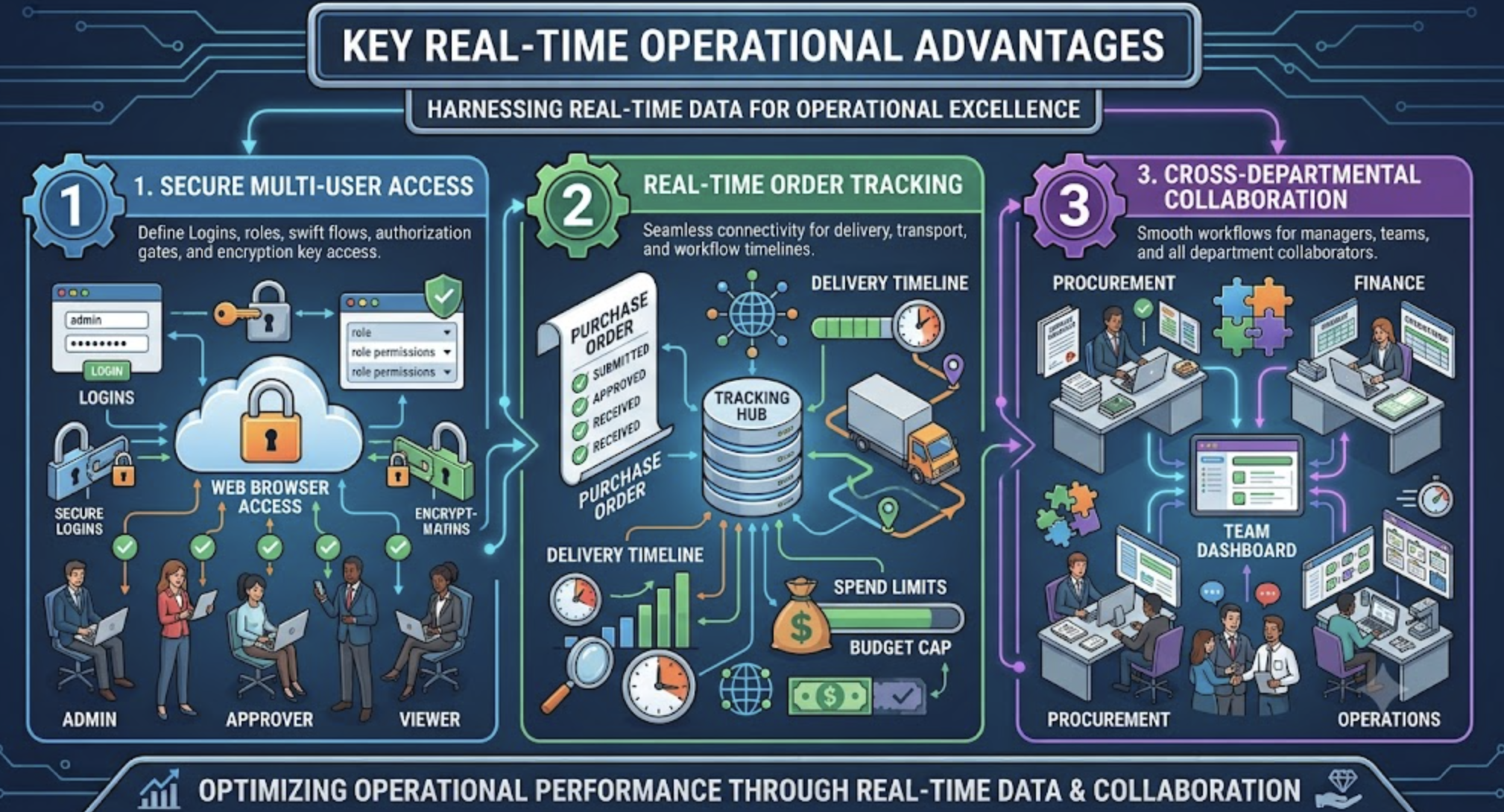
Key Real-Time Operational Advantages

  • Secure Multi-User Access: Role-based access control available on demand from any web browser.
  • Real-Time Order Tracking: Instant visibility into purchase order status, delivery timelines, and spend limits.
  • Cross-Departmental Collaboration: Streamlined workflows between procurement, finance, and operational managers.

3. Evolution of SaaS Sourcing Platforms Over Time

Over the past decade, cloud procurement platforms have evolved from basic administrative tools into the backbone of corporate digital transformation.

Automating manual approval processes, quote comparisons, and invoice matching frees up strategic sourcing professionals to focus on high-value supplier negotiation and risk management.

4. Timeline: Historical & Future Evolution of SaaS Procurement

Evolution Phase Impact on Purchasing Operations
Early Stages Basic transactional recording, simple digital purchase orders, and localized tracking
Present Day End-to-end process automation, real-time analytics, and seamless ERP/CRM integration
Future Horizon Artificial intelligence, predictive spending models, and automated market benchmarking

Conclusion: Accelerating Sourcing Optimization

Transform Purchasing Operations with Cloud Innovation

Integrating SaaS procurement platforms into your business processes unlocks real-time visibility, lowers operational costs, and drives continuous supply chain efficiency.

Empower your team with modern cloud technology to streamline workflows and convert purchasing into a strategic value engine.

Exploring the Strategic Benefits of SaaS Procurement Solutions

SaaS procurement solutions play a key role in transforming purchasing operations across modern enterprises.

Whether driving performance, lowering capital expenditures, or enforcing compliance, cloud-based software is revolutionizing how procurement departments operate and deliver enterprise value.

1. Accessibility and Flexibility of Cloud Purchasing Platforms

The flexibility of SaaS procurement solutions is a game changer for dynamic business environments. Secure, 24/7 cloud access allows procurement teams to retrieve critical spend data and manage workflows from any device, anywhere.

This ubiquitous access seamless collaboration between distributed teams, remote decision-makers, and external suppliers, significantly increasing operational reactivity to sudden market shifts.

2. Financial Optimization & Cost Reduction

Key Elements of Cost Savings

  • Zero Hardware Capital Expenditure: Eliminates major upfront investments in physical servers and IT infrastructure.
  • Adjustable Subscription Models: Pay-as-you-go pricing that scales predictably with actual usage and user headcount.
  • Automated IT Maintenance: System updates, security patches, and backups occur automatically without internal IT intervention.

3. Improving Operational Efficiency & Workflow Speed

Traditional procurement processes can be notoriously slow, manual, and error-prone. SaaS solutions streamline operations by automating repetitive tasks—such as multi-level purchase order approvals, inventory tracking, and invoice matching.

Eliminating administrative friction reduces processing errors and frees strategic sourcing professionals to focus on high-impact initiatives like supplier negotiations and value engineering.

4. Summary Matrix of SaaS Strategic Advantages

Strategic Advantage Operational Details
Accessibility & Flexibility Real-time access across devices, streamlined cross-departmental collaboration
Cost Reduction Predictable subscription pricing, zero hardware maintenance expense
Operational Efficiency Automated purchase approvals, administrative error reduction, faster lead times

Conclusion: Modernize Your Procurement Strategy

Embrace the Future of Digital Procurement

Integrating SaaS procurement solutions provides your organization with efficient, cost-effective tools aligned with a modern, agile business strategy.

The future of purchasing is increasingly digital—drive continuous innovation and efficiency across your end-to-end supply chain.

Comparing SaaS Procurement Solutions with Traditional On-Premise Models

Choosing between cloud-based SaaS procurement platforms and traditional on-premise software is a critical decision for procurement leaders.

Each architecture presents distinct characteristics regarding total cost of ownership, maintainability, scalability, and operational collaboration that directly influence procurement performance.

1. Cost of Acquisition and Ongoing Maintenance

Financial models differ drastically between the two deployment types:

SaaS Procurement Solutions: Operate on a predictable subscription model (OPEX). Businesses pay a recurring fee, avoiding heavy upfront capital expenditure and hardware costs.
On-Premise Models: Require substantial initial investments (CAPEX) in software licenses, dedicated server infrastructure, and complex setup. Ongoing internal maintenance and IT overhead further add to long-term operational costs.

2. System Updates and Business Scalability

Adapting software to evolving business demands reveals clear operational contrasts:

SaaS Solutions: Deliver seamless, automated background updates, giving users immediate access to new features without downtime or manual IT intervention. Scalability is instant as organizations expand.
On-Premise Systems: Depend on manual, complex, and often expensive update cycles. Scaling infrastructure to meet rapid market growth is slow and resource-intensive.

3. Accessibility & Cross-Departmental Collaboration

Key Comparative Advantages of SaaS

  • Global Accessibility: Cloud infrastructure enables secure 24/7 access from any location or device.
  • Fluid Collaboration: Streamlines communication across remote teams, finance departments, and external vendors.
  • Reduced Friction: Eliminates site-restricted network limitations inherent to traditional legacy hosting.

4. SaaS vs. On-Premise Architectural Comparison

Evaluation Criterion SaaS Procurement Solutions Traditional On-Premise Solutions
Payment Model Predictable subscription (OPEX) Heavy initial capital investment (CAPEX)
Software Updates Automatic & continuous Manual, complex & expensive
Accessibility Global, cloud-native & multi-device Localized / site-restricted
Collaboration Seamless cross-departmental integration Restricted to local networks

Conclusion: Embracing Modern Procurement Infrastructure

Modernize Your Purchasing Ecosystem

SaaS procurement solutions provide the speed, flexibility, and financial efficiency required to navigate today's fast-moving business landscapes.

Transitioning from legacy on-premise constraints to cloud procurement unlocks seamless collaboration, automated scalability, and continuous innovation.
FAQ: Optimizing Purchases with SaaS Solutions

1. What Is a SaaS Solution?

A SaaS (Software as a Service) solution is cloud-hosted software accessible directly via the internet on a subscription basis.

Because it requires no local server installation or physical infrastructure, teams can log in securely from anywhere. A common everyday example is Google Workspace for online office collaboration and productivity.

2. How Do SaaS Solutions Help Optimize Procurement?

SaaS platforms automate repetitive purchasing workflows and track spend data in real time across the supply chain.

For example, specialized e-procurement software can automatically analyze vendor quotes, compare pricing tiers across multiple suppliers, and route purchase orders for fast, policy-compliant approvals.

3. What Benefits Do Businesses Get from SaaS Procurement Management?

Core Business Advantages

  • Time & Cost Efficiency: Workflow automation drastically reduces cycle times and cuts administrative spend.
  • In-Depth Spend Analytics: Real-time dashboards provide actionable insights for strategic decision-making.
  • Operational Scalability: Cloud resources expand seamlessly to support growing procurement volumes.

4. Are SaaS Solutions Secure for Handling Purchases?

Yes, enterprise-grade SaaS procurement platforms implement strict security protocols to safeguard sensitive data.

They protect confidential financial information, contract terms, and payment details using advanced data encryption standards, multi-factor authentication, and regular compliance audits.

5. Can Small Businesses Benefit from SaaS Procurement Solutions?

Absolutely. SaaS levels the playing field by giving small and medium-sized enterprises (SMBs) access to advanced sourcing tools without prohibitive IT budgets.

For example, cloud-based inventory and purchasing modules allow small online stores and growing companies to reduce operational costs, streamline accounting workflows, and operate with enterprise-level efficiency.

Conclusion: Elevate Your Digital Procurement Ecosystem

Transform Procurement into a Strategic Growth Driver

Adopting modern SaaS procurement tools empowers organizations of all sizes to streamline purchasing, optimize spend, and build resilient vendor relationships.

Unlock the full potential of cloud technology to accelerate your procurement efficiency and boost long-term profitability.

Line
Featured Post

Popular posts