Market studies

Optimizing Sales Performance Through Customer Data Analysis

Published By
Olivier Audino
Tags
Sourcing

Enhancing Commercial Performance Through Customer Data Analysis

In the face of evolving market dynamics, strengthening sales performance has become more critical than ever. Customer data analytics is rapidly emerging as the cornerstone of modern commercial strategy.

By leveraging innovative analytical tools and precise data interpretation, businesses can unlock the full potential of their customer insights to refine targeting, optimize sales funnels, and maximize revenue growth.

1. Driving Data-Informed Commercial Decision-Making

Core Strategic Pillars

  • Actionable Customer Insights: Transforming raw interaction history into clear behavioral profiles and purchasing intent.
  • Precision Targeting & Segmentation: Structuring tailored sales offers based on real-time customer behavior and needs.
  • Sales Pipeline Optimization: Identifying bottlenecks, improving conversion rates, and shortening deal closing cycles.
  • Predictive Analytics: Forecasting market demand trends to stay ahead of competitive industry shifts.

2. Transforming Sales Strategies into Revenue Growth

Moving from intuition-led sales to data-driven decision-making empowers sales teams to focus energy on high-probability opportunities.

Fine-tuning customer interactions through data analytics revolutionizes organizational decision-making—ensuring higher customer retention, improved cross-selling capabilities, and sustainable sales growth.

Conclusion: Maximizing Sales Potential with Strategic Data

Revolutionizing Commercial Strategy with Analytics

Capitalizing on customer data allows organizations to transition from reactive sales techniques to proactive, highly targeted commercial strategies.

Empower your sales force with advanced customer insights to revolutionize decision-making and accelerate commercial performance.

How Customer Data Analysis Drives Commercial Performance

Leveraging customer data provides a deeper understanding of purchasing behaviors, preferences, and real target audience needs. This depth of insight optimizes sales cycles, making it simpler to offer the right products or services at the exact right time.

Modern enterprises rely on advanced analytics tools to collect, organize, and analyze continuous data streams. This leads to heightened personalization, stronger customer retention, and accelerated revenue growth.

1. Concrete Benefits of Data-Driven Sales Optimization

Key Operational Advantages

  • Rapid Adaptation to Evolving Customer Needs: Real-time KPI tracking allows sales teams to pivot strategies instantly in response to market fluctuations.
  • Shorter Sales Cycles: Delivering tailored proposals increases message relevance and accelerates customer decision-making.
  • Higher Customer Satisfaction & Loyalty: Targeted campaigns and personalized offers deepen customer attachment and brand trust.
  • Proactive Opportunity Detection: Uncovers previously untapped commercial avenues and cross-selling potential before competitors.

2. Essential Tools That Facilitate Customer Data Analytics

From CRMs to dedicated analytics platforms, modern tools centralize valuable information and generate clear visual dashboards to guide sales strategy:

Sales Automation & Algorithms: Offloading repetitive analysis to algorithms frees team time and eliminates human error during data entry.
Cross-Functional IT Integration: Specialized customer tools integrate natively with existing infrastructure, fostering seamless collaboration between sales, marketing, and customer support.
AI-Powered Predictive Insights: Artificial intelligence features enrich trend forecasting, increasing recommendation precision and grounding strategic decisions in data.
Real-Time Dashboards & Accurate Reporting: Visual KPI tracking allows managers to monitor performance at a glance, celebrate successes, identify areas for improvement, and navigate market shifts proactively.

3. The Power of Data Segmentation & Interpretation

High commercial performance stems directly from thorough customer knowledge. Segmentation differentiates buyer profiles to tailor prospecting and loyalty campaigns to specific group traits.

Data interpretation goes far beyond raw numerical collection—it connects data points to meaningful business context. Communicating through tailored channels strengthens brand perception, elevates engagement rates, and maximizes conversion opportunities.

Fact-based decision-making reduces strategic risks by anchoring choices in measurable KPI results, cultivating an agile culture centered on efficiency, responsiveness, and sustainable growth.

Conclusion: Building a Competitive, Data-Driven Sales Culture

Transforming Customer Insights into Sales Growth

Capitalizing on customer data analysis transforms traditional sales tactics into an integrated, highly personalized commercial strategy.

Grounding sales decisions in real-time customer insights empowers sales teams, strengthens client retention, and secures a lasting competitive advantage.
Sales Process Automation & Digital Transformation

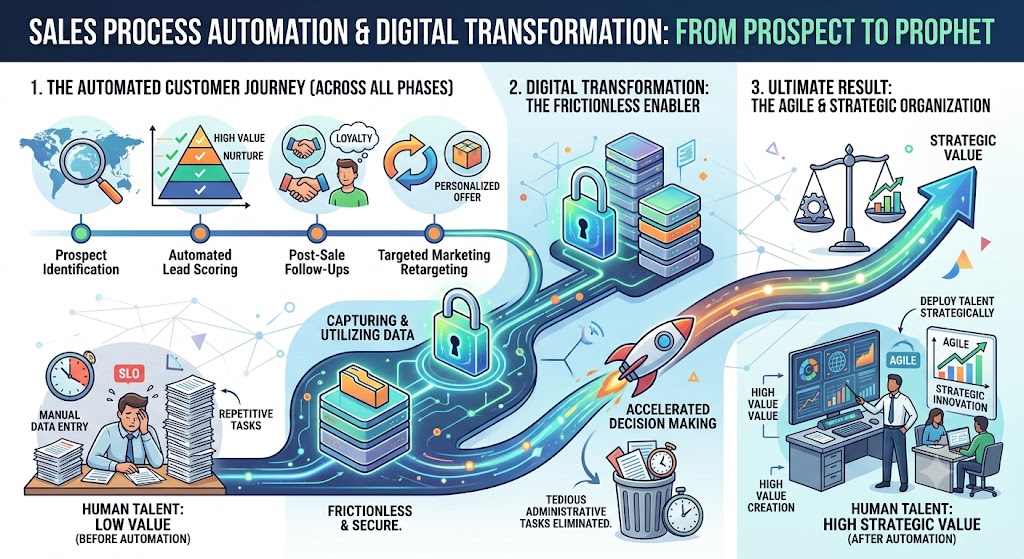
Automation intervenes across every phase of the customer journey: prospect identification, automated lead scoring, post-sale follow-ups, and targeted marketing retargeting.

These mechanisms highlight the growing necessity of an agile organization capable of deploying its human talent where it generates the highest strategic value. With digital transformation, capturing and utilizing data becomes frictionless and secure, accelerating decision-making while eliminating tedious administrative tasks.

Core Benefits of Digital Workflows

  • Faster Processing Lead Times: Interconnected workflows shorten response windows and accelerate deal velocity.
  • Reduced Administrative Overhead: Shifts employee bandwidth away from manual paperwork toward strategic growth initiatives.
  • Enhanced Quality Control: Automated monitoring safeguards data integrity and ensures process consistency.

1. Overcoming Barriers to High-Performance Customer Data Analytics

Despite clear advantages, several obstacles can delay the adoption of an effective analytics approach:

Lack of Training: Insufficient skill building hinders team autonomy.
Resistance to Change: Reluctance to abandon legacy habits creates operational friction.
Absence of Governance: Unclear data policies lead to fragmented, unreliable information.

2. Strategic Levers for Data Maturity

Overcoming these challenges requires active team enablement. Educating sales teams on the concrete value of customer analytics boosts engagement and aligns staff with overarching commercial goals.

Flawless Data Quality: Uncompromising data accuracy is an absolute priority—without reliable inputs, no analytics strategy can endure.
Organization-Wide Engagement: Involving every department in data governance builds a resilient analytical ecosystem.
Active Tech Monitoring: Tracking technological innovations ensures enterprises maintain a competitive edge by continuously refining their sales strategies.

Conclusion: Cultivating a Virtuous Circle of Commercial Success

Building an Agile, Market-Centered Sales Model

In-depth customer data analysis lays the foundation for a new commercial organization. Dynamic management centered on market expectations enables true competitive differentiation and opens new avenues for growth.

The energy dedicated to collecting, segmenting, interpreting, and acting on customer insights creates a virtuous cycle of agility, innovation, and sustainable long-term performance.

Line
Featured Post

Popular posts