
Call for tenders and e-Procurement

Outsourcing your tender response: a good or bad idea?

Published By
Olivier Audino
Tags
Sourcing

Outsourcing Tender Management: Strategic Choice for Public & Private RFPs

Responding to tenders and RFPs (Requests for Proposals) is a pivotal strategic exercise for any enterprise seeking to secure high-value public contracts or commercial business opportunities.

Navigating rigid deadlines, strict formal compliance requirements, and intense market competition rapidly raises a crucial organizational question: Should companies rely solely on internal teams, or engage specialized bid management consultants?

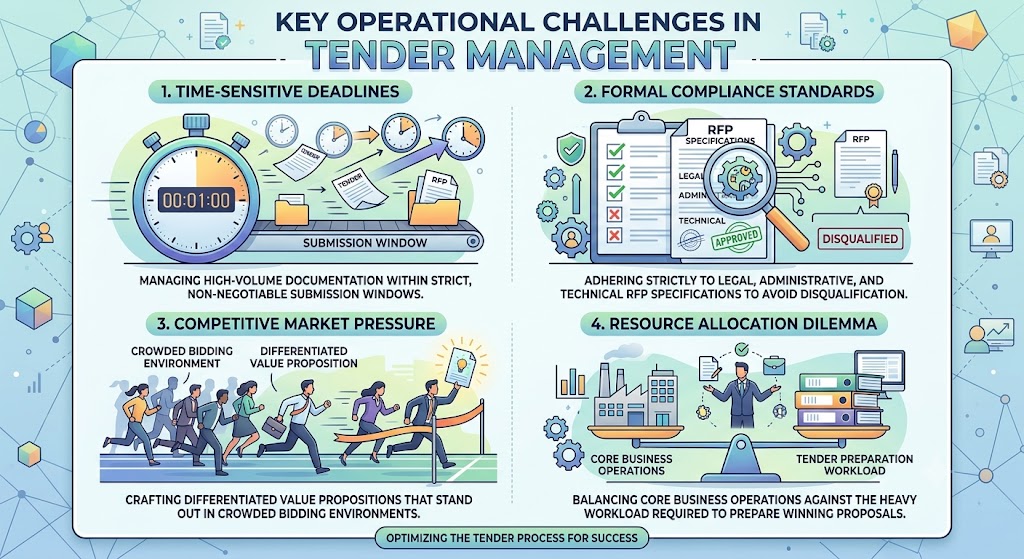
Key Operational Challenges in Tender Management

  • Time-Sensitive Deadlines – Managing high-volume documentation within strict, non-negotiable submission windows.
  • Formal Compliance Standards – Adhering strictly to legal, administrative, and technical RFP specifications to avoid disqualification.
  • Competitive Market Pressure – Crafting differentiated value propositions that stand out in crowded bidding environments.
  • Resource Allocation Dilemma – Balancing core business operations against the heavy workload required to prepare winning proposals.
While outsourcing RFP management is gaining strong traction across corporate sectors, determining its true value depends heavily on organizational context, internal capacity, and target market complexity.

Conclusion: Aligning Bid Strategy with Corporate Capacity

Evaluating the ROI of Specialized Procurement Support

Outsourcing tender management can transform a time-consuming administrative burden into a structured, high-conversion growth engine.

By evaluating internal bandwidth against external expertise, enterprises can deploy the ideal bidding framework to maximize proposal win rates and secure key procurement contracts.
Outsourcing RFP Responses: Definition and Strategic Stakes

Outsourcing a tender response consists of entrusting all or part of the proposal creation process to a specialized external partner. This typically spans consultation dossier analysis, response structuring, technical memory (mémoire technique) drafting, and overall bid coordination.

The primary goal is to boost overall proposal quality by combining specialized bid writing methodology with operational time savings.
The critical stake lies in the quality of the final submission. The technical proposal plays a decisive role in buyer evaluation: its clarity, structure, and ability to precisely address buyer requirements often determine the winning candidate.

Core Benefits of RFP Outsourcing

Key Operational Advantages

  • Specialized Expertise – External specialists master buyer scoring grids, evaluation criteria, and persuasive technical proposal drafting.
  • Structured Methodology – Streamlined workflows secure document production, improve readability, and maintain rigorous quality control.
  • Resource & Time Efficiency – Frees internal teams to focus on core operations, especially when managing multiple simultaneous tenders.
  • Higher Win Rates & Punctuality – Impactful proposal structuring highlights company strengths while eliminating the risk of late or incomplete submissions.

Limitations and Points of Vigilance

Despite its clear advantages, outsourcing tender management presents specific operational boundaries:

Deep Internal Alignment Required – External consultants require access to detailed company knowledge, technical capabilities, and unique value propositions. A high-quality response still demands time investment and close coordination with internal teams.
Financial ROI Evaluation – Engaging external bid support represents a investment that must be weighed against target contract value, prospective margins, and win probabilities.
Risk of Operational Disconnect – Insufficient communication can cause a disconnect between written proposal promises and actual delivery capabilities, potentially damaging vendor credibility.

Conclusion: Aligning External Support with Internal Realities

Maximizing Proposal Impact Through Collaborative Bid Management

Outsourcing tender management provides a high-performing strategic lever to scale public and private market participation without overleveraging internal teams.

By combining specialized external bid expertise with close internal coordination, organizations safeguard compliance, improve proposal readability, and significantly boost contract win rates.

When Should You Externalize Your Tender Response?

Outsourcing bid management is particularly compelling under specific operational conditions. It proves most effective for complex or strategic consultations that demand rigorous formalization, advanced methodology, and flawless compliance.

It is equally invaluable when internal bandwidth is depleted or when an enterprise enters public or private bidding for the first time without established internal expertise.

When to Externalize vs. Manage Internally

  • Strategic & High-Stakes Tenders – Delegate complex, high-value RFPs to external experts to guarantee methodological precision and narrative impact.
  • Resource Constraints & First-Time Bids – Bridge internal skills gaps and overcome bandwidth shortages during workload peaks.
  • Recurring & Standardized Consultations – Retain in-house management to capitalize on past submissions, streamline response templates, and lower operational costs.

Adopting a Hybrid Bid Strategy

In practice, many forward-thinking organizations adopt a hybrid model. Specific technical phases—such as structuring, auditing, or optimizing the technical memory (mémoire technique)—are entrusted to external consultants, while core strategy, pricing, and value propositions remain anchored internally.

This balanced setup grants companies expert external oversight while retaining full governance over commercial positioning.

Conclusion: Strategic Alignment for Proposal Success

Maximizing RFP Win Rates with Tailored Execution

Outsourcing a tender response is neither an absolute necessity nor an option to avoid. It represents a strategic lever to activate based on internal bandwidth, expertise levels, and commercial stakes.

Regardless of the operational path chosen, one constant remains: overall proposal quality—and specifically the technical memory—remains the decisive factor in securing winning contracts.

Line
Featured Post

Popular posts