Purchasing performance

Predicting Procurement Needs: When AI Anticipates Demand Better Than Teams

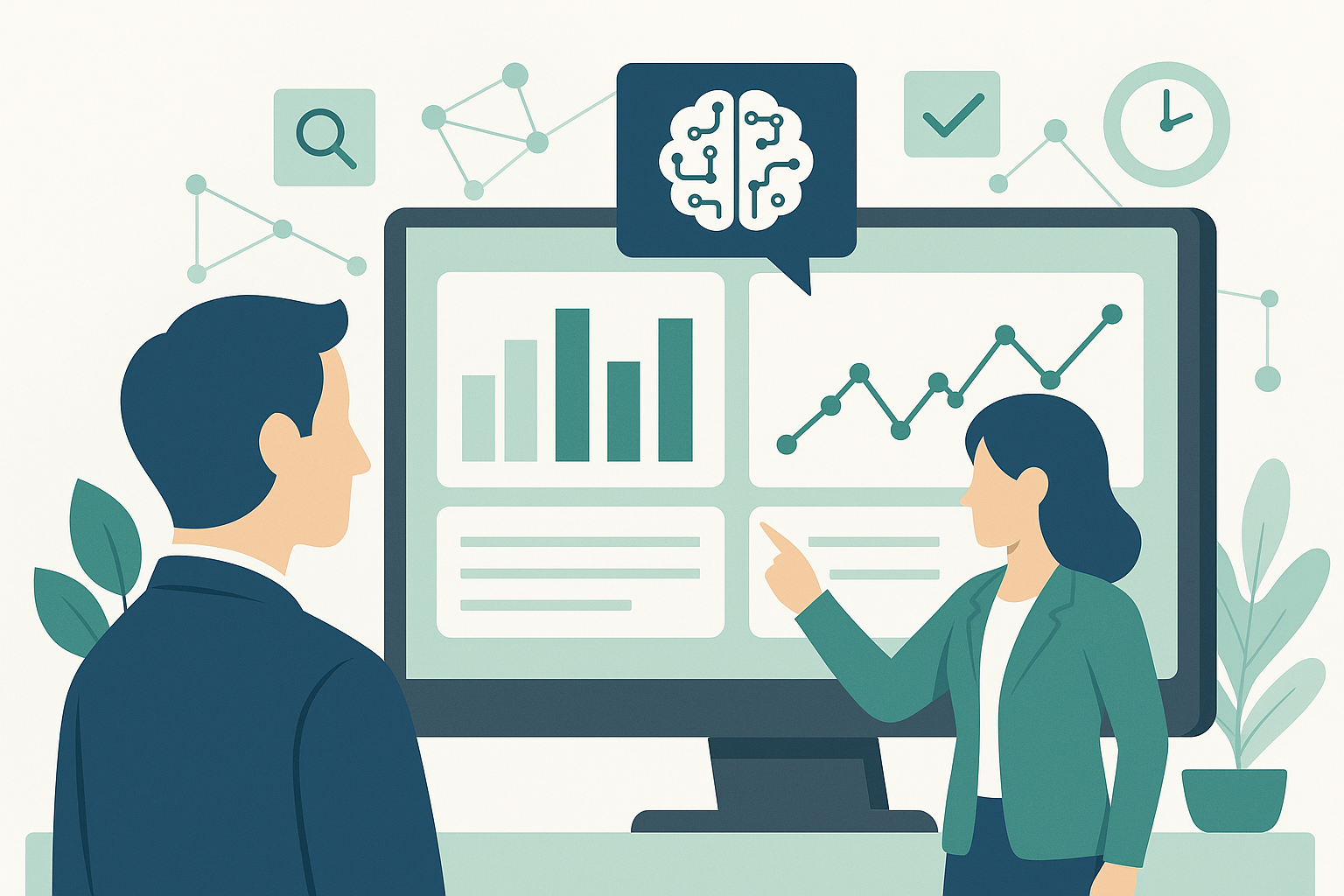
Analyste observant un tableau de bord IA prédisant les besoins achats
Published By
Olivier Audino
Tags
Sourcing

Procurement Needs Prediction: Anticipating Demand Through AI

Navigating Market Volatility with Strategic Anticipation

In an environment where market volatility, logistics bottlenecks, and rapid regulatory shifts dictate daily operations for procurement leaders, anticipation has become a vital strategic competency.

Yet, the vast majority of organizations remain trapped in a reactive mode—responding retroactively to stockouts, price surges, or unexpected supplier shortages.

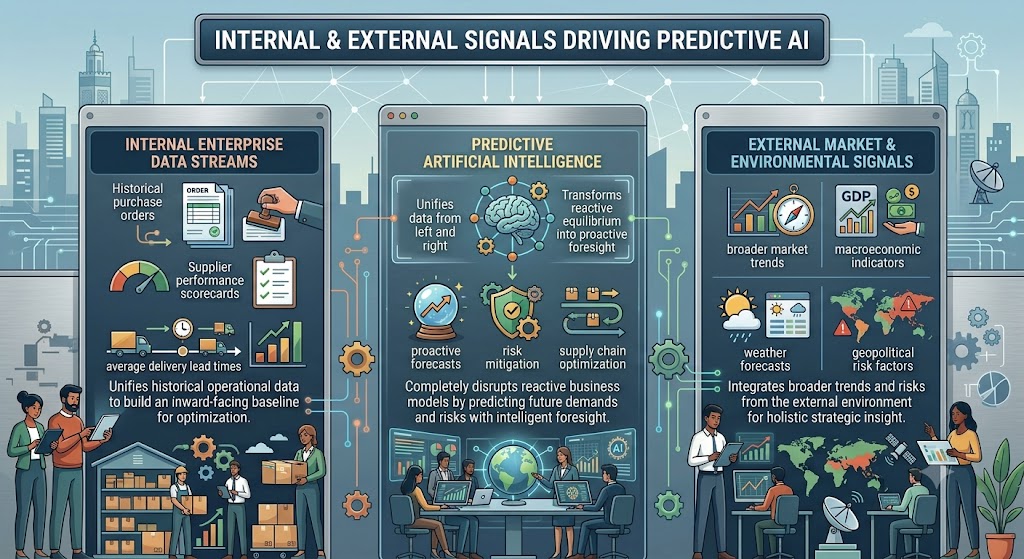
Internal & External Signals Driving Predictive AI

Predictive artificial intelligence completely disrupts this reactive equilibrium by unifying internal operational data with external market signals:

  • Internal Enterprise Data Streams – Historical purchase orders, supplier performance scorecards, and average delivery lead times.
  • External Market & Environmental Signals – Broader market trends, macroeconomic indicators, weather forecasts, and geopolitical risk factors.
By continuously processing and correlating these multidimensional variables, AI becomes capable of anticipating procurement needs well before they physically emerge on the business radar.

Conclusion: A Strategic Paradigm Shift with Buy Made Easy

Moving from Basic Purchasing to Proactive Demand Mastery

At Buy Made Easy, predictive demand forecasting represents a fundamental shift in operational philosophy.

By translating complex market and internal signals into actionable foresight, Buy Made Easy enables procurement leaders to move seamlessly from traditional, reactive purchasing management to total proactive control over enterprise demand.

Why Anticipation is Becoming Key in Procurement

The performance of a procurement department is no longer measured solely by price negotiation or immediate cost savings. In an environment where supply chains face growing fragility, anticipating needs has become a major competitive advantage. Artificial Intelligence is proving essential to shift operations from reactive troubleshooting to predictive demand management.

1. Volatility, Disruptions, and Cost: The Price of Unpreparedness

Recent global crises exposed the structural limits of traditional supply models. Organizations that failed to anticipate component shortages, freight spikes, or raw material fluctuations suffered severe consequences:

Production Delays: Manufacturing bottlenecks due to missing inputs.
Emergency Surcharges: Premium rush fees incurred to secure last-minute stock.
Eroded Supplier Relationships: Strained partnerships caused by reactive, high-pressure demands.

Financial Impact of Uncontrolled Demand

Internal analyses across major industrial groups reveal that up to 18% of unmanaged procurement expenditures stem directly from a lack of foresight. Preventing disruptions is far more cost-effective than correcting them after the fact.

2. Procurement Data as the Raw Material for Prediction

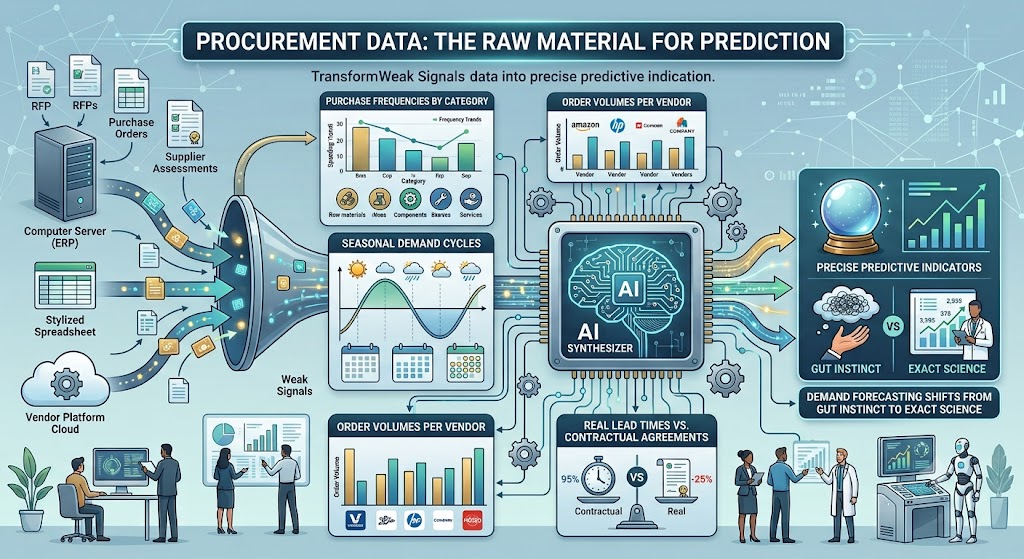
Every purchase order, RFP, and supplier assessment generates valuable data. Scatter across ERPs, spreadsheets, and vendor platforms, these data points contain critical weak signals:

• Purchase frequencies by category
• Seasonal demand cycles
• Order volumes per vendor
• Real lead times vs. contractual agreements

AI synthesizes these scattered streams into precise predictive indicators. Demand forecasting shifts from gut instinct to an exact science.

3. The Structural Bottlenecks of Traditional Tools

Limits of Legacy ERPs & Spreadsheets

  • Static Reporting – Legacy systems record past transactions but offer zero forward-looking foresight.
  • Inability to Cross Complex Variables – Spreadsheet models fail to correlate history, pricing, lead times, climate events, and currency shifts.
  • Partial Visibility & Delayed Decisions – Fragmented views leave procurement teams acting on outdated information.
  • Over-Reliance on Individual Instinct – Performance remains tied to personal buyer experience rather than scalable, augmented collective intelligence.

Conclusion: Shifting to Predictive Intelligence with AI

Contextualized, Forward-Looking Procurement

Artificial Intelligence fundamentally transforms this equation by delivering predictive, contextualized, and constantly evolving demand forecasts.

By converting raw transaction data into actionable foresight, forward-thinking procurement leaders eliminate emergency costs and secure long-term operational resilience.
How AI Transforms Procurement Needs Forecasting

Artificial intelligence goes far beyond automating repetitive tasks—it learns, predicts, and actively guides decision-making. In procurement, it serves as a predictive planning engine that anticipates internal and external requirements while factoring in market dynamics and supplier contexts.

1. Data Streams Mobilized for Precision Prediction

High-performing AI models in procurement rely on correlating rich internal and external datasets:

Internal Data Streams: Order history, supply seasonality, vendor lead times, and price variance metrics.
External Data Signals: Macroeconomic indicators, exchange rates, broader market trends, CSR ratings, weather forecasts, and geopolitical conditions.

Combined and weighted, these variables model future demand with a level of accuracy human analysis cannot achieve alone.

2. Core Technologies: Machine Learning & Trend Detection

Pattern Recognition Across Millions of Data Points

Predictive AI leverages machine learning algorithms to uncover hidden patterns across massive datasets, identifying:

  • Fluctuating Purchase Categories – Pinpointing categories highly sensitive to market shifts.
  • Recurring Ordering Behaviors – Mapping systemic purchasing cycles across departments.
  • High-Risk Supply Windows – Detecting upcoming periods vulnerable to overconsumption or inventory shortages.

3. Buy Made Easy: Platform Integration & Predictive AI Engine

At Buy Made Easy, forecasting requirements is an integrated core feature. The native AI engine analyzes consolidated procurement data, tracks emerging trends, and generates automated planning scenarios.

Procurement leaders gain clear, actionable visibility into:
• Forecasted order volumes by category
• Projected price shifts and market trends
• Optimized procurement recommendations

Conclusion: Turning Data into a Decision Advantage

From Transactional Purchasing to Predictive Strategy

Predictive AI empowers organizations to adjust sourcing strategies proactive before demand materializes, optimizing both purchasing volumes and total costs.

By embedding intelligent demand forecasting directly into core workflows, Buy Made Easy transforms raw procurement data into a measurable, strategic decision advantage.

Concrete Use Case: Anticipating Volumes to Optimize Inventory & Costs

Artificial Intelligence is no longer just an analytical tool—it is evolving into an active driver of proactive planning. When properly integrated into a procurement information system, AI anticipates demand, prevents inventory stockouts, and converts expenditures into measurable performance levers.

1. Case Study: An Industrial Manufacturer Forecasting Demand with AI

Consider an industrial manufacturing company that struggled with manual supply planning. Forecasts were calculated using basic monthly averages without accounting for real market fluctuations.

This legacy approach resulted in bloated inventory, exorbitant holding costs, and frequent stockouts on critical components.

The Solution: By integrating the Buy Made Easy platform, the company deployed a predictive AI model connected directly to its procurement, vendor, and production data streams.

Measurable ROI Achieved by Month 3

  • 92% Need Prediction Accuracy – High-precision forecasting across complex product lines.
  • –28% Reduction in Dormant Stock – Significantly lowering warehouse carrying expenses.
  • –35% Decrease in Emergency Orders – Eliminating unplanned, costly rush shipments.

2. Strategic Shift: From Reactive Control to Predictive Performance

By shifting from legacy reactive tracking to predictive AI forecasting, procurement teams unlock three key capabilities:

Consumption Cycle Alignment: Schedule replenishment based on true demand cycles rather than arbitrary calendar dates.
Dynamic Price & Volume Tuning: Adjust order volumes and contract terms against live market projections.
Financial Scenario Simulation: Model the budget impact of various sourcing strategies prior to commitment.

3. The Evolving Role of Procurement Teams

AI does not replace human domain expertise—it elevates it. Buyers evolve into augmented data pilots who:

• Interpret predictive signals generated by AI models.
• Adjust purchasing priorities in alignment with overarching enterprise strategy.
• Collaborate closely with supply chain leads to guarantee smooth operational execution.

Buy Made Easy accompanies this transition through tailored upskilling, empowering buyers to become key drivers of intelligent demand planning.

Maturity, Challenges & Implementation Best Practices

Adopting AI prediction in procurement goes beyond simple software deployment. It requires a fundamental shift in culture and data governance, demanding a structured, phased approach.

Evaluating Data & AI Readiness in Procurement

Prior to implementation, procurement leadership must evaluate data readiness through three core diagnostic questions:

  • Data Quality & Centralization: Are procurement data streams centralized, cleansed, and fully usable?
  • Operational Traceability: Are vendor profiles and purchase orders tracked consistently across departments?
  • Predictive Analytics Readiness: Do current KPIs allow machine learning algorithms to identify subtle demand trends?

Conclusion: Building a Solid Foundation for Intelligent Forecasting

Scaling Value Through Structured AI Adoption

Conducting a initial data maturity diagnostic provides the necessary foundation for machine learning algorithms and ensures high-value use cases are prioritized first.

By pairing robust data governance with the Buy Made Easy predictive engine, organizations transition smoothly from reactive troubleshooting to intelligent, cost-effective demand mastery.

Governance & Skills: The Strategic Buyer + Data Scientist Alliance

Accurately predicting procurement requirements relies on seamless collaboration between business domain experts and data engineers.

While buyers master economic logic, operational constraints, and market dynamics, data scientists bring algorithm calibration, machine learning architecture, and data pipelines. Together, they translate AI-generated signals into concrete operational decisions: exact order volumes, lead time adjustments, and proactive supplier mobilization.
At Buy Made Easy, this synergy is fundamental: predictive AI models are co-engineered with and for procurement teams to deliver practical, highly actionable forecasts designed for real-world execution.

1. Phased Deployment Strategy for Predictive AI Projects

3 Steps to Predictive AI Maturity

A successful AI deployment unfolds across three structured phases to ensure cumulative, measurable gains:

  • Pilot Phase – Focuses on a restricted scope (a single purchasing category or manufacturing site) to test and validate model precision.
  • Extension Phase – Progressively expands predictive modeling across additional spend categories and business units.
  • Industrialization Phase – Achieves complete end-to-end forecasting automation with seamless ERP/AI data synchronization.

2. Safeguarding Data Quality & Mitigating Algorithmic Bias

Predictive AI models are exceptionally powerful, but their outputs are strictly bound to data quality and representativeness. Incomplete, outdated, or skewed data streams can produce erroneous—and potentially costly—demand predictions.

To eliminate these risks, Buy Made Easy embeds automated verification algorithms, data cleansing pipelines, and dynamic weighting mechanisms to ensure complete model reliability, transparency, and fairness.

Conclusion: Predicting Accurately, Fairly & Scalably

Building a Trusted, High-Precision Forecasting Model

True demand prediction in procurement is not merely about generating forecasts—it is about generating reliable, unbiased, and fair forecasts that buyers can trust implicitly.

By combining human domain expertise with data science rigor and phased project execution, Buy Made Easy transforms raw demand data into an essential driver of long-term operational excellence.
Conclusion: The End of Reactive Procurement Management

The era of purely reactive procurement management is officially coming to a close.

The market-leading procurement organizations of tomorrow will be those capable of anticipating demand long before it manifests, leveraging the full analytical power of enterprise data and artificial intelligence.

Strategic Impact of Predictive AI in Sourcing

Through predictive AI models, buyers no longer spend time analyzing historical transactions—they actively model future demand scenarios:

  • Supply Risk Reduction – Eliminating stockouts, inventory bottlenecks, and logistics disruptions.
  • Cost & Inventory Optimization – Lowering carrying expenses while tuning buffer stock thresholds.
  • Enhanced Supplier Relationships – Building collaborative, long-term partnerships driven by reliable demand visibility.
  • Value Chain Performance – Delivering measurable operational efficiency across all procurement categories.
With Buy Made Easy, strategic demand prediction becomes accessible and pragmatic. Our platform pairs sophisticated predictive algorithms with an intuitive user experience, enabling procurement teams to transition smoothly from reactive troubleshooting to proactive demand mastery—without technical complexity.

Anticipate Better. Decide Faster. Perform Sustainably.

Transform Your Data into an Intelligent Forecasting Engine

Ready to move away from reactive purchasing and empower your Procurement teams with real-time predictive insights?

Discover how Buy Made Easy transforms raw procurement metrics into actionable, intelligent demand forecasting.

Frequently Asked Questions (FAQ)

What is Procurement Needs Prediction?

Procurement needs prediction leverages historical and contextual data streams to accurately anticipate future purchasing volumes, delivery lead times, and sourcing costs.

Powered by artificial intelligence, this approach transforms procurement operations from a reactive posture to a proactive, predictive model—enabling superior demand planning and eliminating operational surprises.

What is the Difference Between Traditional Forecasting and AI Demand Prediction?

Traditional forecasting methods rely heavily on static averages and human estimates, which are inherently constrained by the volume and complexity of enterprise variables.

In contrast, AI continuously cross-analyzes thousands of real-time data points (pricing dynamics, order volumes, supplier lead times, market fluctuations, climate trends) to build dynamic, evolving models that anticipate disruptions and recommend concrete purchasing decisions.

Which Data Streams Are Required for Effective AI Demand Prediction?

Internal operational data—such as purchase order histories, vendor profiles, lead time logs, and budget allocations—forms the foundational baseline.

However, high-precision AI models also integrate external market signals: macroeconomic indicators, currency exchange rates, weather forecasts, geopolitical conditions, and ESG risk metrics. Combining internal and external sources yields highly reliable, actionable forecasts.

How Do You Measure the ROI and Performance of AI Procurement Forecasting?

Core Key Performance Indicators (KPIs)

  • Reduction in Supply Stockouts: Eliminating unexpected component and inventory shortages across production lines.
  • Lower Dormant Inventory: Minimizing warehouse carrying costs through optimized, automated safety stock levels.
  • Fewer Emergency Rush Orders: Decreasing unbudgeted, last-minute procurement surcharges and expedited freight fees.
  • Higher Demand Forecast Precision: Raising overall prediction accuracy across complex purchasing categories.

A high-performing AI model also boosts internal stakeholder satisfaction and strengthens vendor partnerships through predictable, stable order schedules.

Conclusion: Why Choose Buy Made Easy for Demand Forecasting?

Transforming Procurement Data into Strategic Action

Buy Made Easy incorporates a native artificial intelligence engine purpose-built for procurement operations, capable of seamlessly correlating your internal transaction metrics, supplier scorecards, and market data.

Our intuitive platform delivers visual, predictive recommendations without requiring complex technical skills—empowering your teams to anticipate demand, reduce risk, and execute smarter decisions faster.

Line
Featured Post

Popular posts