Olivier Audino
Webinar
Tail Spend: The Overlooked Lever to Free Up Your Buyers' Time
Tuesday March 31 at 2:00 PM

Tail Spend: The Overlooked Lever to Free Up Your Buyers' Time
Tuesday March 31 at 2:00 PM
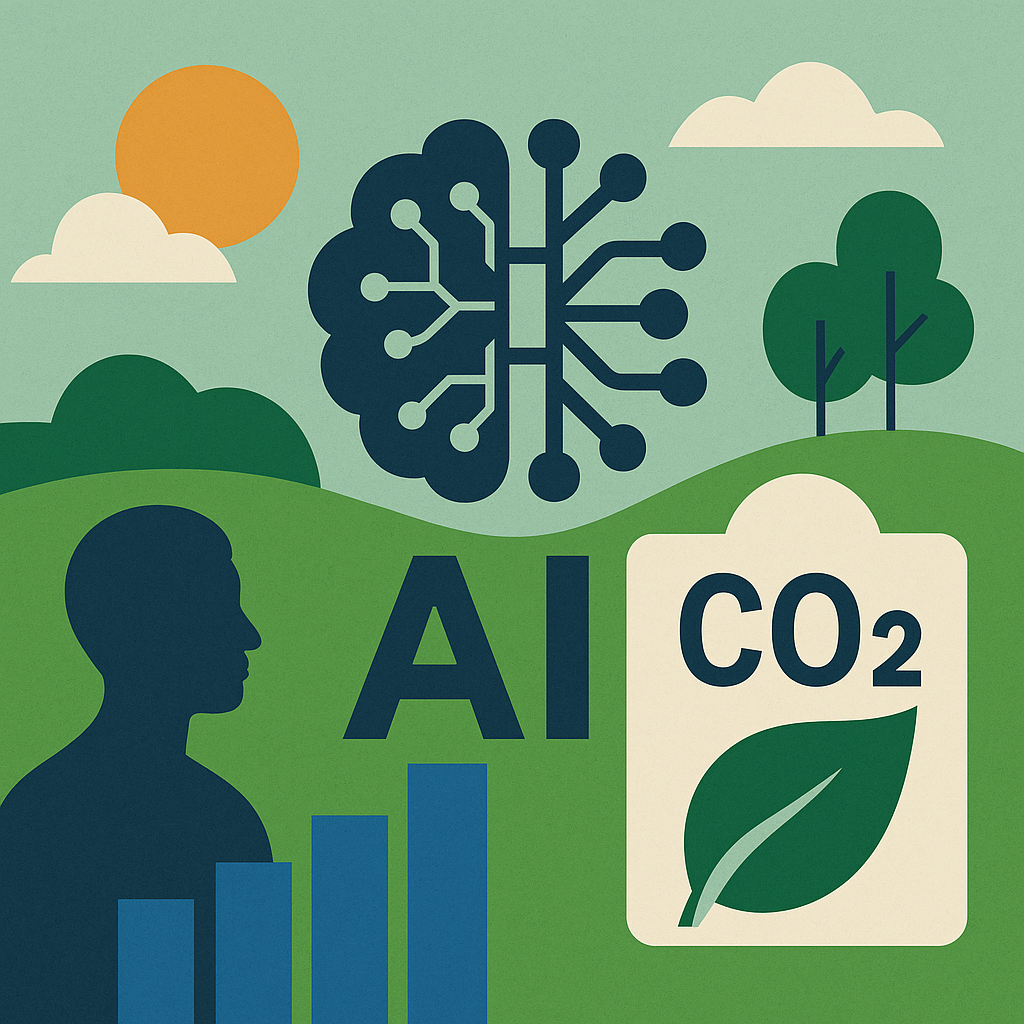

Carbon neutrality is no longer an option: it is a strategic, regulatory, and competitive requirement. However, while companies currently measure their direct emissions (buildings, energy, travel), a major blind spot remains: Procurement, which accounts for an average of 70% to 80% of the total carbon footprint (Scope 3).
The challenge? The data required for this calculation is scattered across suppliers, invoices, ERPs, and accounting systems. The result is reporting that is frequently incomplete, approximate, and difficult to audit.
Artificial intelligence changes this equation. It automates the collection, calculation, and analysis of carbon data linked to Procurement, while guaranteeing unprecedented precision and traceability.
“AI does not replace environmental expertise: it amplifies it, making carbon performance measurable, actionable, and steerable on a daily basis.”
At Buy Made Easy, this vision takes shape through a data-driven approach that connects procurement data, emission factors, and ESG performance within an integrated and auditable carbon platform.
Artificial intelligence makes it possible to evaluate and manage the carbon footprint of Procurement by automating the collection and analysis of Scope 3 data. Buy Made Easy transforms Procurement into a concrete lever for measurable and sustainable decarbonization.
Carbon footprint assessment is no longer an isolated reporting exercise: today, it conditions ESG credibility, access to sustainable financing, and a company's ability to project itself into the low-carbon economy. And it is precisely within the procurement scope that the battle for decarbonization is fought.
Since the implementation of the CSRD directive, companies must now publish verifiable environmental indicators, including indirect emissions (Scope 3). These emissions, originating from production, transport, or purchased services, often represent more than 75% of a company's total carbon footprint. Beyond regulation, pressure also comes from:
The procurement carbon footprint is becoming a governance indicator as much as a tool for competitiveness.
The majority of companies still evaluate their carbon footprint via supplier questionnaires or Excel spreadsheets, without real automation. While commendable, these methods have several structural limitations:
The result is declarative reporting that is often far removed from field reality, difficult to audit, and of little use for decision-making. As long as measurement remains manual, the carbon strategy remains theoretical.
Procurement departments are now becoming the conductors of decarbonization. They must:
However, this mission requires a tool capable of:
This is exactly what artificial intelligence enables: transforming carbon measurement into environmental steering.
Buy Made Easy makes procurement data a concrete lever for decarbonization. Thanks to AI, every expense becomes a source of environmental information:
“At Buy Made Easy, sustainability is not estimated; it is calculated, verified, and steered.”
Procurement accounts for up to 80% of a company's carbon emissions. Buy Made Easy uses AI to ensure the reliability of Scope 3 measurement and transform decarbonization into strategic procurement steering.
Measuring the procurement carbon footprint is one of the most complex challenges of the sustainable transition: data is inherently heterogeneous, emission factors vary significantly by supplier, and operational scopes are constantly evolving. Artificial intelligence resolves these obstacles by transforming carbon collection, calculation, and analysis into a continuous, automated workflow.
The first critical milestone toward reliable carbon measurement is data integrity, and AI excels at recognizing, categorizing, and integrating disparate procurement flows. Buy Made Easy algorithms analyze the following streams in real time:
This information is automatically classified by procurement category, product or service type, and geographical zone. Consequently, each commercial transaction becomes an integrated carbon measurement point. AI reveals what traditional spreadsheets used to hide: the true environmental impact of every single purchase.
Once procurement data is consolidated, AI engines dynamically map the appropriate emission factors based on purchase type, transport mode, or country of origin. This dynamic approach makes it possible to:
The result is a procurement carbon balance sheet updated continuously, in strict compliance with international frameworks like ISO 14064 and the GHG Protocol. Carbon data ceases to be a static annual snapshot; it becomes a living, reliable, and verifiable stream of intelligence.
AI goes beyond mere measurement: it actively guides strategic decisions. Through predictive analytics, Buy Made Easy isolates the most carbon-intensive categories and simulates optimization scenarios, including:
The AI framework calculates the potential environmental impact of a purchasing shift before the transaction is executed. Measuring with AI means anticipating risks long before emitting carbon.
All environmental insights are accessible directly through the Buy Made Easy Carbon Data dashboard, featuring:
This transparency allows Procurement, Sustainability, and Finance departments to speak a single carbon language based entirely on factual, auditable data. AI connects metrics to enterprise strategy: every avoided ton becomes a core indicator of global corporate performance.
Buy Made Easy transforms procurement data into an environmental carbon compass for the entire enterprise.
Artificial intelligence automates the collection and calculation of the procurement carbon footprint. Buy Made Easy ensures the operational reliability of Scope 3 emissions data and identifies concrete CO2 reduction levers at every stage of the procurement lifecycle.
Measuring the carbon footprint is no longer enough: it is essential to act on data, transforming it into concrete decisions and sustainable performance levers. This is the role of Buy Made Easy, which connects artificial intelligence, procurement data, and ESG strategy within an integrated carbon steering architecture.
The Buy Made Easy ecosystem relies on a data architecture capable of:
Each purchase becomes an environmental measurement unit, traceable and auditable at any time. The procurement carbon footprint ceases to be an abstract indicator: it becomes actionable business data.
A large retail group collaborated with more than 4,000 suppliers across 12 countries. Each entity managed its environmental data in isolation, making the Scope 3 calculation incomplete and non-certifiable.
After integrating Buy Made Easy:
Results:
In 6 months, carbon data transitioned from basic reporting to strategic steering.
| Key Indicator | Before Buy Made Easy | After Integrated BME AI | Gain |
|---|---|---|---|
| Procurement Scope 3 Coverage | 60% | 97% | +37 pts |
| Consolidation Time | 4 weeks | 3 days | −89% |
| Carbon Reporting Reliability | Average | Certified | +41% |
| Indirect CO₂ Reduction (Year 1) | — | −14% | Measurable |
These results prove that centralized and automated carbon data becomes a strategic advantage for procurement departments. Buy Made Easy does not just calculate emissions: it transforms them into informed decisions.
Thanks to its AI platform, Buy Made Easy creates an operational link between Procurement, ESG, and Finance:
This collaborative governance ensures consistency between economic performance objectives and actual decarbonization. Carbon data becomes a common language between decision-makers and operational teams.
“At Buy Made Easy, we believe that responsible purchasing starts with reliable data. Our AI does not just measure: it guides companies toward purchasing decisions aligned with carbon neutrality.”
Buy Made Easy connects procurement data, ESG, and AI to measure and steer the carbon footprint. Result: reliable Scope 3 reporting at 97% coverage, measurable CO₂ reduction, and shared carbon governance.
Measuring the carbon footprint is only a starting point. The challenge for procurement departments is now to move from data to action, and to transform ESG indicators into real-impact decisions. Thanks to artificial intelligence, this transition toward low-carbon procurement becomes measurable, steerable, and profitable.
AI makes it possible to integrate carbon criteria directly into the heart of the decision-making process:
Buy Made Easy fuels these decisions with updated, verified, and comparable data, ensuring that every purchasing act contributes concretely to the Net Zero trajectory.
Artificial intelligence makes sustainability operational and performance measurable.
Procurement decarbonization cannot succeed without collective involvement. Buy Made Easy supports its clients in team upskilling:
A "carbon-intelligent" company is one where every buyer understands the environmental impact of their choices.
Scope 3 automation is not just of regulatory interest. It opens the way to a new, more responsible, and more efficient procurement performance:
Companies that master their procurement carbon footprint increase their attractiveness and reduce their operational risks.
Carbon becomes an indicator of competitiveness, not just compliance.
Take action today. Request an AI carbon audit with a Buy Made Easy expert to:
[Evaluate my procurement carbon footprint with Buy Made Easy]
Because procurement represents the majority of indirect emissions (Scope 3) and constitutes a company's primary operational lever for overall decarbonization.
It automates the collection and classification of procurement data streams, applies the correct emission factors, and continuously ensures the validation and reliability of all calculations.
An average of 70% to 80%, depending heavily on the specific industry sector.
Through its interconnected AI platform, BME centralizes procurement metrics and environmental data to produce fully certifiable and auditable carbon reporting.
Supplier optimization, raw material substitution, logistical nearshoring, and seamlessly integrating carbon weighting criteria directly into tenders and RFPs.
AI transforms carbon measurement into an active strategy. Buy Made Easy helps companies steer their procurement towards Net Zero through reliable data inputs, predictive scenarios, and a shared carbon governance framework.


Get in touch with our experts, who'll be glad to take you behind the scenes of our procurement outsourcing systems — proven for over 10 years.
.svg)