
Olivier Audino
Webinar
Tail Spend: The Overlooked Lever to Free Up Your Buyers' Time
Tuesday March 31 at 2:00 PM

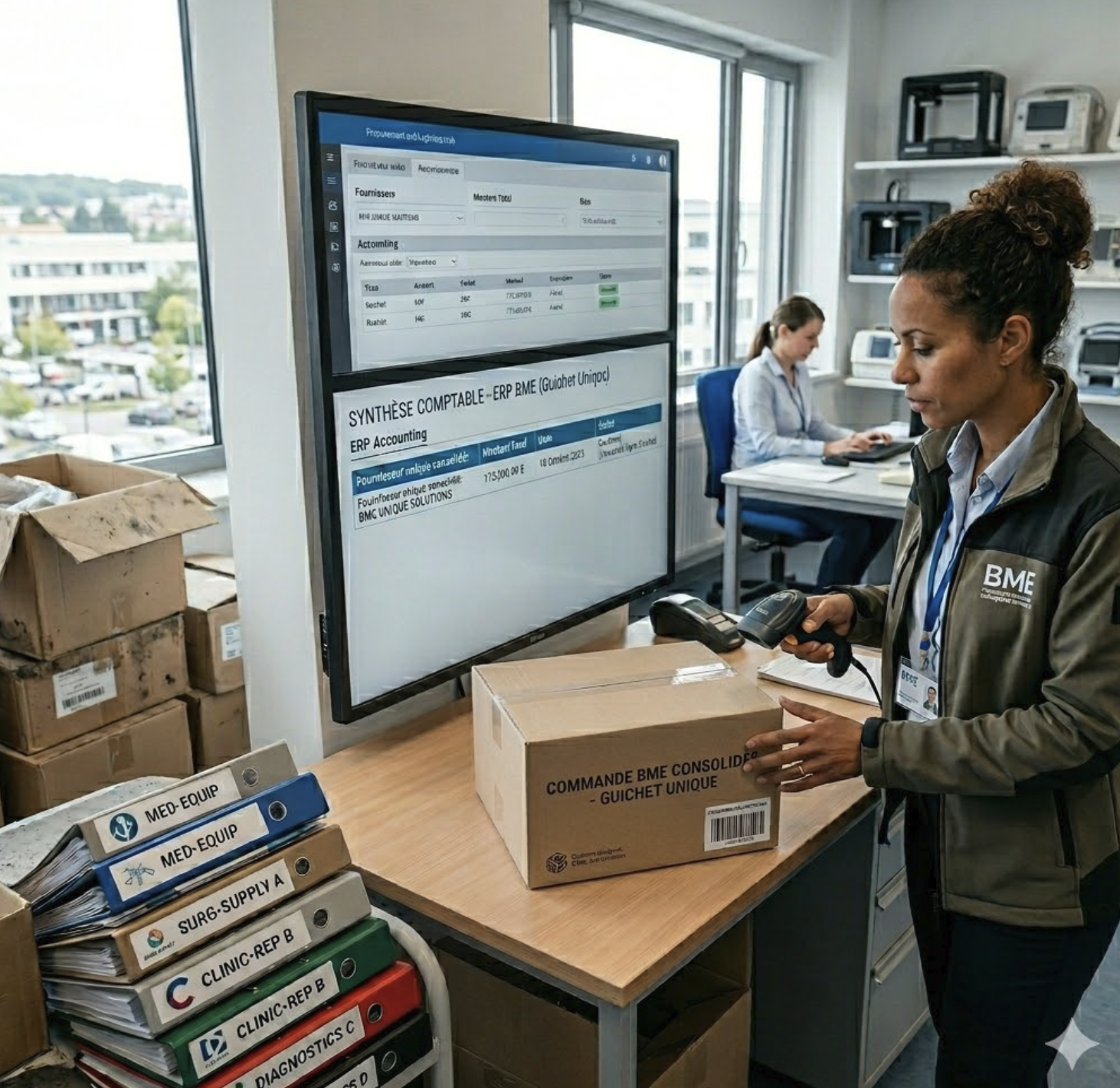

The paradox of modern procurement engineering lies in its own power. Procurement departments deploy massive information systems to steer their strategic contracts. Yet, when faced with a micro-expenditure, this same infrastructure turns into an agent of operational paralysis.
The goal of rationalizing the Procure-to-Pay (P2P) process daily clashes with the reality of tail spend. Managing thousands of occasional service providers within a tool designed for multi-year partnerships is a systemic error. The challenge for a CPO is no longer to optimize this dispersion, but to consolidate it technically.
The implementation of a supplier procurement hub is the technological lever allowing you to transition from an organic, resource-draining dispersion to centralized management driven via a single pivot point.
Stop letting the dispersion of your Master Data slow down your overall performance.
Evaluate the hidden cost of your supplier dispersionWhile EBITDA loss is easy to calculate, legal exposure on Class C procurement is often ignored until a decisive audit occurs.
Sapin II regulations are strictly blind to invoiced amounts. The requirement for probity does not weaken based on the size of the partner.
Settling for auditing your main panel (the Top 20) is an obsolete strategy given the methods used by the French Anti-Corruption Agency (AFA).
The uninterrupted growth of a supplier database is never a performance indicator for a large group. It is the symptom of a P2P process that lacks an upstream filter to manage spot demand.
Tail spend management (or Class C management) represents a marginal financial volume, often less than 5% of overall company spend. However, this low transactional volume disproportionately captures up to 80% of your teams' mental and administrative load.
Because every spot need forces the opening of a new record in the ERP. This mechanism directly pollutes your supplier Master Data. On average, 70% of accounts present in a large group's database are disposable third parties, having been billed only once.
This saturation creates heavy technical consequences: system slowdowns, complex compliance audits, and a mathematical increase in the risk of fraud on dormant bank data.
A Lead Buyer is an expert trained for value creation. When an internal client (marketing project manager, maintenance manager) submits an urgent request for an 800 € service, the buyer faces an operational deadlock.
Facing their portfolio, the Lead Buyer will systematically prioritize their 2 million euro tender. The small request stagnates in the workflow. The classic onboarding process (about 15 days to collect registration, tax ID, and bank details) blocks operations on the ground, which then perceives Procurement as an activity blocker.
To bypass this bottleneck, the internal requester refuses to wait and pays for the service with their corporate credit card. This is the birth of maverick spend, a capital leak that destroys your ability to steer financial performance.
Discover how to regain control over these invisible expenses and structure your P2P process.
Watch our webinar: Stop spot purchasing and master your maverick spendFor a finance department, managing the long tail is not simply a sourcing problem, it is a profitability anomaly. The absence of Class C procurement outsourcing generates a silent capital leak, often hidden under general operating expenses.
The cost of processing a supplier invoice does not depend on its face value. Whether the invoice is for 50,000 € or 300 €, the verification steps in the ERP remain strictly identical (third-party creation, KYC compliance, PO/invoice matching, bank validation).
According to industry analysis from firms like McKinsey, this total cost is approximately 150 € per transaction internally, mobilizing nearly 3 hours of cumulative work across procurement, legal, and accounting departments.
Let us apply this mathematical reality to an average industrial group that onboards 5,000 occasional suppliers per year:
This figure is a direct loss. This is 750,000 € burned solely to run the administrative machinery, without generating the slightest saving on the initial purchase price.
Beyond the direct financial impact, it is the misallocation of resources that penalizes the group. These 750,000 € correspond to the loaded salary of several highly qualified FTEs (Full Time Equivalents).
Because forcing an expert buyer to hunt for a missing registration certificate or bank details is financing under-productivity. By consolidating this flow via a supplier procurement hub, these FTEs are immediately recovered and reallocated to the negotiation of strategic panels.
Objectify this loss with our transactional charge calculator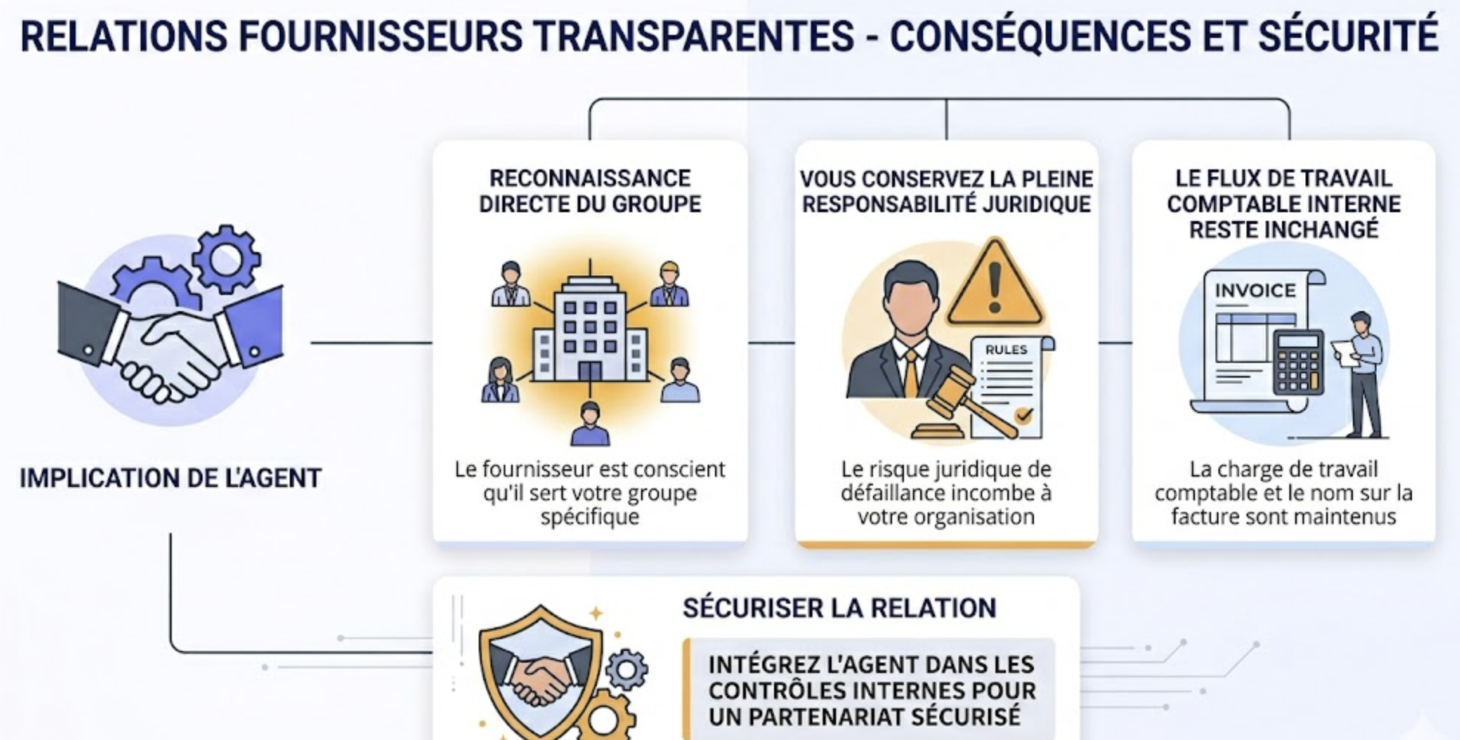
While financial destruction is mathematically measurable, legal risk is often the blind spot of executive leadership. Legislation makes no distinction based on volume: the integrity expected of a one million euro supplier applies in the same way to a craftsman billing 500 €.
During an audit by the French Anti-Corruption Agency (AFA), sampling is not limited to your Top 20% of suppliers. It is precisely within the unaudited mass of spot purchases that risks of conflicts of interest or undeclared labor hide.
It is physically and technically impossible for a procurement department to keep the legal files of 8,000 occasional suppliers up to date. Sapin II procurement compliance then becomes a theoretical concept, leaving the CPO exposed to fines reaching 5% of turnover.
To neutralize this systemic risk, the procurement hub replaces human effort with an automated infrastructure. BME deploys an active Compliance Shield across your entire outsourced transactional perimeter.
We manage the initial collection and continuous update of business registration certificates (less than 3 months old) and social compliance certificates. You can audit your current protection level on the long tail via our legal exposure stress test below:
P2P legal exposure stress testClass C outsourcing is not just a service offering, but a restructuring of your Procure to Pay (P2P) architecture. For a procurement department to close 8,000 inactive accounts, it requires a technological pivot capable of absorbing this volume without degrading the service level.
The mechanics are clinically efficient: instead of multiplying records in your procurement ERP, you reference only one entity (BME). By becoming your single creditor, we interpose ourselves between your systems and the myriad of local providers.
When a requester needs a translation agency or an occasional maintenance part, the buyer validates the transaction under the BME vendor code. The Master Data is instantly purged of "disposable" third parties, dividing the risk of fake supplier fraud and IT maintenance costs by ten.
Processing micro-invoices often raises the issue of cash flow for SMEs. BME deploys a financial portage system: we advance the funds and pay the provider on demand (or via deposit), while you retain your usual supplier payment terms (e.g., 60 days).
This payment is conditioned by our compliance algorithm. Within the framework of supplier risk management, BME verifies legal obligations in real time. If a registration certificate is expired or a social compliance document is missing, the system applies strict preventive blocking. This locking guarantees total security against the requirements of the French Anti-Corruption Agency (AFA).
To avoid resistance to change, the user experience must be native. Thanks to the Seamless Connection via PunchOut or API integration, your requester orders from their usual interface (Coupa, Ariba, SAP). The flow is redirected in the background to BME without any double entry.
The finance department stops chasing hundreds of missing bank details. At the end of the month, the client receives a Consolidated Invoice: a single invoicing line, perfectly broken down by analytical code, ready to be integrated directly into accounts payable.
Download our white paper to optimize your Class C procurementTheory regarding P2P consolidation must be supported by real data. Let us analyze the impact of the Supplier Procurement Hub within a major industrial group (CAC40) before and after BME intervention.
The starting point: the group's P2P architecture counted 12,000 active supplier records. Of this total, an audit revealed that 8,000 accounts belonged to Class C and had recorded only a single transaction in 18 months.
Every year, the group opened an average of 4,000 new occasional accounts to respond to operational field urgencies (maintenance, flash marketing, non-production purchases).
The cost of processing a supplier invoice does not depend on its face value. Whether the invoice is for 50,000 € or 300 €, the verification steps in the ERP remain strictly identical (third-party creation, KYC compliance, PO/invoice matching, bank validation).
According to industry analysis from firms like McKinsey, this total cost amounts to approximately 150 € per transaction internally, mobilizing nearly 3 hours of cumulative work across procurement, legal, and accounting departments.
Let us apply this mathematical reality to an average industrial group that onboards 5,000 occasional suppliers per year:
This figure is a direct loss. This is 750,000 € burned solely to run the administrative machinery, without generating the slightest saving on the initial purchase price.
Beyond the direct financial impact, it is the misallocation of resources that penalizes the group. These 750,000 € correspond to the loaded salary of several highly qualified FTEs (Full Time Equivalents).
Because forcing an expert buyer to hunt for a missing registration certificate or bank details is financing under-productivity. By consolidating this flow via a supplier procurement hub, these FTEs are immediately recovered and reallocated to the negotiation of strategic panels.
Objectify this loss with our transactional calculatorThe French Anti-Corruption Agency (AFA) demands total vigilance regardless of purchase volume. Managing 8,000 Sapin II files manually is impossible. BME deploys an automated Compliance Shield. We collect registration certificates and tax compliance documentation.
But there is a detail
Our system applies algorithmic preventive blocking. If a local artisan's legal document is expired, the transaction is blocked before the payment is issued. You thus delegate the entire criminal risk linked to the long tail.
Absolutely not, it is the opposite effect. BME acts as a cash flow shock absorber via its financial portage. We pay small providers on demand or via deposit, securing their financial health.
Why
Because your processes often require payment terms of 60 days, which are unsuitable for small businesses. The procurement hub absorbs this friction: the provider is paid immediately by BME, and your group settles the single Consolidated Invoice monthly to BME according to your own schedules.
No. The engineering relies on Seamless Connection. BME interfaces with your system (SAP, Oracle, Coupa) via a PunchOut integration. Your teams continue to order in their usual environment. It is in the background that thousands of accounts are archived in favor of the BME entity.
To identify the current weaknesses of your ERP facing Class C spend, take action:
Run our P2P compliance stress test


.svg)