Olivier Audino
Webinar
Comment 3 leaders de l'Auto ont fait économiser +1000 heures à leurs équipes Achats
Jeudi 02 Octobre à 11h00


Managing class C purchases is a significant challenge for many companies. High volumes, fragmented requests, and multiple suppliers make cost control and process standardization difficult. Adopting a ERP solution allows companies to centralize information, automate processes, and improve operational monitoring, ensuring greater efficiency and reduced uncontrolled spending.
Understanding the role of an ERP in managing class C purchases means analyzing how this tool can optimize workflows, improve visibility, and enable more reliable decision-making. Let’s explore how an integrated system can radically enhance purchasing performance.
An ERP solution is a centralized system that integrates essential company processes: purchasing, finance, inventory, suppliers, accounting, and operations. By unifying these functions in a single platform, the ERP eliminates information silos that complicate the management of class C purchases. This unification allows teams to work with consistent, real-time data, improving decision-making accuracy.
Modern ERPs include modules for orders, receipts, invoicing, and supplier tracking. These features facilitate handling the high volumes typical of class C purchases. This data consolidation aligns with practices outlined in la structuration des achats, highlighting the importance of having a single source of truth.
Companies looking to improve the reliability of their information system can also refer to internationally recognized standards such as ISO 9001 quality management. The ERP thus becomes a key element to ensure operational consistency and internal process compliance.
Class C purchases generate a high volume of requests distributed across multiple suppliers. Without an ERP solution, each department uses different tools, leading to data entry errors, lack of visibility, and difficulties in controlling financial commitments. This fragmentation results in a loss of control and increases operational risks.
The absence of a centralized system also complicates supplier tracking, as information is dispersed across multiple files and platforms. This lack of consistency directly affects decision-making quality. Similar situations are described in the practices outlined in la gestion structurée des fournisseurs, where data dispersion undermines overall performance.
In addition to efficiency loss, manual management significantly increases non-compliance risks. International organizations such as the OECD emphasize the importance of reliable systems to ensure integrity and internal control in purchasing processes. Without an ERP, achieving adequate traceability and preventing procedural deviations becomes difficult.
When purchasing processes are managed manually, each department develops its own methods, separate Excel files, and inconsistent approval paths. This lack of standardization generates data entry errors, duplicate orders, and limited visibility for class C purchases. Without an ERP solution, it is difficult to obtain a reliable overview to anticipate needs and maintain control over expenses.
Fragmented tools also create inconsistencies between requests, receipts, and invoices. Teams must spend additional time correcting information or chasing suppliers. Similar scenarios are illustrated in practices described in la dematerialisation des factures, highlighting the importance of a centralized system to reduce operational errors.
Beyond efficiency losses, manual management increases compliance risks. European institutions, as described in the page on corporate governance, emphasize the importance of controlled and traceable processes. An ERP ensures continuous oversight, limiting information dispersion and procedural deviations.
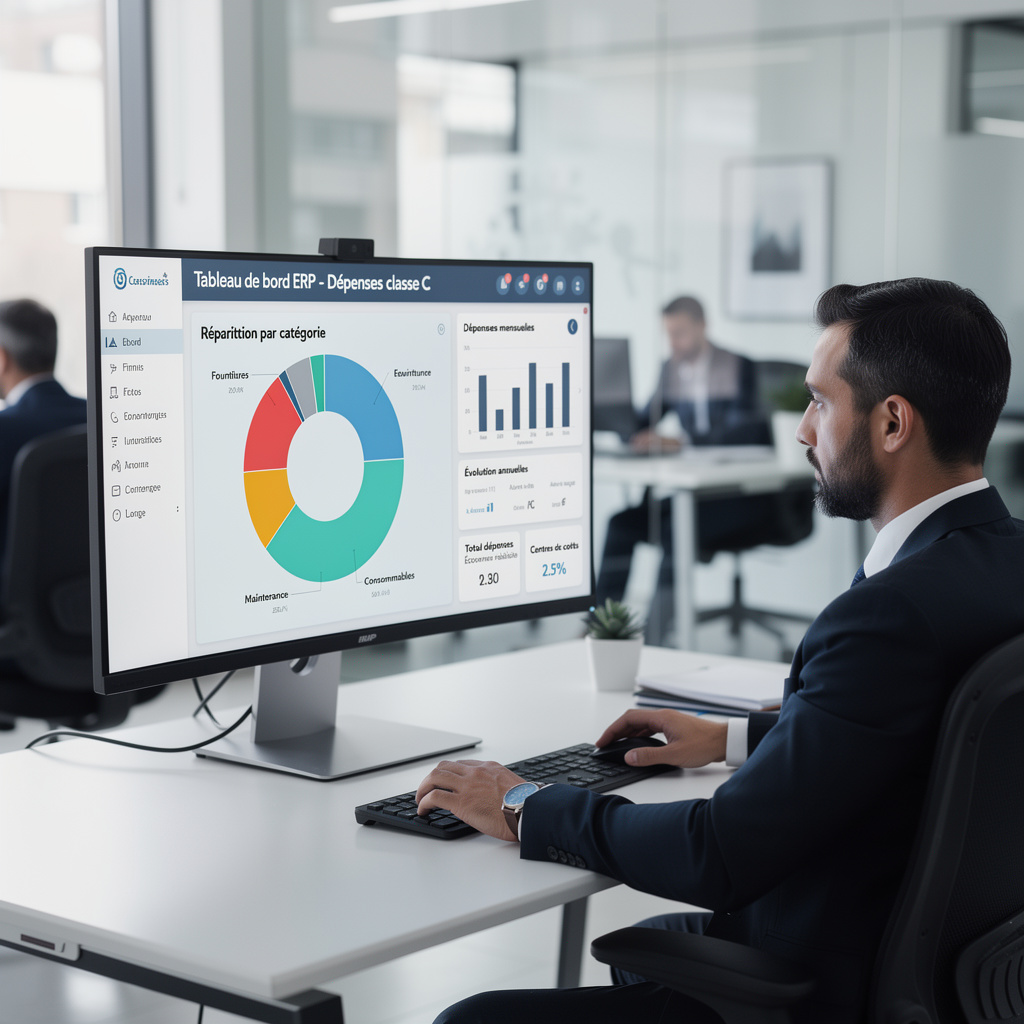
The main advantage of an ERP solution is its ability to centralize all information related to suppliers, orders, and contract conditions within a single system. This centralization immediately reduces the dispersion typical of class C purchases, where each department might use different files or procedures. By unifying this data, companies eliminate duplicates, improve information quality, and accelerate operational execution.
Centralization also allows better supplier categorization, simplifying expense consolidation and risk monitoring. This organizational logic aligns with practices described in la centralisation des achats pour industries, where the goal is to ensure decision-making consistency and reduce departmental discrepancies.
To support this approach, international organizations such as the International Organization for Standardization (ISO) recommend structured systems that enhance operational control. An ERP thus becomes a central tool for achieving more reliable and predictable management of non-strategic purchases.
One of the immediate benefits of an ERP solution is the automation of approval flows. In class C purchases, many companies still rely on manual processes or emails, which lengthen processing times and increase the risk of errors. The ERP ensures that each request follows a consistent path, compliant with internal rules and free from discretionary variations.
Automating approvals also reduces compliance risks, especially when multiple departments are involved in the approval chain. The ERP workflow checks data consistency before validation, avoiding common errors. This approach aligns with practices described in l’automatisation des demandes d’achats, which aim to streamline operations while increasing control.
ERP workflow element
Benefit for class C purchases
Authorization thresholds
Reduction of budget overruns
Approval automation
Shorter processing times
Complete traceability
Enhanced internal control
International standards such as ISO for IT governance emphasize the importance of automated tools to ensure reliability and security in processes. Adopting an ERP reduces manual errors and improves traceability at every stage of the purchasing cycle.
One of the main strengths of an ERP solution is its ability to enforce a common structure across teams. In class C purchases, where requests are numerous and varied, process standardization significantly reduces departmental discrepancies. Each request follows the same path, budget rules, and checks, eliminating ad hoc decisions and non-compliant purchases.
Standardization also helps reduce hidden costs. An ERP allows applying compliance rules, predefined budgets, and validated authorizations. This approach aligns with practices illustrated in standardization of purchases, which aim to improve consistency and expense control.
International bodies such as the OECD highlight the importance of uniform processes to prevent financial deviations. ERP becomes a central tool to ensure consistent rule enforcement across the company, reducing variances and the risk of budget overruns.
An ERP solution strengthens financial control by providing full visibility over commitments and actual expenses. In class C purchases, discrepancies between orders, receipts, and invoices are common when processes are not coordinated. The ERP automatically synchronizes this information in real time, allowing teams to identify variances immediately and adjust operational decisions accordingly.
Monitoring becomes more reliable thanks to centralized dashboards that consolidate key data into indicators and charts. This approach aligns with practices illustrated in creating high-performance purchasing dashboards, ensuring a clear view of critical metrics for process control.
ERP monitoring element
Impact on class C purchases
Budget commitments
Immediate detection of overruns
Ordered volumes per category
Prevention of unnecessary variations and optimization of needs
Order-to-receipt discrepancies
Improved process reliability
To reinforce these mechanisms, international frameworks such as the IFRS Foundation highlight the importance of transparency and reliable data to improve operational and financial decision-making.

An integrated supplier catalog is a key functionality of an ERP solution to ensure full control over class C purchases. It centralizes essential information: pricing conditions, product categories, delivery times, and compliance levels. This allows teams to reduce manual searches, limit errors, and improve order quality.
The catalog also facilitates the standardization of items and services, reducing unnecessary variations in requests. Data consolidation aligns with practices illustrated in supplier referencing, which is essential for effective supplier management.
Example of key benefits of a structured catalog:
ERP functionality
Benefit for class C purchases
Centralized supplier records
Reduced duplicates and better partner management
Item standardization
Reduced variations and more consistent requests
Real-time updates
Reliable pricing and contract conditions
To reinforce these practices, the industry recommends rigorous supplier data management, as indicated in supplier data management, to improve decision-making and supply chain performance.
One of the major advantages of an ERP solution is the ability to configure a customized approval workflow. In class C purchases, requests come from multiple departments with different urgency levels. Without a clear and standardized path, approvals pile up, processing times increase, and errors multiply. ERP allows defining precise rules that simplify the process and ensure compliance.
A well-designed workflow can include:
These mechanisms are similar to practices described in supplier payment processes, based on rigorous approvals to ensure the security of every commitment.
ERP workflow element
Associated benefit
Authorization thresholds
Reduced budget deviations
Approval automation
Shorter processing time
Full traceability
Improved internal control
Full traceability provided by an ERP solution enables monitoring every stage of the purchase cycle, from the initial request to final delivery. In class C purchases, which generate a high number of small orders, this visibility is essential. The ERP automatically synchronizes order, delivery, and invoice information, reducing discrepancies and improving internal control.
Key operational benefits of traceability include:
This approach follows the guidelines illustrated in supplier monitoring, where data quality plays a key role in reducing operational risks.
International organizations such as GS1 recommend standardizing logistical information to ensure reliable data flow across all supply chain actors.
ERP traceability element
Impact on class C purchases
Real-time status monitoring
Reduced delays and better planning
Complete action history
Minimized disputes and strengthened internal control
Order–receipt–invoice alignment
Improved expense control and reduced discrepancies
Real-time reporting is essential for effectively managing class C purchases. An ERP solution enables instant visibility into spending, ordered volumes, and budget status. This transparency allows teams to quickly identify discrepancies, prevent overruns, and take corrective actions without waiting for month-end reporting.
Integrated dashboards within the ERP consolidate key data into charts and indicators. This approach aligns with practices described in automated reporting, supporting more reliable and structured decision-making.
Example of key metrics in an ERP:
Monitored indicator
Use in class C purchases
Budget commitments
Immediate detection of overruns
Ordered volumes by category
Prevention of unnecessary variations and optimization of needs
Order-to-receipt discrepancies
Improved process reliability
This methodology is reinforced by recommendations from the IFRS Foundation, which emphasizes precise and transparent monitoring to improve operational and financial decision quality.
An ERP solution improves collaboration between purchasing, finance, and operational teams by providing shared visibility on expenses. In class C purchases, this transparency is essential to avoid duplication, anticipate needs, and control budgets. Every department accesses the same real-time data, reducing misunderstandings and improving decision-making quality.
Shared visibility also allows better responsibility distribution: operations monitor consumption, purchasing controls commitments, and finance verifies budget consistency. This alignment is in line with practices described in structured purchasing management, based on synchronizing key information.
To strengthen this collaborative dynamic, the Chartered Institute of Public Finance & Accountancy (CIPFA) recommends sharing operational data across departments to facilitate decision-making and improve overall control.
An ERP solution facilitates alignment between planned budgets and operational needs. In class C purchases, teams often face urgent or unexpected requests that cause unplanned variations. By centralizing commitments and consumption, the ERP allows real-time budget updates and prevents overruns.
This alignment is based on understanding recurring needs, seasonal variations, and the most consuming categories. These principles are also applied in practices illustrated in purchase planning, where the objective is to ensure consistency between forecasts and operational reality.
These practices are supported by recommendations from the International Federation of Accountants, which emphasizes unified control to improve a company’s financial performance.
An ERP solution significantly reduces uncontrolled purchases, a recurring problem in class C purchases. When teams place orders outside official processes, the company loses visibility, negotiation power, and budget consistency. The ERP enforces a clear framework that limits deviations and ensures every expenditure is validated according to internal rules.
Uncontrolled purchases often involve non-referenced suppliers, unnegotiated prices, or urgent unplanned orders. The ERP mitigates these behaviors by automatically guiding users toward approved suppliers. This approach aligns with practices described in reducing rogue purchases, emphasizing the importance of rigorous procedures.
To reinforce internal control, ISO 37001 recommends implementing strict mechanisms to limit non-compliant behavior in purchasing and supplier management processes.
Choosing an ERP solution should be based on objective criteria to ensure effective management of class C purchases. Needs vary: volume control, budget visibility, process automation, and compliance. The ERP must effectively address each of these requirements.
To select an ERP capable of improving purchase control, it is essential to evaluate the key functionalities described in ERP system optimization, which highlight the importance of flexible configuration and coherent integration with internal processes.
Summary of key selection criteria:
Evaluation criterion
Impact on class C purchases
User-friendliness
Rapid adoption by teams and reduced errors
Process automation
Reduced processing time and uniform approvals
Real-time reporting and monitoring
Immediate detection of budget deviations
Connectivity with other tools
Smoother operations between departments
For strategic considerations, organizations like the World Economic Forum recommend prioritizing scalable solutions that can grow with the company, avoiding medium-term functional limitations.
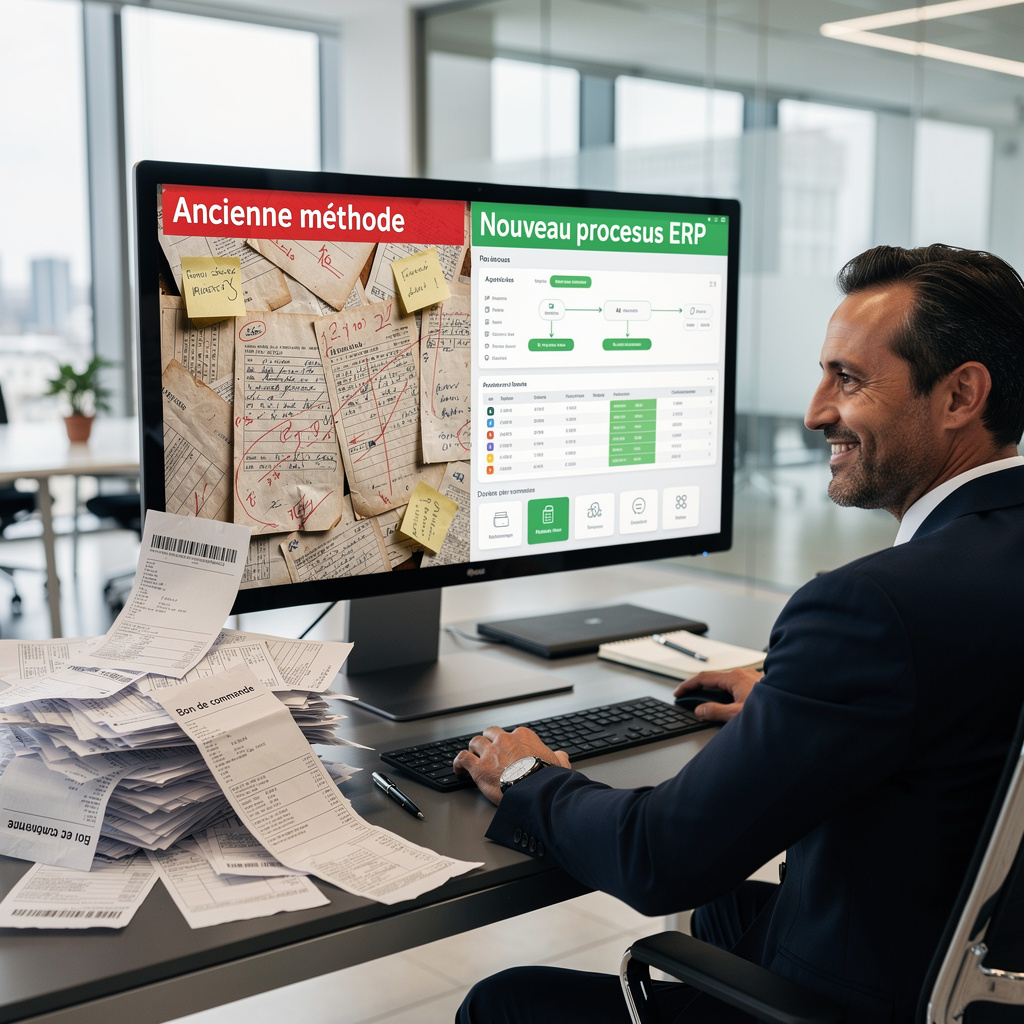
The choice between a cloud ERP and an on-premise ERP directly affects costs, flexibility, and a company's ability to manage class C purchases effectively. Each model offers specific advantages depending on technical, operational, and budgetary needs.
Cloud solutions, hosted remotely, offer great agility and continuous updates. On-premise solutions require internal infrastructure but provide full system control. The choice should align with internal needs, as highlighted in practices described in ERP solutions, emphasizing the importance of analyzing each environment’s characteristics.
Comparison of the two models:
Criterion
Cloud ERP
On-Premise ERP
Initial costs
Low (subscription)
High (infrastructure + licenses)
Updates
Automatic and regular
Managed internally
Flexibility
Very high
Depends on internal capabilities
Security
Certified and outsourced
Full in-house control
To explore strategic aspects, organizations like the Cloud Security Alliance provide recommendations to secure cloud environments while ensuring regulatory compliance.
The ability of an ERP solution to integrate with existing company tools is essential for effectively managing class C purchases. Smooth integration avoids duplicate entries, reduces errors, and ensures consistency across different systems: accounting, inventory management, CRM, invoicing tools, and e-procurement platforms.
A high-performing ERP automatically synchronizes data flows, updating inventories, tracking invoices, and sending orders to suppliers. This interconnected logic is illustrated in practices described in integrated procurement management, demonstrating how unified systems improve accuracy and operational speed.
To ensure these integrations, technological standards such as REST APIs and guidelines from the OpenAPI Initiative facilitate communication between different solutions within the company.
Implementing an ERP solution is a strategic lever to regain control over class C purchases. By centralizing data, automating approvals, improving traceability, and optimizing budget monitoring, the ERP reduces costs and ensures the security of the entire process. Companies that structure their workflows improve operational performance and gain full visibility of actual spending.
For effective implementation, it is essential to define clear processes, train teams, and adapt the ERP to the company’s needs. Modernization practices follow guidelines illustrated in structured purchasing, emphasizing the importance of methodical management to ensure operational consistency.
Do you want to optimize your class C purchases and structure processes with an ERP solution? Explore the pathway by consulting guidance to improve purchasing performance and implement methods suitable for your organization.
Because an ERP centralizes requests, budgets, suppliers, and approvals. This avoids information dispersion and strengthens control over non-strategic spending.
Yes. Through automation and standardization, the ERP limits manual entries, reduces duplicates, and improves data reliability.
Cloud ERP solutions allow gradual adoption, with lower costs and scalable modules. They are ideal for companies that want to professionalize the management of class C purchases.
It depends on company size, process complexity, and the desired level of integration. On average, a few weeks are sufficient for simple implementations.
Clear communication, proper training, and consistent processes promote adoption. Involving users from the early stages of the project is essential.
To ensure reliable decision-making and continuous improvement, structured methodologies such as those from APQC help companies organize processes efficiently and in a controlled manner.



.svg)