Market studies

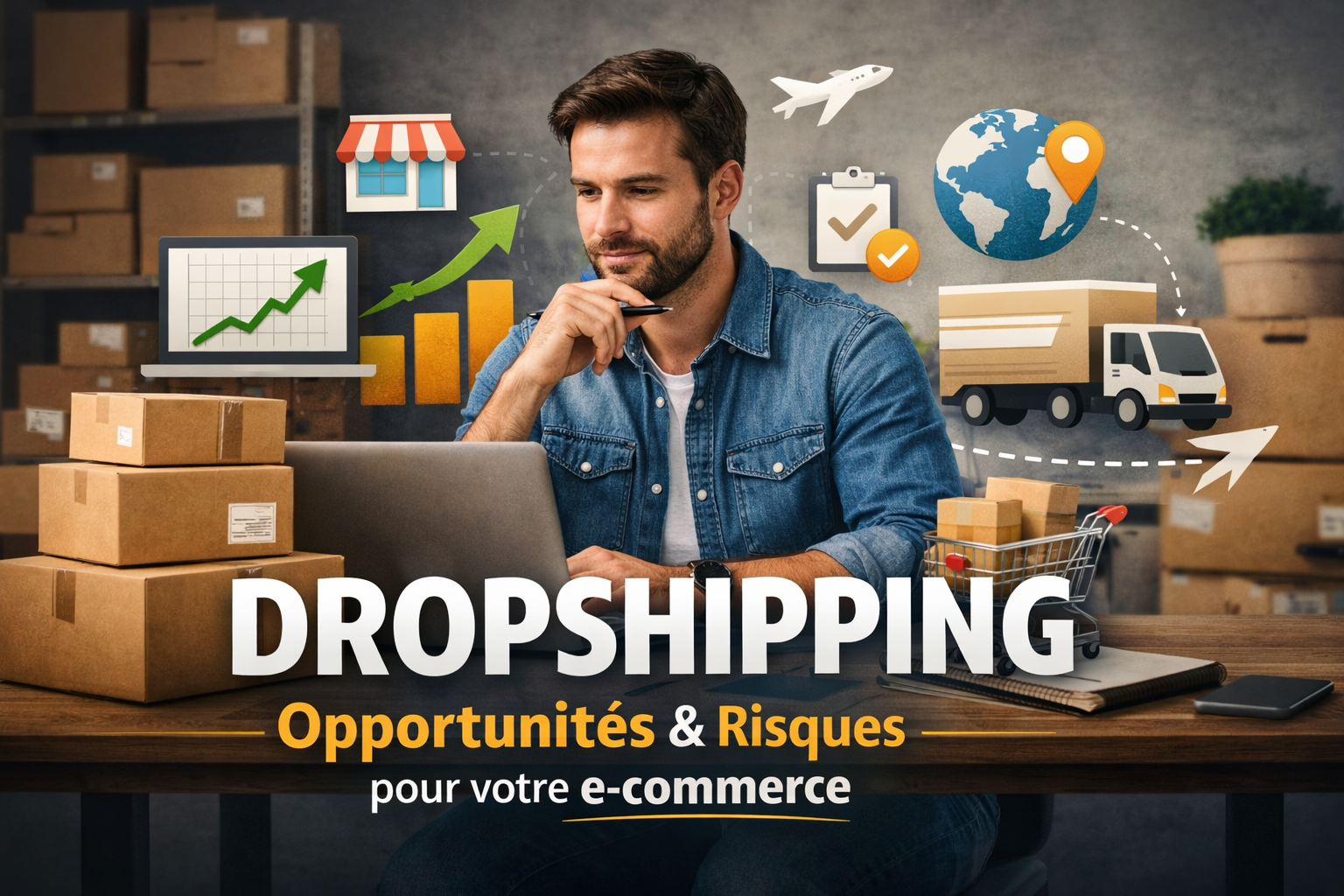
Dropshipping: Real Opportunity or a Bad Idea for Entrepreneurs and Buyers?

Published By
Olivier Audino
Tags
Sourcing

Dropshipping: A Procurement Analysis of Zero-Stock E-Commerce

Dropshipping attracts numerous entrepreneurs due to its core value proposition: selling online without managing inventory. This model appears accessible, rapid to deploy, and inherently less capital-intensive than traditional retail setups.

However, behind this apparent operational simplicity lie critical procurement and supply chain challenges—including supplier selection, cost structure mastery, quality assurance, and regulatory compliance.

The Procurement Perspective: Ownership Without Physical Inventory

From a professional procurement standpoint, dropshipping demands a structured strategic evaluation. Not holding physical stock does not equate to an absence of operational or legal responsibility.

On the contrary, the seller remains fully accountable to end consumers for product quality, delivery lead times, and post-purchase support.

Core Pillars for Successful Dropshipping Management

  • Rigorous Supplier Qualification – Vetting third-party vendors for manufacturing consistency, stock reliability, and dispatch speeds.
  • Total Cost & Margin Control – Factoring hidden logistics fees, return costs, and currency fluctuations into net profitability calculations.
  • Quality & Service Standard Enforcement – Establishing Service Level Agreements (SLAs) to protect customer satisfaction and brand equity.
  • Regulatory & Consumer Compliance – Ensuring imported products meet regional safety standards, labeling laws, and consumer rights frameworks.
Dropshipping represents a viable business opportunity—provided it is governed with disciplined procurement methodology and rigorous vendor controls.

Conclusion: Strategic Governance for Long-Term Viability

Turning Operational Flexibility into Sustainable E-Commerce Performance

Decoupling sales from inventory management offers undeniable agility, but long-term success hinges on supply chain rigor.

Treat supplier relationships as strategic partnerships, enforce strict compliance benchmarks, and apply structured procurement practices to turn dropshipping into a scalable, high-performing business model.

What is Dropshipping?

Dropshipping is an e-commerce model where the seller markets products without stocking them directly. When a customer places an order on the merchant's store, the order details are transmitted to the supplier, who fulfills and ships the product directly to the end consumer.

This operational structure provides an immediate advantage: it significantly lowers initial capital requirements. It allows entrepreneurs to test markets, launch ventures rapidly, and expand product lines without tying up working capital in inventory—explaining its strong appeal among online business creators.
However, this flexibility comes with a trade-off: the seller heavily depends on the supplier for critical operational factors, including stock availability, shipping lead times, product quality, return processing, and regulatory compliance.

Core Advantages for Entrepreneurs

Key Business Benefits

  • Fixed Cost Reduction – Eliminates warehouse lease requirements and bulk inventory purchases prior to market validation, drastically lowering financial exposure.
  • Commercial Agility – Enables quick testing across multiple product categories, allowing rapid portfolio adjustments and underperforming SKU removal.
  • Accessible Entry Point – Serves as a low-friction entry into e-commerce for entrepreneurs looking to focus primarily on marketing, brand building, and customer acquisition.

Why Dropshipping is More Complex Than It Appears

The main trap of dropshipping is the belief that zero inventory guarantees operational simplicity. In reality, operational challenges do not disappear—they shift toward supplier management and customer experience control.

Saturated Catalog Competition – When multiple storefronts sell identical products from shared supplier catalogs, standing out becomes difficult. Competition intensifies, profit margins compress, and customer retention drops.
Execution-Driven Success – Viability relies less on the product itself and more on overall brand positioning, marketing execution, and service quality.
Heightened Third-Party Risk – Shipping delays, sudden stockouts, or inconsistent product quality directly impact the seller's brand reputation and customer trust.

Conclusion: Balancing Agility with Operational Discipline

Navigating Zero-Inventory E-Commerce Successfully

Dropshipping offers significant market entry speed and capital efficiency, but long-term profitability demands rigorous partner management.

Focus on brand differentiation, strict supplier oversight, and exceptional service delivery to turn the agility of dropshipping into a sustainable commercial advantage.

Supplier Selection: A Core Strategic Pillar

In dropshipping, the supplier is a critical business partner directly impacting your commercial promise, customer satisfaction, and overall venture profitability. Selecting a vendor must be executed with the same rigor as a structured corporate procurement process.

Key evaluation criteria include logistical reliability, lead-time stability, physical product quality, dispute management protocols, responsiveness, and documentary compliance. A low-cost supplier can ultimately prove expensive if poor execution triggers frequent operational friction. The target metric is overall performance rather than the lowest unit price.

Total Cost Ownership vs. Displayed Profit Margins

Evaluating profitability strictly by comparing wholesale supplier costs to retail selling prices is overly simplistic. Measuring true business viability requires calculating the Total Cost of Ownership (TCO):

• Customer acquisition & marketing spend
• Refunds, return shipping, and dispute processing fees
• Customer support overhead
• Hidden costs of customer churn and brand equity erosion

A product that appears lucrative on paper can rapidly become unprofitable if fulfillment failures create high operational friction.

E-Commerce Platform Quality: Driving Credibility & Conversion

A successful dropshipping initiative requires a high-performing, trustworthy website. User experience, page loading speeds, compelling product pages, clear terms of sale, and perceived brand trust directly dictate conversion rates.

Developing a truly conversion-optimized e-commerce store involves complex technical, UX, and security requirements. Because building a high-converting platform independently can be challenging, many entrepreneurs partner with web development professionals. A poorly executed store suppresses sales performance regardless of product quality.

Navigating Legal Liabilities and Regulatory Risks

Dropshipping does not exempt merchants from consumer protection laws. The seller remains legally responsible to the end customer and must ensure full compliance:

Essential Regulatory & Legal Commitments

  • Product Safety & Conformity – Verifying that products comply with regional safety regulations and standards.
  • Transparent Lead-Times – Displaying realistic delivery timeframes and clear shipping policies.
  • Compliant Legal Documentation – Presenting transparent Terms & Conditions (T&Cs), return policies, and clear merchant identification.

Conclusion: Strategic Governance for Scalable E-Commerce

Mastering Sourcing, Total Cost, Platform, and Compliance

Long-term viability in dropshipping requires treating supply partners, total cost structures, website architecture, and legal compliance with equal strategic focus.

By shifting focus from short-term unit margins to total performance and customer trust, merchants convert a zero-inventory model into a resilient, profitable enterprise.

Best Practices for Building a Sustainable Dropshipping Business

To build a durable e-commerce enterprise, several core operational principles must be rigorously observed. Success begins with carefully vetting supply chain partners and physically testing product quality prior to commercial launch, ensuring your brand promise matches customer expectations.

Additionally, structuring a clear product positioning is essential to avoid commodity traps and differentiate your store in a crowded marketplace.

Key Performance Indicators and Systems Integration

Core Executive Metrics to Pilot

  • Conversion Rate Optimization – Tracking traffic efficiency and checkout performance
  • Fulfillment Lead Times – Monitoring average dispatch and delivery speeds
  • Return & Dispute Rates – Minimizing post-purchase friction and product dissatisfaction
  • Customer CSAT Scores – Measuring long-term brand satisfaction and retention
  • True Net Margin – Accounting for total acquisition, overhead, and fulfillment costs
Sustainable dropshipping requires viewing website architecture, digital marketing, supplier sourcing, and customer service as an interconnected, cohesive ecosystem. Dropshipping succeeds when governed as a true corporate venture rather than an automated solution.

Conclusion: Transforming Accessibility into Enterprise Value

From Low-Capital Entry to Reliable E-Commerce Model

Dropshipping offers an attractive opportunity to launch or test e-commerce concepts with reduced initial capital investment. However, the model should not be idealized: it demands strict discipline in vendor selection, cost control, website quality, legal compliance, and customer experience management.

For entrepreneurs and procurement professionals alike, the goal is clear: convert an accessible entry point into a reliable, sustainable business model. Dropshipping is not a magic formula—it is a demanding model that delivers high performance when structured with method and operational rigor.

Line
Featured Post

Popular posts