Partnerships

Optimizing TPE Purchasing Costs: Effective Strategies

Published By
Olivier Audino
Tags
Sourcing
Optimizing purchasing costs is crucial for any small business looking to maximize its profitability and maintain long-term financial health.

In today's fluctuating economic environment, adopting effective, structured purchasing strategies is no longer optional—it is a vital operational necessity. Small businesses can leverage proven cost-reduction methods without compromising product quality or overall productivity.

Pillars of Cost-Effective Small Business Procurement

  • Comprehensive Supplier Analysis: Evaluate vendor performance, pricing structures, and reliability to identify hidden savings.
  • Strategic Contract Negotiation: Re-negotiate terms and leverage volume discounts to reduce ongoing spend.
  • Uncompromised Quality & Productivity: Cut procurement costs while maintaining strict operational standards.
  • Doing More with Less: Deploy lean purchasing practices tailored specifically to small business realities.

Transform Purchasing Practices into a Competitive Advantage

By shifting from tactical buying to strategic procurement, small business owners can streamline sourcing, reduce administrative overhead, and boost operating margins.

Discover practical, easy-to-implement techniques designed to optimize cash flow, strengthen supplier relationships, and turn procurement into a distinct competitive advantage.

Maximize Small Business Profitability Today

Taking control of your purchasing practices allows your business to navigate market volatility with confidence and financial agility.

Transform your purchasing operations, reduce unnecessary expenses, and drive sustainable profitability.

Optimizing Purchasing Processes to Reduce TPE Purchasing Costs

In small business management (TPE/VSE), optimizing purchasing processes is essential for curbing wasteful expenditure and boosting operating margins.

Through rigorous expense audits, centralized purchasing, and clear procurement policies, small business owners can eliminate superfluous costs and build a streamlined, highly competitive sourcing structure.

1. Expense Analysis: Identifying and Eliminating Waste

A thorough spend analysis detects areas where expenses diverge from the actual operational needs of a small business.

By reviewing each expense line item, procurement leaders can identify actionable cost-reduction opportunities—allowing overvalued vendor contracts or redundant purchases to be renegotiated or eliminated entirely.

2. Current Expense & Justification Audit

Expense Category (Poste de Dépense) Annual Cost (Coût Annuel) Operational Justification (Justification)
Office Supplies (Fournitures de bureau) 3,000 € Necessary for day-to-day business administration
Software Licences (Logiciels) 5,000 € Essential digital tools and operational platform licences
Travel & Transport (Transport) 4,000 € Travel expenses tied to business development and client meetings

3. The Strategic Advantages of Centralized Purchasing

Centralizing purchasing operations in a small enterprise aggregates order volumes, drastically boosting negotiating power while reducing administrative friction.

By unifying purchase requests into consolidated orders, small businesses unlock bulk pricing discounts and achieve greater control over cash outflows.

Core Benefits of Centralized Procurement

  • Enhanced Negotiation Power: Leverage aggregated purchasing volume to secure preferential vendor pricing.
  • Process Redundancy Elimination: Remove duplicate purchasing tasks across internal departments.
  • Strict Expense Compliance: Maintain real-time tracking over operational spend and policy adherence.

4. Setting Up Effective Small Business Purchasing Policies

Establishing clear purchasing policies structures small business operations and prevents rogue spending.

These guidelines define requisition steps, approval thresholds, and stakeholder responsibilities. Regularly updating purchasing policies ensures your business continuously adapts to evolving market conditions and maintains low operational overhead.

Key Implementation Steps:
• Precise definition of operational needs and purchasing frequency.
• Systematic selection and periodic benchmarking of key suppliers.
• Formalization of standardized order placement and goods receipt workflows.

Conclusion: Drive Sustainable Cost Reductions

Transform Small Business Purchasing into a Growth Lever

Conducting spend audits, centralizing purchasing volumes, and enforcing clear procurement policies directly reduces TPE purchasing costs.

Protect your margins, streamline vendor negotiations, and maximize small business profitability today.

Purchasing Automation and Digitalization

Transitioning to automated purchasing workflows and digital procurement platforms is essential for small businesses seeking to reduce costs and streamline daily operations.

By replacing manual keying with automated tools, small enterprises minimize human error, accelerate order fulfillment, and gain real-time visibility into operational spend.

1. Why Automating Purchases Can Lower Your Costs

Automating procurement processes is a crucial step for small businesses aiming to optimize internal resources and cut purchasing overhead.

Automated systems significantly reduce manual data entry errors, accelerate turnaround times, and secure better pricing through data-driven analysis. Furthermore, real-time expense tracking allows managers to instantly flag and eliminate superfluous costs.

Core Drivers of Digital Procurement Efficiency

  • E-Procurement Transparency: Gain complete visibility over the entire purchasing cycle from quote request to delivery.
  • Instant Price Comparison: Leverage online sourcing platforms to benchmark vendor rates in real time.
  • Data-Driven Purchasing: Use automated expense analytics to negotiate better contracts and prevent overspending.
  • Agile Market Operations: Expand access to global suppliers while minimizing order lead times.

2. Digital Tools to Facilitate Purchasing Management

Digital solutions such as e-procurement software and online sourcing platforms modernize and simplify procurement workflows.

They provide total transparency across every stage of the purchasing process. Beyond streamlining inventory control, these platforms drive down costs by enabling instant price comparisons and strengthening negotiating positions during vendor discussions.

3. How to Choose Purchasing Management Software for a Small Business

Selecting the right procurement platform can be a game-changer for a small business.

Look for an intuitive, easy-to-use system with tailored functionalities: vendor management, order tracking, and expense analytics. Effective software simplifies daily tasks and drives cost reductions by providing actionable recommendations based on real-time data.

4. The Impact of Digitalization on Cost Reduction

Embracing digital transformation is vital for small businesses committed to long-term profitability.

Digitizing purchases fosters seamless supplier collaboration, unlocks access to broader international markets, and provides the agility required to react swiftly to market shifts—minimizing delays and optimizing operational costs.

Conclusion: Transform Your Small Business Procurement

Unlock Savings Through Smart Digitalization

Automating purchase requests, deploying e-procurement software, and utilizing data analytics guarantees measurable operational efficiency and sustainable cost savings.

Modernize your purchasing operations, eliminate manual bottlenecks, and drive small business growth today.
Supplier Management: Selecting, Renegotiating & Evaluating Vendors

Strategic supplier management is essential for small businesses (TPE/VSEs) seeking to reduce purchasing costs while securing high-quality goods and reliable delivery timelines.

By rigorously evaluating potential suppliers, renegotiating contracts with data-backed leverage, and building strategic vendor partnerships, small enterprises turn supplier relationships into a source of continuous competitive value.

1. Selecting the Right Suppliers & Renegotiating Contracts

Rigorous Supplier Selection: Thoroughly evaluating potential vendors on reliability, delivery lead times, and after-sales service quality minimizes supply chain disruptions and establishes an economical sourcing baseline.

Data-Driven Contract Renegotiation: Approach negotiations armed with accurate purchasing data—highlighting order volume, purchasing consistency, and early payment terms. Open, trust-based dialogues yield lower rates while preserving high service standards.

Core Supplier Evaluation KPIs

  • On-Time Delivery Rate: Track punctuality to prevent operational downtime and inventory bottlenecks.
  • Product Compliance Rate: Measure the proportion of delivered goods meeting strict quality benchmarks.
  • Perfect Order Ratio: Evaluate complete, error-free order fulfillment from request to final receipt.
  • Vendor Responsiveness: Assess communication speed and flexibility when handling unexpected issues.

2. Building Sustainable Supplier Partnerships

Investing in long-term relationships transforms vendors into strategic business partners.

This collaboration unlocks preferential commercial terms, priority access to new product lines, and dedicated support—ensuring suppliers are deeply invested in your company's long-term success.

Group Purchasing and Cooperative Sourcing

Group purchasing allows small businesses to aggregate their buying power, accessing wholesale rates and reduced logistics costs typically reserved for large enterprises.

3. Real-World Impact of Group Purchasing

Business Sector Group Purchasing Strategy Applied Realized Cost Reduction (%)
Electronics Manufacturing Raw material procurement via sectoral buying group 15% Reduction in procurement costs
Service Enterprise Collective bargaining for office supplies & IT equipment 20% Reduction in annual expenses

4. Opportunities vs. Risks in Cooperative Purchasing

Key Opportunities: Unlocks significantly lower negotiated rates, shared freight and transport expenses, and access to specialized legal advice or purchasing seminars.

Navigating Risks: The primary trade-off is dependence on collective group decisions, which may slightly reduce individual flexibility. However, effective group management ensures the financial gains far outweigh these constraints.

Proven Cost Reduction Strategies for Small Businesses

5. The Kaizen Method: Continuous Procurement Improvement

Originating in Japan, the Kaizen method focuses on continuous, incremental process improvements across all operational activities.

Applying Kaizen to procurement involves systematically reviewing every step of the sourcing workflow—analyzing order cycles, standardizing purchased components, and optimizing stock levels to eliminate waste and boost profitability.

Small Adjustments with Big Financial Impact

  • Order Quantity Alignment: Fine-tune order sizes to match real-time demand and avoid holding costs.
  • Eco-Friendly Packaging: Switch to sustainable, lower-cost packaging materials.
  • Logistics Route Optimization: Plan transport schedules carefully to eliminate rush shipping surcharges.
  • Inventory Automation: Deploy digital tools to automate reordering and prevent stock imbalances.

6. Building a Strategic Cost Reduction Roadmap

1. Comprehensive Spend Audit: Review all supplier contracts, payment terms, and indirect expense items to identify savings potential.

2. Action Plan Development: Combine contract renegotiations, alternative sourcing options, and group purchasing models.

3. Staff Training & Policy Adoption: Educate internal teams on new procurement procedures and compliance standards for lasting results.

Conclusion: Master TPE Sourcing & Drive Margin Growth

Transform Small Business Sourcing into a High-ROI Strategy

Combining strategic supplier evaluation, group purchasing leverage, Kaizen continuous improvement, and data-backed contract negotiations ensures sustainable profitability.

Optimize your purchasing costs, eliminate operational waste, and maximize small business competitive strength today.

Monitoring and Analysis of TPE Purchasing Cost Reductions

Rigorous monitoring and data-driven analysis are fundamental to ensuring that cost reduction strategies deliver sustainable financial impact for small businesses.

By establishing key performance indicators (KPIs), leveraging modern reporting software, and integrating advanced AI analytics, small enterprises transform procurement tracking from a passive administrative task into a proactive savings engine.

1. Measuring Strategy Effectiveness with Key Performance Indicators

Evaluating procurement performance requires tracking concrete metrics—such as total purchase cost per item, annual expense reduction percentages, and supplier satisfaction ratings.

Quantitative tracking enables management to assess progress continuously, spot operational variances, and adjust sourcing tactics before small overruns compound into major expenses.

2. KPI Tracking Dashboard

Performance Indicator (Indicateur) Target Value (Valeurs cibles) Current Achievement (Réalisation actuelle)
Total Purchase Cost per Product (Coût total d'achat par produit) 10% Reduction 7% Reduction achieved
Annual Expense Reduction Rate (Pourcentage de réduction des dépenses) 5% per year 3% currently achieved

3. Data-Driven Cost Optimization & Advanced AI Tracking

Analyzing aggregated purchasing data uncovers subtle spend trends, highlights overpriced contracts, and builds leverage for supplier renegotiations.

Integrating artificial intelligence and machine learning moves tracking beyond historical reporting—enabling predictive price modeling, demand-based inventory forecasting, and real-time anomaly alerts for unauthorized expenses.

Core Reporting & Analytics Suite

  • E-Procurement Analytics: Centralized software equipped with real-time spend visualization.
  • Predictive Price Intelligence: AI models that forecast raw material and commodity price fluctuations.
  • Automated Anomaly Detection: Real-time alerts flagging unexpected price spikes or unauthorized orders.
  • Demand-Driven Inventory Optimization: Stock management powered by accurate sales forecasting.

Training and Awareness for Lasting Cost Reduction

Technology alone is not enough; building a cost-conscious enterprise culture ensures that every team member contributes to small business financial efficiency.

4. Team Training, Awareness & Continuing Education

Best Practice Training: Upskilling employees in negotiation techniques, vendor selection criteria, and resource management prevents wasteful spending at the source.

Continuous Awareness: Sharing practical tips, success stories, and quarterly savings metrics via workshops or internal newsletters helps staff understand how their daily choices impact bottom-line profitability.

Targeted Continuing Education: Partnering with industry experts or software providers ensures teams stay proficient with modern purchasing tools and evolving procurement methods.

5. Employee Engagement & Feedback Systems

Engaged employees pay closer attention to operational details that yield substantial cumulative savings.

Recognizing employee contributions, organizing internal efficiency competitions, and implementing post-training survey loops ensures that procurement goals remain top-of-mind across the entire organization.

Conclusion: Build a Culture of Sustainable Savings

Maximize Small Business Margins Through Analytics & Engagement

Combining precise KPI monitoring, AI predictive analytics, and ongoing staff training converts procurement into a key competitive asset.

Empower your team, automate spend tracking, and achieve sustainable cost reductions today.
FAQ - Frequently Asked Questions About Optimizing Purchasing Costs for SMEs

Optimizing purchasing costs is crucial for Small and Medium Enterprises (SMEs) aiming to maximize operating margins and build supply chain resilience.

Below are concrete answers to common questions on inventory optimization, procurement technologies, vendor negotiations, bulk purchasing leverage, and smart supplier diversification.

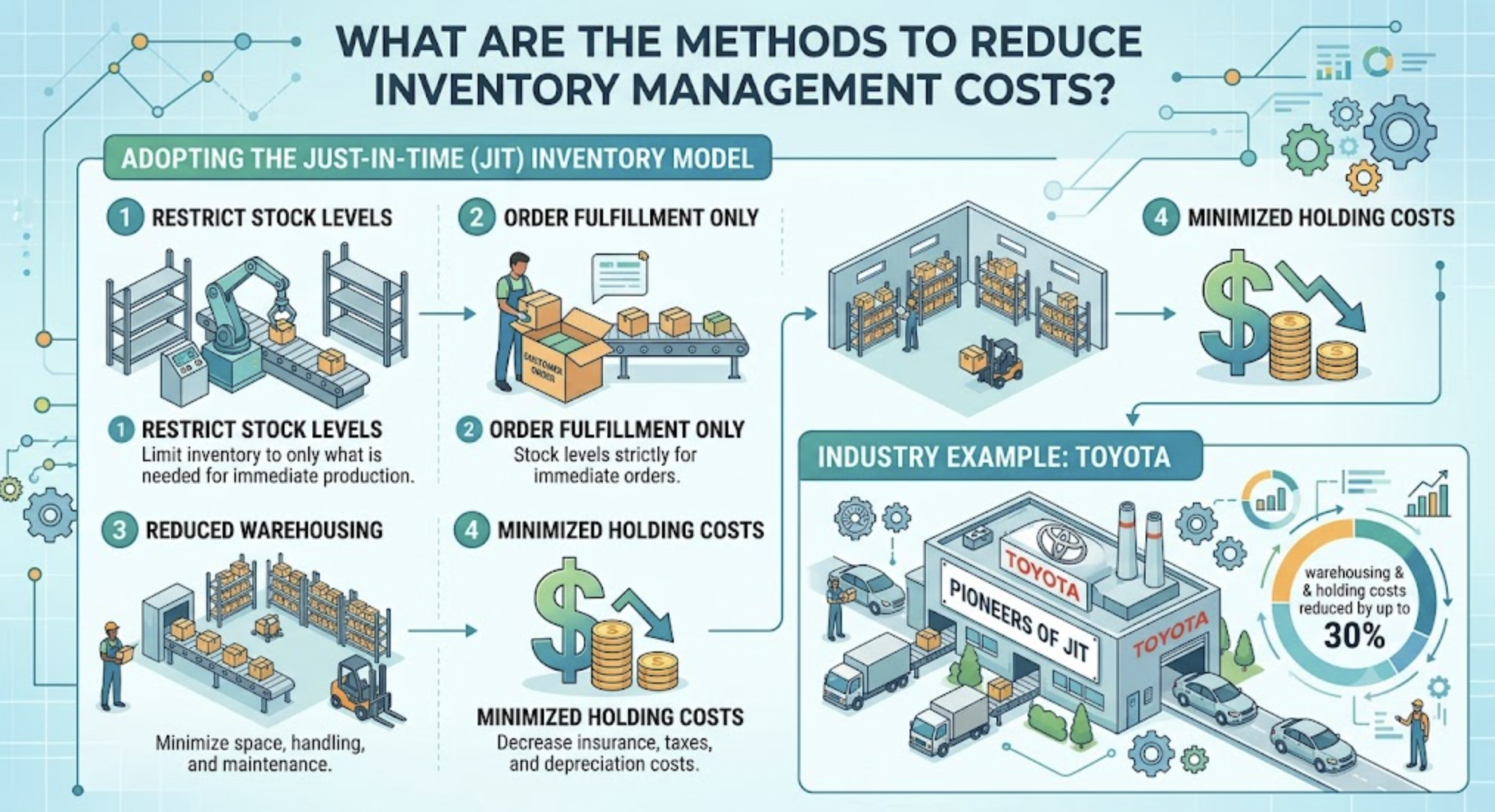
1. What are the methods to reduce inventory management costs?

Just-In-Time (JIT) Inventory Model: An exceptionally effective method is adopting a JIT system, which restricts stock levels strictly to what is required for immediate production or order fulfillment.

Industry Example: Toyota famously pioneered this approach, reducing total warehousing and holding costs by up to 30%.

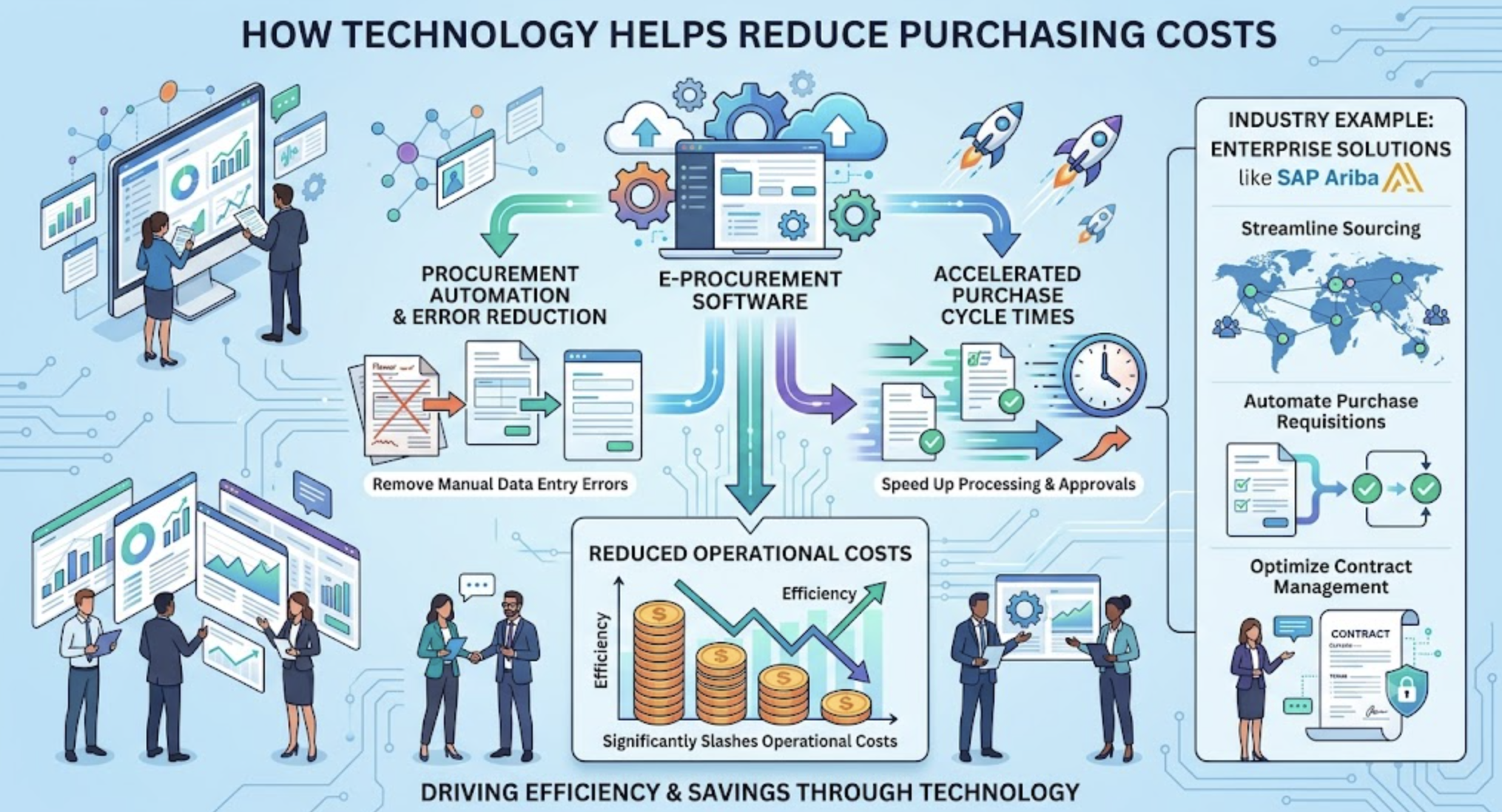
2. How can technology help reduce purchasing costs?

Procurement Automation & Error Reduction: Automating procurement through dedicated e-procurement software significantly slashes operational costs by removing manual data entry errors and accelerating purchase cycle times.

Industry Example: Implementing enterprise solutions like SAP Ariba allows businesses to streamline sourcing, automate purchase requisitions, and optimize contract management.

Core Strategic Takeaways for SME Cost Optimization

  • Lean Inventory Management: Deploy Just-In-Time processes to eliminate excess holding costs.
  • Digital Procurement Automation: Utilize specialized software to streamline order cycles and prevent data errors.
  • Long-Term Rate Lock-Ins: Secure multi-year or annual fixed-price agreements with core vendors.
  • Economies of Scale: Consolidate order volumes to achieve up to 20% unit cost reductions.
  • Hybrid Sourcing Networks: Combine local suppliers with international partners to balance lead times and freight costs.

3. Can prices be negotiated with suppliers and how?

Long-Term Strategic Contracting: Negotiating preferential pricing with suppliers is essential. Securing long-term or annual fixed-rate contracts provides suppliers with guaranteed volume while insulating your business against market price volatility.

Industry Example: Starbucks routinely negotiates fixed annual purchase prices with coffee bean farmers to keep raw material costs stable despite commodity market fluctuations.

4. What impact does buying in bulk have on unit costs?

Volume Discounts & Economies of Scale: Purchasing in bulk allows enterprises to capture significant volume discounts, directly lowering per-unit acquisition costs.

Industry Example: These economies of scale can yield price reductions of up to 20%, as demonstrated by wholesale retail models like Costco.

5. What strategies should be adopted to diversify suppliers without increasing costs?

Hybrid Sourcing Strategy (Local + International): Partnering with local vendors alongside international suppliers allows companies to mitigate regional supply chain risks while controlling transport expenses and lead times.

Industry Example: Global fashion retailer H&M effectively applies this strategy by maintaining a balanced mix of suppliers across both Europe and Asia to combine low production costs with rapid regional restocks.

Conclusion: Transform SME Procurement Performance Today

Build a Strategic, High-Margin Procurement Model

From Just-In-Time inventory management and automated e-procurement software to bulk purchasing and hybrid sourcing networks, optimizing SME purchasing converts daily overhead into sustained profitability.

Streamline your purchasing practices, negotiate better vendor contracts, and maximize small business profitability today.

Optimizing purchasing costs is crucial for any small business wishing to maximize its profitability. By adopting proven strategies, such as negotiating with suppliers and carefully analyzing expenses, small businesses can significantly reduce expenses. This allows them to intelligently reinvest in key areas that drive growth and innovation. Be sure to discover more techniques and tips in the rest of this article to transform your purchasing costs into a real driver of success for your business.
Line
Featured Post

Popular posts