Selection and Contracts

Optimizing Purchase Requests: A Guide to Efficiency

Published By
Olivier Audino
Tags
E-Procurement solution
In today's highly competitive business environment, the optimization of purchase requests represents a crucial strategic lever for any performance-driven organization.

Streamlining procurement workflows, reducing unnecessary expenditure, and accelerating turnaround times allow enterprises to transform routine purchasing into a powerhouse of operational efficiency.

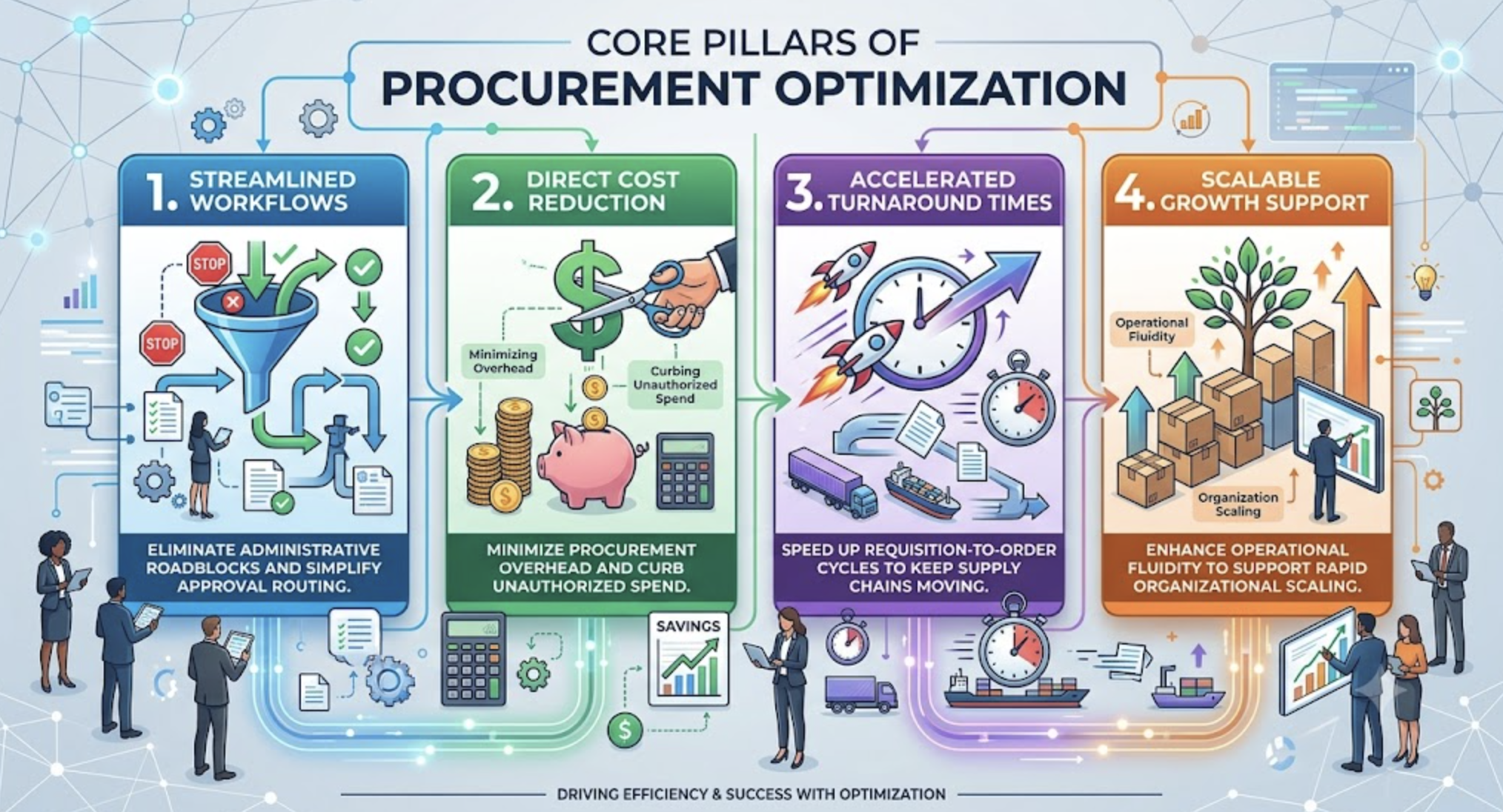
Core Pillars of Procurement Optimization

  • Streamlined Workflows: Eliminate administrative roadblocks and simplify approval routing.
  • Direct Cost Reduction: Minimize procurement overhead and curb unauthorized spend.
  • Accelerated Turnaround Times: Speed up requisition-to-order cycles to keep supply chains moving.
  • Scalable Growth Support: Enhance operational fluidity to support rapid organizational scaling.

Transform Order Management into a Supply Chain Asset

Effective order management is far more than a back-office administrative task—it is a core asset that directly strengthens your end-to-end supply chain.

Improving the fluidity of your purchasing operations ensures rapid response times, protects operating margins, and provides the agility required to drive sustainable enterprise growth.

Elevate Your Purchasing Operations Today

Unlocking the full potential of purchase request optimization equips your business with greater efficiency, lower operational costs, and faster execution.

Streamline your procurement processes and drive long-term business growth with intelligent purchasing solutions.

Introduction to Optimizing Purchase Requests

Efficient procurement requests are critical for any business that wants to maintain a smooth, profitable, and agile supply chain.

Optimized request management not only reduces direct costs, but also improves delivery lead times and final product quality. By focusing on optimizing purchase requests, businesses actively avoid costly overstocks and damaging stockouts.

1. Strategic Supply Chain Impact & Core Objectives

Impact on the Supply Chain: Reducing procurement errors and processing delays fosters seamless inter-departmental and supplier coordination. This leads to superior inventory predictability—essential for responding swiftly to market demands while maintaining optimal stock levels.

Key Optimization Goals: Primary objectives center on maximizing efficiency, driving down operational costs, and establishing end-to-end process transparency. Standardizing workflows and adopting technologies like automation and AI ensures consistent operational excellence.

Identifying Common Challenges in Purchase Requests

2. Bottlenecks in the Request Optimization Process

Bottlenecks represent major friction points in procurement, causing systemic delays and reduced organizational efficiency.

These roadblocks typically emerge during approval routing, inter-departmental handoffs, or manual data entry. Precise bottleneck identification is crucial for deploying targeted resolution strategies.

Common Procurement Bottlenecks

  • Extended Approval Times: Multi-tiered manual sign-offs that delay order placement.
  • Poor Inter-Departmental Communication: Siloed information flows between requisitioners and purchasing teams.
  • Manual Data Entry: Error-prone manual keying of product codes, quantities, and vendor details.

3. Bottleneck Resolution Strategy Matrix

Procurement Bottleneck Strategic Resolution Approach
Approval Delays Workflow automation and delegation of authority matrices
Inter-Departmental Communication Implementation of a centralized collaborative procurement platform
Manual Data Entry Errors Deployment of automated data capture and validation software

4. Common Mistakes, Consequences, and Prevention

Procurement errors carry severe financial and operational costs, including inaccurate data entry, duplicate purchase orders, and procedural non-compliance.

Major Consequences Include:
• Elevated operational costs through inefficient spending.
• Deterioration of key vendor and supplier relationships.
• Heightened compliance and audit risk exposures.
Common Procurement Error Targeted Prevention Strategy
Inaccurate Data Entry User training combined with automated verification tools
Duplicate Orders Early warning warning systems and routine system audits
Non-Compliance with Procedures Strengthening internal workflow controls and regular compliance audits

5. Cost Analysis of Ineffective Processes

An inefficient purchase request process leads to compounding hidden costs across the enterprise, driven by emergency rush orders, administrative processing delays, and sub-optimal inventory management.
Inefficiency Cost Driver Financial & Operational Impact
Urgent / Emergency Orders High freight surcharges and premium vendor pricing
Processing Delays Increased administrative overhead and wasted labor hours
Poor Inventory Management Stockout losses, unfulfilled revenue, and inventory holding costs

Conclusion: Streamline Purchase Requests for Growth

Transform Procurement into a Strategic Performance Lever

Overcoming procurement bottlenecks, eliminating manual data entry errors, and automating approval workflows guarantees measurable operational efficiency.

Empower your enterprise with real-time request tracking, automated validations, and seamless supply chain integration today.

Applying Best Practices for an Efficient Process

Optimizing purchase requests requires a structured framework based on operational best practices: automation, centralized information management, and procedure standardization.

Implementing these core pillars reduces administrative overhead, minimizes human errors, and accelerates end-to-end procurement cycles.

1. Automation, Centralization, and Standardization

Automating Purchase Requests: Automated routing forwards requests directly to designated suppliers according to pre-established approval rules, speeding up execution and eliminating data entry errors.

Centralization of Information: Consolidating procurement data onto a single unified platform delivers real-time visibility into inventory levels, supplier benchmarks, and spend patterns.

Standardizing Procedures: Uniform requisition workflows facilitate employee onboarding, remove operational ambiguity, and streamline cross-departmental collaboration.

Core Best Practices to Implement

  • Automated Approval Routing: Set rule-based approval delegates to eliminate processing bottlenecks.
  • Centralized Vendor & Contract Management: Store all supplier records and agreements in a single repository.
  • Standardized Procurement Forms: Unify document templates and requisition requirements across all business units.

2. Impact of Automation Summary

Automation Benefit Impact on the Enterprise
Reduction in Processing Time Increased overall productivity and faster lead times
Minimization of Manual Errors Improved data accuracy and order precision
Enhanced Compliance Strengthened internal governance and auditability

Implementation of Advanced Tools and Technologies

3. Modern Digital Architecture: ERP, AI, and Workflow Automation

Dedicated Software & ERP Systems: Modernizing procurement relies on integrated ERP software and specialized purchasing management tools to organize data, prevent duplicate entries, and boost departmental communication.

AI-Driven Forecasting: Machine learning algorithms predict market trends, evaluate historical spend patterns, and automate stock level optimization—preventing both costly overstocks and operational stockouts.

Digital Transformation Advantages: Digital workflows create automatic, immutable audit trails that guarantee regulatory compliance while providing decision-makers with real-time operational insights.

4. Technological Advantages Matrix

Technology Key Capabilities Impact on Request Optimization
Software Solutions (ERP) Error reduction, improved productivity Process optimization and reduced cycle delays
Artificial Intelligence Accurate trend forecasting, stock optimization Minimization of inventory costs and excess stock
Digitalization Platforms Enhanced visibility, automated controls Increased operational responsiveness and secure compliance

Evaluation and Performance Monitoring

5. Key Performance Indicators & Predictive Analytics

Continuous evaluation ensures purchase request optimization delivers sustainable financial and operational value.

By pairing real-time reporting dashboards with statistical predictive analytics models, procurement managers can benchmark performance, forecast seasonal demand surges, and correct process inefficiencies proactively.

6. Procurement Success Dashboard Benchmarks

Key Performance Indicator (KPI) Target Benchmark Value
Order Compliance Rate 95%
Average Processing Time 48 hours
Cost Savings Realized 15% of total procurement budget

Strategic Benefits & Competitive Advantage

Optimizing purchase requests directly lowers acquisition costs, allowing companies to price products more competitively and reallocate financial capital toward high-growth strategic initiatives like R&D, marketing, and global expansion.

7. Sector-Specific Savings Breakdown

Industry Sector Average Realized Cost Savings (%)
Manufacturing 20% reduction in operational procurement costs
Distribution & Logistics 15% reduction in acquisition expenses

Conclusion: Maximize Procurement Efficiency

Transform Purchase Requisitions into a Growth Engine

Combining automated workflows, centralized data management, AI predictive analytics, and strict KPI monitoring guarantees measurable operational performance.

Empower your enterprise with real-time tracking, seamless ERP integration, and sustainable cost reductions today.
Improving Operational Efficiency & Strengthening Supplier Relationships

Optimizing purchase requests allows businesses to automate and standardize their core procurement processes, effectively eliminating unnecessary bottlenecks and administrative delays.

In addition to drastically cutting processing lead times, streamlined workflows improve order accuracy and free up internal teams to focus on high-value strategic initiatives rather than repetitive tasks.

1. Success Stories: Enterprise Case Study

Measurable Impact: A major technology enterprise reduced its total order cycle time by 30% after implementing an automated purchase request optimization platform.

By enabling faster request execution with significantly fewer errors, the company achieved superior operational agility and a marked increase in customer satisfaction.

2. Strengthening Strategic Supplier Relationships

An optimized purchasing workflow establishes transparent communication channels and sets precise expectations with key vendors, solidifying long-term strategic partnerships.

Greater procedural transparency leads to more favorable contract negotiations, elevated product quality, and a highly sustainable, resilient supply chain.

Key Strategies for Supplier Partnership Enhancement

  • Regular & Transparent Communication: Maintain open, multi-channel dialogues to align on operational expectations and goals.
  • Performance-Based Contracts: Structure vendor agreements around clear, measurable KPIs and shared incentives.
  • Ongoing Evaluations & Feedback: Conduct continuous performance reviews to provide constructive, actionable feedback.
  • Supplier Satisfaction Assessment: Deploy regular surveys and reviews to detect and resolve vendor friction early.

Conclusion: Drive Long-Term Procurement Success

Elevate Operational Efficiency & Strategic Partnerships

Optimizing purchase requests yields direct operational gains: faster processing, zero-error precision, and stronger vendor relationships.

Empower your organization with automated request routing, transparent communication, and collaborative supplier management today.

Strategy and Implementation of Procurement Optimization

Successfully implementing purchase request optimization requires a well-defined strategy, seamless technology integration, and careful operational execution.

By auditing existing workflows, aligning key stakeholders, and adopting scalable digital tools, businesses turn purchasing into a streamlined, future-proof operational driver.

1. Development of the Purchasing Request Optimization Strategy

Defining an effective strategy starts with a thorough operational audit to pinpoint current inefficiencies and process bottlenecks.

Cross-departmental collaboration among procurement, finance, and logistics teams is essential for gaining a holistic view of challenges. Establishing clear, measurable objectives ensures the optimization roadmap remains fully aligned with overarching enterprise goals.

Core Pillars of Strategy & Implementation

  • Comprehensive Operational Audit: Identify process bottlenecks, manual errors, and high-cost operational gaps.
  • Cross-Functional Collaboration: Unite procurement, finance, and logistics teams around shared strategic KPIs.
  • Predictive Tech Integration: Leverage automated procurement systems, AI, and machine learning for optimal inventory control.
  • Continuous Performance Monitoring: Review user feedback and real-time operational data to drive ongoing process refinement.

2. Integration of Adapted Technologies

Adopting tailored technological solutions is critical for modernizing purchase request management.

Automated procurement management systems eliminate manual processing errors while enhancing data visibility across the enterprise. Furthermore, integrating Artificial Intelligence and Machine Learning empowers teams to accurately forecast demand surges, optimize stock levels, and adapt flexibly to shifting market conditions.

3. Implementation, Change Management & Progress Monitoring

Careful implementation management minimizes operational disruptions during system rollout.

Transparent, regular communication with all internal stakeholders builds organizational buy-in. Once deployed, processes must be continuously monitored and fine-tuned based on performance metrics and user feedback—ensuring sustainable, long-term procurement efficiency.

Conclusion: Execute Your Procurement Optimization Roadmap

Build a Agile, High-Performing Procurement Infrastructure

Strategic auditing, tailored software integration, and continuous progress tracking ensure your purchase request workflows deliver maximum ROI.

Transform your procurement operations today to cut costs, eliminate delays, and drive long-term business growth.

Conclusion: Establishing a Sustainable Purchasing Process

In an economic context where efficiency and sustainability are central to corporate success, optimizing purchase requests serves as a crucial lever for organizations aiming to reduce operational costs while minimizing environmental impact.

Establishing streamlined purchasing processes ensures optimal resource management while aligning procurement with increasingly stringent global ESG and sustainability standards.

1. Main Benefits of Successful Procurement Optimization

By optimizing purchase requests, companies achieve significant reductions in acquisition lead times, higher quality products and services, and elevated satisfaction across internal and external stakeholders.

Additionally, streamlined request management establishes complete transparency across procurement workflows, strengthening long-term trust with key suppliers and clients.

Ecological & Environmental Impacts of Procurement Optimization

Reduction of Carbon Footprint: Streamlining purchasing workflows minimizes redundant freight shipments, directly slashing transportation CO2 emissions. Selecting local vendors or eco-conscious manufacturers further supports a low-carbon economy.

Sustainable Material Procurement: Prioritizing recycled or recyclable materials enhances brand reputation among eco-aware consumers while reducing long-term waste disposal expenses.

Optimized Resource & Waste Management: Accurate need forecasting eliminates overstocking and overproduction—the primary drivers of material waste—fostering circular economy practices.

Environmentally Responsible Procurement Practices

  • Sustainable Vendor Selection: Partner with suppliers explicitly committed to green manufacturing standards.
  • Eco-Designed Products: Prioritize materials that feature high recyclability and low environmental impact.
  • Logistics Route Optimization: Streamline delivery schedules and transport modes to lower emissions.
  • Lean Inventory Control: Implement precise demand planning to eliminate excess material holdings and waste.

2. Summary of Ecological Benefits

Environmental Aspect Direct Impact of Optimization
Reduction of Carbon Footprint Significant decrease in emissions due to optimized delivery routes and local supplier sourcing.
Use of Sustainable Materials Enhanced product durability, improved brand equity, and reduced waste disposal fees.
Resource & Waste Management Elimination of material surpluses and overproduction, maximizing overall supply chain efficiency.

Next Steps Toward Responsible Procurement

Build an Integrated & Sustainable Purchasing Ecosystem

Staying competitive requires continuously evolving your purchase request strategies: adopting intelligent management tools, tracking technological advancements, and upskilling procurement teams.

Transform your purchasing operations today to optimize costs, streamline workflows, and fulfill overarching enterprise sustainability targets.
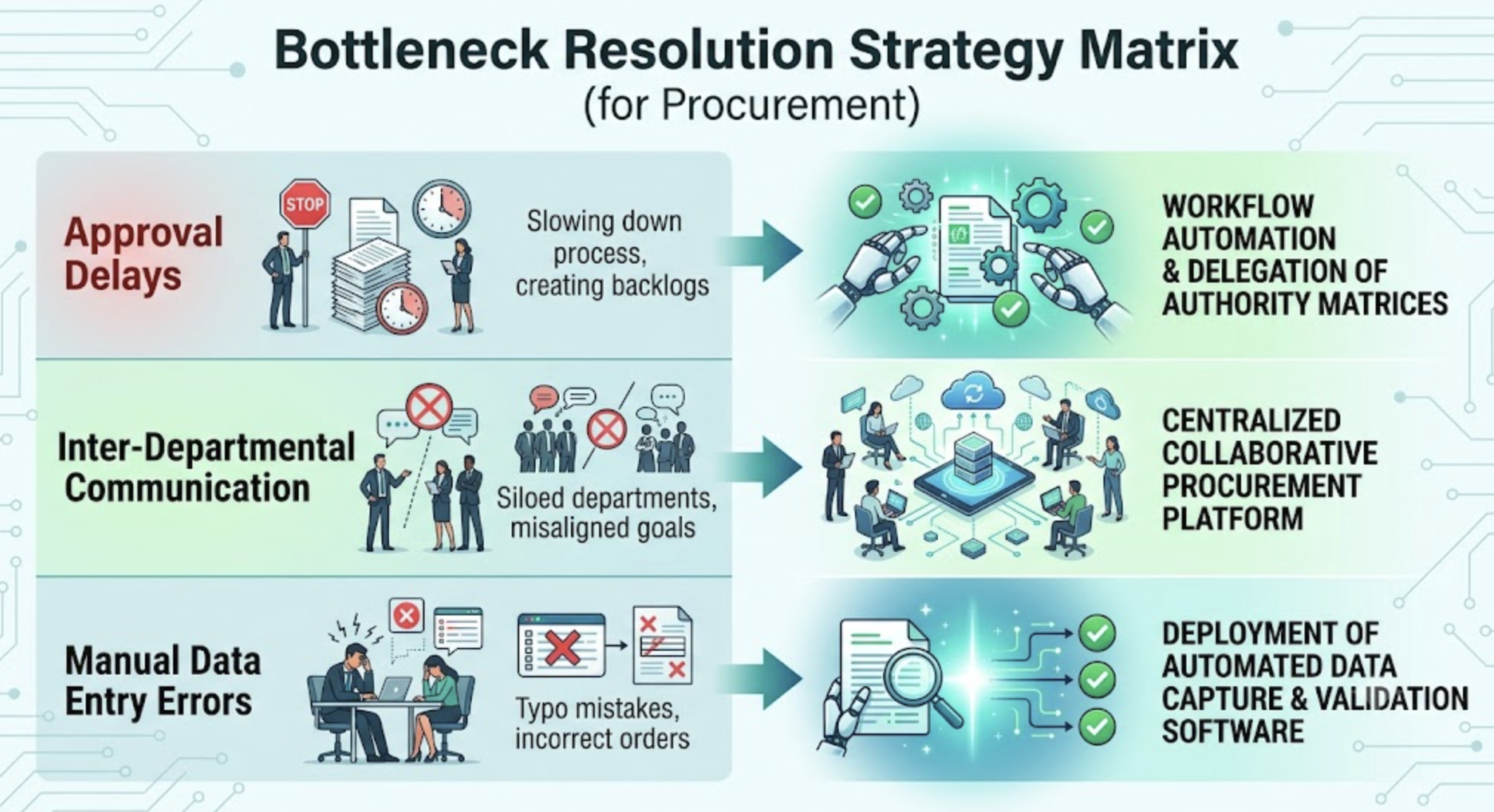
An infographic matrix titled "Bottleneck Resolution Strategy Matrix (for Procurement)" illustrating three main procurement problems and their corresponding technological solutions. The matrix is divided into three rows: Approval Delays, Inter-Departmental Communication, and Manual Data Entry Errors. Each problem is described with text and an illustrative icon on the left, connected by an arrow to a strategic solution with a corresponding icon on the right. Solutions include Workflow Automation & Delegation of Authority Matrices, a Centralized Collaborative Procurement Platform, and Deployment of Automated Data Capture & Validation Software.

FAQ - Questions About Optimizing Purchase Requests

Optimizing purchase requests is fundamental to achieving high operational speed, cost control, and procedural accuracy across modern procurement teams.

Below are actionable answers to common questions on reducing request cycle times, improving inventory accuracy, maximizing cost savings, leveraging technology, and maintaining strict compliance.

1. How can I reduce the time it takes to process purchase requests?

Automate Approval Workflows: To significantly slash processing lead times, automate your request routing.

Practical Application: Utilizing integrated ERP software allows requisitions to be automatically routed to designated approvers based on predefined financial and departmental thresholds.

2. What methods can improve control accuracy?

Synchronized Inventory Systems: Integrating an active inventory management platform directly into your procurement workflow significantly enhances order precision.

This integration eliminates costly purchasing errors resulting from outdated, inaccurate, or duplicate stock data.

3. How to optimize costs in the procurement process?

Strategic Negotiation & Volume Consolidation: Optimize expenditure by negotiating preferential pricing structures with trusted, high-performing suppliers.

Actionable Strategy: Consolidating purchase requests across departments enables bulk ordering, securing better volume discounts and lowering total acquisition costs.

Core Takeaways for Request Optimization

  • ERP Workflow Automation: Streamline sign-off chains to eliminate processing bottlenecks.
  • Inventory System Integration: Prevent order inaccuracies by syncing live stock data.
  • Purchasing Consolidation: Group order volumes to negotiate stronger vendor rates.
  • Predictive AI Analytics: Analyze trend data to forecast buying needs accurately.
  • Embedded Compliance Controls: Utilize built-in audit trails and documentation tools.

4. What role does technology play in improving purchase requests?

Predictive Intelligence & Data Trend Analysis: Modern technologies, including Artificial Intelligence (AI), accurately predict upcoming buying requirements by evaluating historical purchasing trends.

These insights empower procurement managers to make faster, evidence-based purchasing decisions and prevent inventory imbalances.

5. How do you ensure compliance in the purchasing process?

Rigorous Documentation & Integrated Controls: Maintaining thorough digital documentation and conducting routine audits are essential for verifying compliance.

Deploying automated compliance management tools directly within procurement platforms ensures continuous adherence to internal policies and external regulatory standards.

Conclusion: Transform Your Purchase Request Management

Elevate Procurement Speed, Accuracy, and Compliance

From automated ERP routing and predictive AI forecasting to volume rate negotiations, optimizing purchase requests converts administrative friction into measurable enterprise value.

Streamline your procurement workflows, enforce total compliance, and drive cost savings today.

Optimizing Purchase Requests for Strategic Success

Optimizing purchase requests is essential to strengthen organizational effectiveness across modern enterprise procurement pipelines.

By applying proven optimization strategies, businesses achieve substantial cost reductions while accelerating request processing times.

Pillars of Competitive Procurement Management

  • Cost Optimization: Slash operational overhead by streamlining approval workflows.
  • Accelerated Cycle Times: Drastically reduce purchase request lead times from requisition to fulfillment.
  • Systematic Process Enhancement: Rapidly detect workflow friction and deploy targeted solutions.
  • Competitive Market Advantage: Convert administrative management into a high-value performance driver.

Transform Procurement into a Strategic Advantage

Adopting a systematic approach makes it possible to quickly identify operational areas for improvement and implement highly effective, scalable solutions.

Optimized procurement management is synonymous with increased success for your business—providing the agility, accuracy, and financial control needed to outperform competitors.

Elevate Your Procurement Performance Today

Explore these optimization methods in detail to transform your purchase request process into a major, sustainable competitive advantage.

Unlock operational efficiency, eliminate processing bottlenecks, and maximize corporate growth today.

Line
Featured Post

Popular posts