Olivier Audino
Webinar
Comment 3 leaders de l'Auto ont fait économiser +1000 heures à leurs équipes Achats
Jeudi 02 Octobre à 11h00

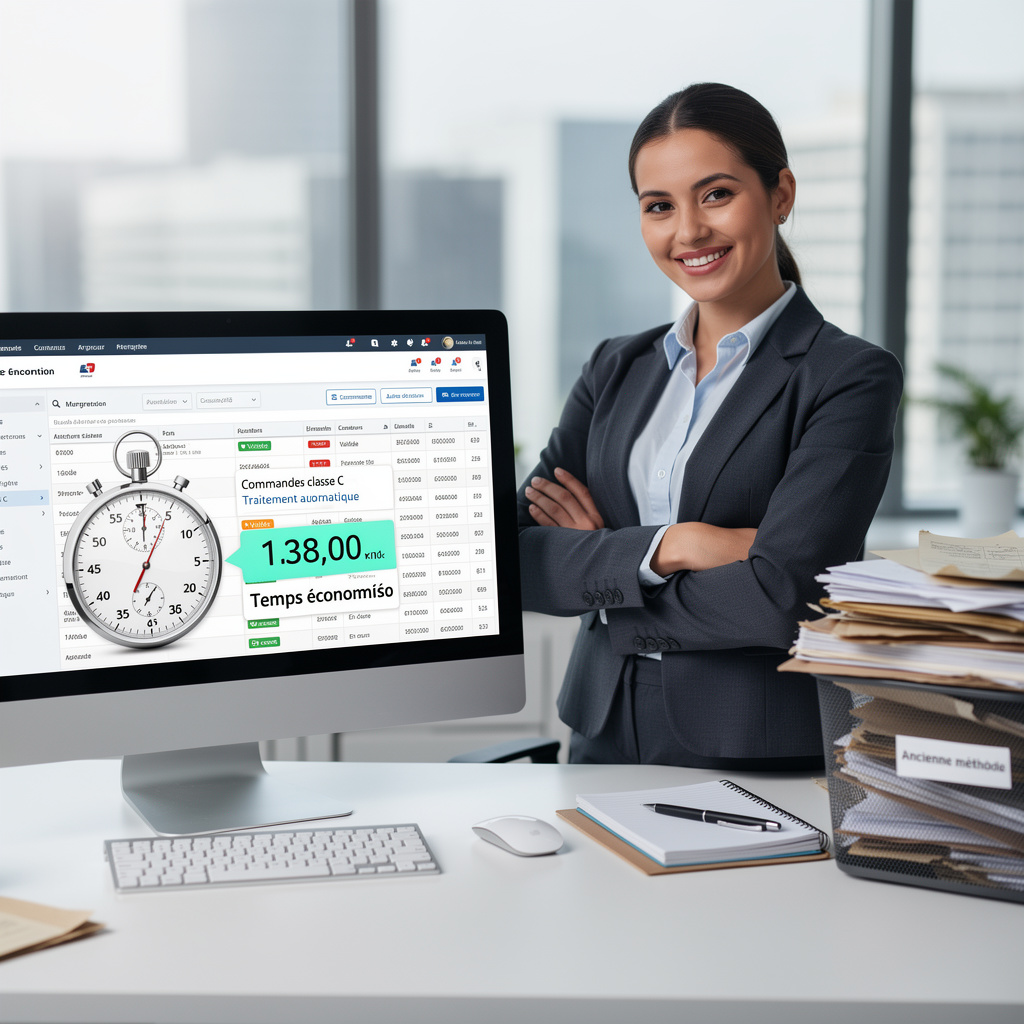

In many industrial and service companies, class C purchases are still managed manually, with scattered requests, untracked approvals and limited visibility over actual spending. This complexity creates hidden costs and slows down operational teams. This is precisely where a procurement software becomes a real performance driver.
By centralising requests, automating workflows and improving supplier monitoring, a procurement software eliminates repetitive tasks and reduces data-entry errors. This digital transformation continues the path already taken by many organisations through initiatives such as digitalisation of purchasing processes, which is redefining how companies manage their procurement activities.
Leading industry bodies such as the Conseil National des Achats emphasise that performance now depends on a combination of digital tools and structured processes. This article aims to guide you step by step in identifying the procurement software best suited to your organisation and in solving the recurring challenges linked to class C purchasing.
Class C purchases often represent less than 5% of the total spend, yet they can generate more than 60% of the administrative workload. This imbalance stems from highly manual processes: non-standardised requests, numerous suppliers, slow approvals and dispersed information. A procurement software helps restore order where processes become too heavy for teams to manage efficiently.
One of the first benefits is the reduction of repetitive tasks. Most data-entry mistakes, duplicate requests and order delays disappear once workflows are automated. Companies that have already optimised their procurement processes—such as those following optimisation des achats— report smoother operations and a significant decrease in time spent on low-value administrative tasks.
Procurement software also provides real-time visibility on class C purchasing activity: order volumes, recurring needs, product categories and supplier performance. These insights help teams make faster and more reliable decisions, adjust policies and improve compliance. Organisations such as the OECD regularly highlight that transparency in purchasing is a key factor in reducing operational risks and improving performance.
Lastly, a modern solution strengthens collaboration across departments. Users benefit from a simplified and guided purchasing journey, while buyers gain a centralised platform to validate and control requests. The result is a more reliable, efficient and scalable model for managing class C purchases.
To truly improve the management of class C purchases, a procurement software must provide features that automate low-value tasks and strengthen internal control. Below are the key capabilities you should look for before selecting a solution.
A robust procurement software should centralise all supplier records, track their performance and standardise contract management. This visibility reduces operational risks and makes decision-making easier. Organisations that have already structured their supplier management report better continuity of service and fewer disputes.
The software should streamline internal processes by automating key steps: request creation, hierarchical approvals, budget checks and order transmission. This significantly reduces manual errors and processing time. The standard ISO 54001 recommends workflow standardisation as a way to improve both performance and compliance in purchasing.

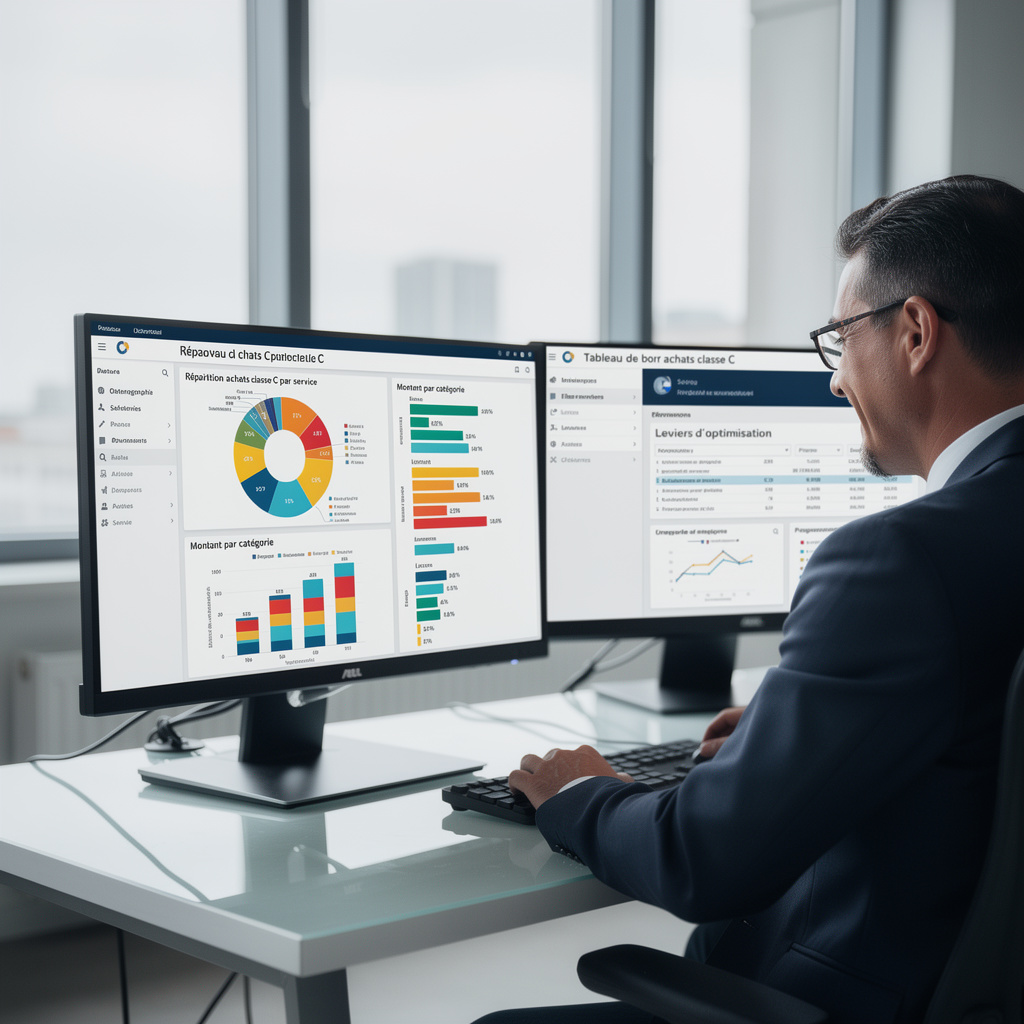
A dynamic reporting layer is essential to monitor spending, detect deviations and anticipate future needs. With reliable indicators, procurement teams can make faster and more accurate decisions, particularly on recurring class C purchases.
An effective solution should offer an analytics module dedicated to class C, able to segment purchases, highlight the most expensive items and suggest optimisation opportunities. This centralised view improves both spend management and cross-team collaboration.
Class C purchases are often seen as non-strategic, yet they are the main source of administrative complexity. A procurement software simplifies this segment by automating repetitive tasks, consolidating orders and improving budget control. The objective is not only to save time, but also to reduce hidden costs that arise from dispersed and unmanaged requests.
Without a dedicated tool, each class C purchase request requires multiple exchanges, manual checks and several layers of validation. With procurement software, these steps become automated and standardised. Companies that have reinforced their processes — as described in purchase requisition optimisation — report a notable reduction in manual operations.
Class C purchases typically involve many small suppliers, one-off orders and decentralised practices. Procurement software consolidates these flows into a centralised and controlled channel, improving negotiation capacity and overall visibility.
According to ASCM, consolidating purchasing flows is one of the most effective levers for improving operational performance and reducing indirect costs in the supply chain.
A procurement software often includes compliance and supplier evaluation modules that assess reliability, performance and risk levels. For class C purchases — where suppliers are numerous and not always stable — this monitoring is crucial.
Selecting a procurement software is a strategic decision that must align with your operational needs, internal processes and the complexity of your class C purchases. To avoid costly mistakes and ensure long-term success, it is essential to evaluate technical, functional and organisational criteria.
A good solution must be user-friendly, intuitive and flexible enough to match your internal workflows. Companies that have already structured their procurement organisation — as described in procurement organisation — observe that ease of use is one of the strongest predictors of successful adoption.
Your procurement software must integrate seamlessly with your ERP to avoid double data entry, ensure consistency and streamline the procure-to-pay chain. This interoperability is crucial for maintaining operational continuity and data accuracy.
The CIGREF highlights that application compatibility is now a non-negotiable requirement for organisations modernising their procurement processes.
Before choosing a solution, it is crucial to estimate the potential value generated: shorter processing times, fewer errors, better spend visibility and fewer non-compliant purchases. A well-chosen software should clearly contribute to reducing administrative costs and improving purchasing performance.
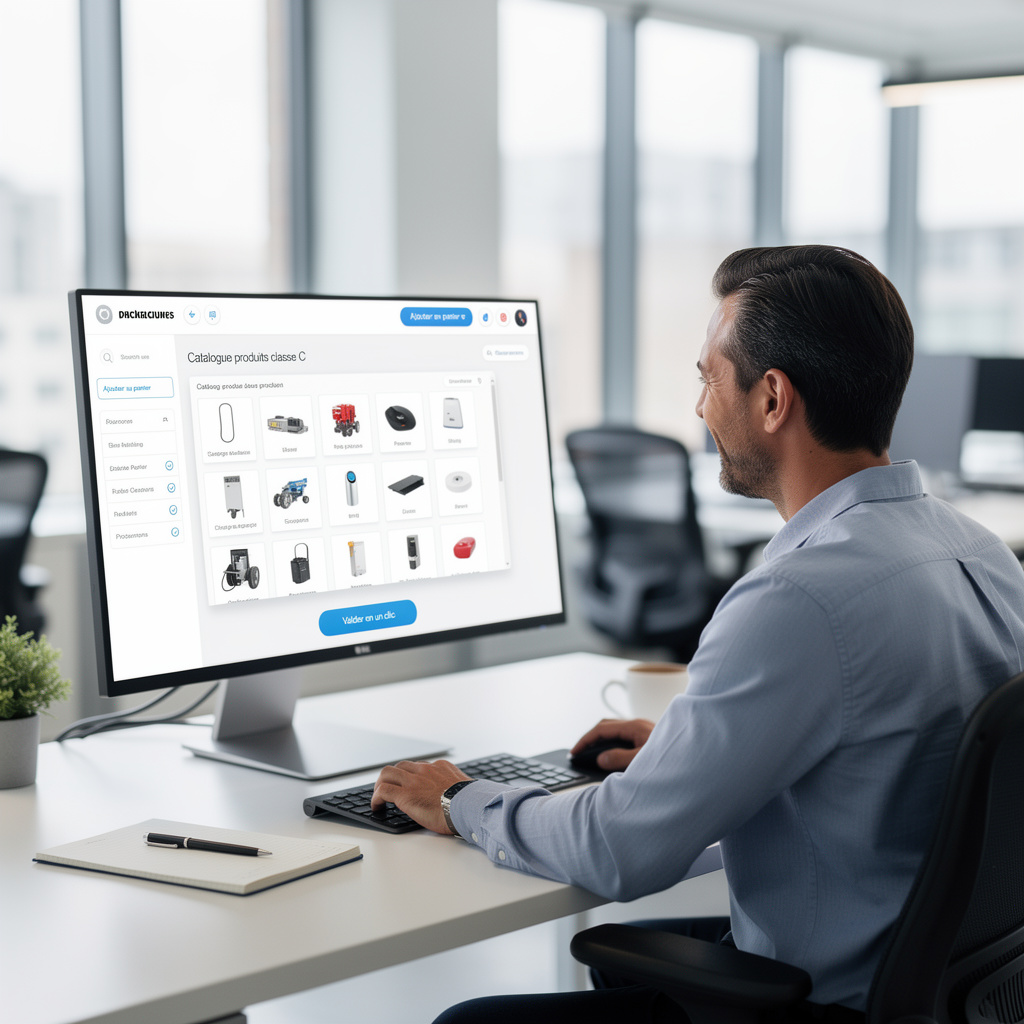
To understand the real impact of procurement software on class C purchases, consider the example of an industrial company facing urgent requests, slow approvals and poor visibility over spend. This situation led to errors, delays and supplier fragmentation, all of which increased administrative costs. Implementing a digital solution transformed the organisation’s procurement performance.
Before implementation, requests were sent by email and often did not meet budget requirements. With procurement software, the company automated each workflow step: request creation, budget validation, supplier selection and order placement. This approach mirrors the principles of procurement planning, where standardisation strengthens reliability and reduces operational delays.
The integrated dashboard provides consolidated insights into class C purchases: frequency, volumes, average prices and supplier usage. This visibility helps leadership teams make faster decisions and identify potential savings.
Many studies published by Supply Chain Quarterly highlight the importance of data transparency in improving performance for organisations with high volumes of class C purchases.
After several months of use, the company saw a major reduction in processing times, fewer supplier disputes and a significant drop in non-compliant purchases. Operational users gained autonomy and speed, while the procurement team strengthened its strategic oversight of spending.
Choosing a procurement software can quickly become complex if recurring mistakes are not anticipated. For class C purchases, selecting the wrong solution can increase costs, reduce user adoption and make processes even more cumbersome. Below are the most common pitfalls and how to avoid them.
One of the most frequent mistakes is choosing software with many features but poor usability. If teams do not adopt the tool, the investment will not generate value. Organisations that have already simplified their purchasing processes — as recommended in procurement standardisation — achieve better results thanks to a stronger alignment between tool and operational capabilities.
If the software does not integrate well with your supplier ecosystem, it will create delays, errors and duplicated entries. Before selecting a tool, it is essential to evaluate data exchange capabilities, supported formats and compatibility with current ordering practices.
Procurement software requires regular updates, fast support and compliance monitoring. Ignoring these aspects often leads to operational disruptions and loss of user confidence.
Class C purchases hold significant optimisation potential within any organisation. Although their unit value is low, they generate a disproportionately high administrative workload, recurring errors and fragmented spend. Implementing the right procurement software allows you to centralise processes, reduce manual intervention, improve visibility and strengthen compliance.
By digitalising this category of spend, organisations can automate workflows, enforce internal rules and benefit from real-time reporting. Studies from the International Federation of Purchasing and Supply Management consistently show that companies integrating digital tools into their procurement operations achieve better decision-making, lower costs and greater operational performance.
To help you define your priorities and select the most suitable solution, you can refer to resources such as the white paper Optimisez vos achats de classe C , which outlines selection criteria, expected ROI and practical guidance for structuring class C purchasing.
If you would like expert support to analyse your current processes, assess solutions or structure your procurement organisation, our team is ready to assist you with personalised guidance.
Contact our procurement experts
Yes. Class C purchases generate a high administrative workload despite their low financial weight. A procurement software helps automate workflows, centralise data and reduce errors, enabling better cost control and operational reliability.
The key features include:
Absolutely. Modern solutions include compliance, risk assessment and supplier monitoring features. These tools help organisations identify high-risk suppliers, track incidents and ensure greater operational continuity—especially valuable in class C purchasing.
Implementation times depend on organisational complexity and integration needs. For a structured environment, activating procurement software for class C purchasing typically takes only a few weeks.
The most relevant ROI indicators include:
Yes. SMEs often face high levels of fragmentation in class C purchasing. A clear and intuitive tool allows them to reduce manual work, improve traceability and gain tighter cost control.



.svg)