Personal development

Master the management of sustainable purchases.

Published By
Olivier Audino
Tags
Sourcing

Sustainable Procurement: Boosting Corporate Competitiveness

Sustainable procurement management has become an essential catalyst for boosting competitiveness in modern enterprise operations.

By embedding environmental, social, and ethical principles into procurement workflows, organizations protect brand reputation, drive substantial long-term cost savings, and secure supply chain resilience.

1. Strategic Benefits of Responsible Sourcing

Core Drivers of Value Creation

  • Substantial Cost Reductions: Optimizes life-cycle costs (TCO), lowers energy usage, and reduces packaging and waste disposal fees.
  • Enhanced Brand Image & Equity: Strengthens market reputation among conscious consumers, investors, and B2B partners.
  • Regulatory & Risk Mitigation: Ensures proactive compliance with evolving ESG standards, carbon regulations, and labor laws.
  • Collaborative Supplier Innovation: Encourages key vendors to co-develop eco-friendly products and circular economy solutions.

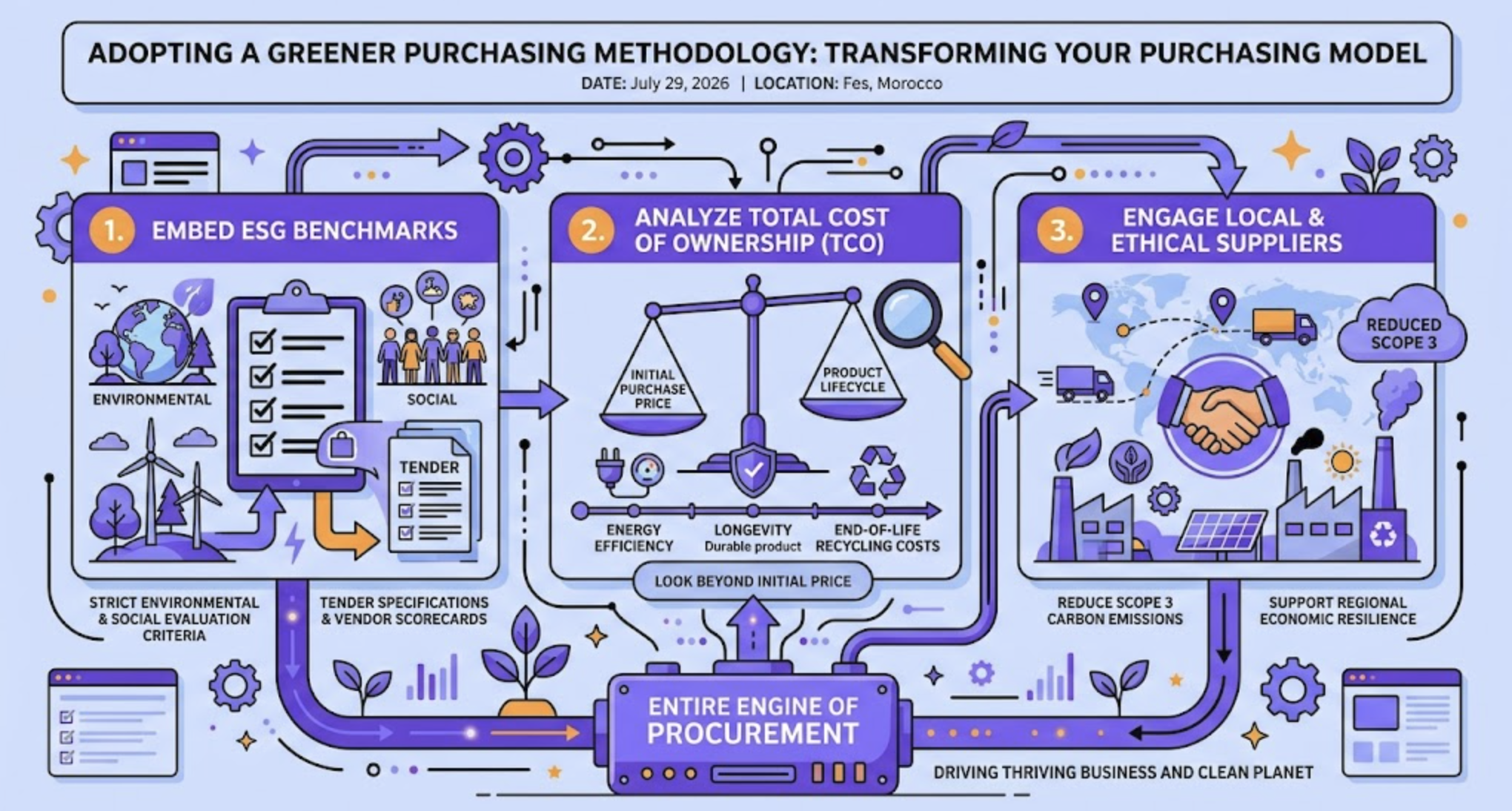
2. Adopting a Greener Purchasing Methodology

Transforming your purchasing model into a sustainable engine requires clear operational commitments:

Embed ESG Benchmarks: Include strict environmental and social evaluation criteria directly within tender specifications and vendor scorecards.
Analyze Total Cost of Ownership (TCO): Look beyond initial purchase price to evaluate energy efficiency, longevity, and end-of-life recycling costs.
Engage Local & Ethical Suppliers: Reduce scope 3 carbon emissions while supporting regional economic resilience.

Conclusion: Transforming Procurement for a Sustainable Future

Build a Resilient, Responsible Supply Chain

Adopting sustainable purchasing practices balances ecological responsibility with strong financial performance, positioning your enterprise for long-term market leadership.

Transform your procurement strategy today and discover the tangible competitive advantages of sustainable sourcing.

Why Integrate Sustainability into Your Purchases?

In a world where environmental concerns are becoming increasingly critical, integrating sustainability into your procurement strategy has become indispensable.

Businesses face growing pressures—from stricter government regulations to rising consumer expectations. Shifting toward sustainable purchasing is no longer just an option; it is a vital strategy for long-term competitiveness.

1. Meeting Stricter Regulatory Requirements

Environmental laws and standards are multiplying at high speed. From energy transition legislation to international standards like ISO 14001, regulatory bodies are forcing organizations to rethink their buying processes.

Ignoring these compliance requirements carries steep costs—not only in financial penalties and legal risks, but also in catastrophic damage to corporate reputation.

2. Reducing Your Enterprise Environmental Impact

Responsible purchasing plays a direct role in lowering CO2 emissions and optimizing waste management. Making informed choices regarding vendor selection and material sourcing dramatically shrinks your company's carbon footprint while lowering waste management costs.

Action Plan to Lower Carbon Footprint

  • Local Supplier Selection: Prioritize regional vendors to minimize transport-related Scope 3 carbon emissions.
  • Recyclable & Eco-Friendly Materials: Favor recycled, bio-based, or easily recyclable packaging and components.
  • Energy Efficiency Standards: Rigorously evaluate energy performance metrics across equipment and operational assets.

3. Creating Value for Your Business & Customers

Integrating sustainable procurement doesn't just protect the planet—it actively boosts commercial performance. It enhances brand image, attracts eco-conscious consumers, and builds customer loyalty while opening new market segments.

4. Competitive Advantages of Sustainable Procurement

Strategic Advantage Business Impact & Description
Enhanced Brand Image Attracts and retains customers who prioritize ecological responsibility
Direct Cost Reduction Minimizes material waste, lowers energy usage, and secures long-term savings
Agile Adaptability Prepares the enterprise for future regulatory shifts and market evolutions

Conclusion: Preparing Your Business for Tomorrow

Lead the Shift Toward Responsible Procurement

Anticipating market changes and embedding sustainability into your purchasing strategy places your company in a position of industry leadership.

Build a resilient, agile, and eco-responsible supply chain equipped to thrive amidst tomorrow's challenges.

Steps to Integrate Sustainability into Your Purchases

Adopting sustainable procurement management is an essential step for the long-term resilience and commercial success of your business.

Integrating environmental and social standards into everyday buying processes requires a structured, multi-step roadmap to transform strategic intent into measurable operational outcomes.

1. Define a Responsible Purchasing Policy

Formulating a comprehensive responsible purchasing policy lays the foundation for informed, policy-driven procurement choices.

Establishing explicit sustainability targets and evaluation criteria guides vendor selection, sets procurement priorities, and strengthens supply chain integrity. Formalize these expectations by incorporating binding ESG clauses directly into commercial vendor contracts.

2. Collaborating with Committed Suppliers

Sustainable procurement relies on building collaborative partnerships with committed vendors. Prioritize certified suppliers adhering to internationally recognized standards such as ISO 14001 (Environmental Management) or Fairtrade.

Treating suppliers as unified strategic partners fosters mutual innovation, unlocks new commercial opportunities, and reinforces customer confidence in your brand values.

3. Promoting the Circular Economy

Integrating circular economy principles into procurement workflows reduces raw material consumption and drives long-term cost savings.

Prioritize reusable, recycled, or renewable materials across product specifications. Emphasizing waste reduction and end-of-life recyclability minimizes environmental impact while stimulating product and process innovation.

Core Strategic Actions Checklist

  • Establish Governance: Set up a formal, environmentally friendly purchasing policy.
  • Verify Vendor Credentials: Select certified suppliers committed to responsible labor and environmental practices.
  • Drive Resource Efficiency: Promote recycling, waste reduction, and circular material sourcing.

4. Sustainable Procurement Implementation Framework

Implementation Step Key Operational Actions
Define Policy Establish clear objectives and binding sustainability criteria in contracts
Collaborate with Suppliers Select certified partners and build joint ESG improvement plans
Promote Circular Economy Implement waste reduction, material reuse, and eco-design practices

Conclusion: Making Decisions for a Brighter Future

Transform Procurement into a Sustainable Value Engine

Integrating sustainability into procurement workflows is far more than a marketing asset—it is a core business strategy that aligns operations with modern consumer expectations.

Empower your enterprise to make responsible purchasing decisions that secure long-term profitability and shape a brighter future for your business and customers alike.
The Long-Term Benefits of Sustainable Procurement Management

When evaluating sustainable procurement management, recognizing the long-term rewards it delivers is crucial.

Adopting responsible purchasing practices transcends brief trends or mere regulatory compliance—it serves as a strategic cornerstone that generates tangible cost savings, strengthens stakeholder partnerships, and builds long-term organizational resilience.

1. Reduction of Operational Costs Through Resource Optimization

A major advantage of sustainable sourcing is a substantial reduction in operational expenditure.

Optimizing resource consumption and avoiding regulatory non-compliance penalties generates direct savings. Adopting energy-efficient practices lowers utility bills, while utilizing recycled materials reduces raw purchase costs—freeing up capital to reinvest in core growth initiatives.

Cost Reduction Drivers

  • Waste Minimization: Cuts total volume of waste and reduces associated disposal and management fees.
  • Energy Efficiency: Decreases power consumption across facilities, warehousing, and transportation.
  • Raw Material Optimization: Maximizes resource utilization and expands the use of circular, recycled inputs.

2. Improving Stakeholder Relationships & Brand Image

Integrating responsible procurement practices elevates relationships across your entire commercial network. Demonstrating a clear commitment to fair, ethical, and eco-friendly standards builds a climate of mutual trust and cooperation essential for long-term growth.

Key Relationship Improvements

  • Enhanced Supplier Collaboration: Fosters joint value creation, transparent communication, and shared innovation.
  • Increased Customer Loyalty: Retains eco-conscious buyers who actively prioritize sustainable brands.
  • Strengthened Investor Confidence: Attracts ESG-focused investment capital and enhances enterprise valuation.

3. Building Supply Chain Resilience Against Market Volatility

Investing in sustainable procurement equips companies with greater resilience against economic disruptions and supply shortages.

Establishing robust, ethical supply networks reduces single-source dependency and protects operations from external shocks. Proactively anticipating upcoming environmental regulations ensures a dominant, future-proof market position.

4. Long-Term Strategic Benefits Summary

Strategic Advantage Operational Impact & Description
Reduction in Operational Costs Direct financial savings from energy efficiency, waste minimization, and recycled inputs
Improved Relationships Strengthened trust and collaboration with suppliers, customers, and investors
Increased Resilience Robust, flexible supply networks built to withstand market volatility and disruptions
Alignment with ESG Goals Measurable contributions toward global sustainability benchmarks and future regulatory compliance

Conclusion: Securing the Future of Your Enterprise

Build a Sustainable, Future-Proof Business

Adopting sustainable procurement management safeguards both the planet and the long-term commercial viability of your organization.

Transform your purchasing practices today into a resilient engine for profitability, risk mitigation, and competitive advantage.

FAQ: Mastering Sustainable Procurement Management

1. How Can Sustainable Procurement Benefit My Business?

Sustainable purchasing drives long-term cost reductions, enhances corporate brand image, and elevates customer satisfaction.

For example, transitioning to digital workflows and reducing paper usage saves direct material costs while protecting natural resources—attracting eco-conscious consumers and strengthening brand equity.

2. What Are the Criteria for Choosing a Sustainable Supplier?

Selecting responsible vendor partners depends on verifying environmental commitments and certified operational standards:

Environmental Certifications: Compliance with recognized standards such as ISO 14001.
Resource Efficiency: Use of recycled inputs, renewable energy powering production facilities, and eco-friendly packaging.
Ethical Standards: Fair labor practices, transparent supply chains, and local sourcing capabilities.

3. How Do You Measure the Environmental Impact of Sustainable Procurement?

Core ESG Metrics & KPIs

  • Carbon Footprint Reduction: Tracking total Scope 1, 2, and 3 CO2 emissions across transportation and production.
  • Energy & Resource Consumption: Monitoring power consumption efficiency and water usage metrics.
  • Circular Material Usage: Evaluating percentages of recycled, biodegradable, or renewable inputs used across categories.

4. What Is the Difference Between Sustainable and Traditional Procurement?

Traditional procurement focuses primarily on initial purchase price, short-term savings, and transactional terms.

In contrast, sustainable procurement evaluates the total product life-cycle—incorporating Total Cost of Ownership (TCO), environmental stewardship, social responsibility, and long-term waste reduction into every buying decision.

5. How Can Sustainability Be Integrated into the Supply Chain?

Integrating sustainability requires engaging suppliers as active partners in your ESG roadmap.

Educate vendor networks on environmental targets, incentivize waste reduction, and encourage the adoption of biodegradable materials, circular design practices, and low-emission logistics.

Conclusion: Driving Sustainable Procurement Success

Transform Responsible Sourcing into Enterprise Value

Mastering sustainable procurement management aligns your buying decisions with environmental stewardship, regulatory compliance, and long-term financial growth.

Empower your organization to build a resilient, eco-responsible supply chain that delivers lasting competitive advantages.

Line
Featured Post

Popular posts