Olivier Audino
Webinar
Tail Spend: The Overlooked Lever to Free Up Your Buyers' Time
Tuesday March 31 at 2:00 PM



An electronic invoicing platform is a solution designed to issue, receive, transmit and control invoices in electronic format, in compliance with regulatory requirements. It goes far beyond the simple exchange of PDF files: its role is to structure invoicing data, ensure traceability and guarantee compliance.
Within the French electronic invoicing reform, the platform becomes a central link between companies, their suppliers and the tax authorities. It is part of a broader effort to secure transaction flows, particularly supplier invoices, which represent key evidence of procurement transactions and purchasing decisions.
Companies already engaged in supplier invoice dematerialization have a solid foundation. However, an electronic invoicing platform goes further by embedding standardized compliance and transmission rules required by the reform.
Confusion between these concepts is common, yet each refers to a distinct reality with direct implications for platform selection.
| Term | Definition | Business impact |
|---|---|---|
| Dematerialization | Conversion of a paper document into a digital format | Time savings and paper reduction |
| E-invoicing | Issuing and receiving structured electronic invoices | Regulatory compliance and data reliability |
| E-reporting | Transmission of invoicing data to tax authorities | Fiscal transparency and control |
An electronic invoicing platform must therefore be able to cover these dimensions directly or integrate seamlessly into an ecosystem that manages them consistently, particularly when connected to procure-to-pay processes .
The generalization of electronic invoicing is driven by the fight against VAT fraud and the improvement of economic data quality. In France, this reform is led by the government and detailed on official public websites.
Beyond regulatory compliance, electronic invoicing platforms address strong operational challenges:
These challenges are particularly critical for high-volume and dispersed flows such as C-class purchasing, where invoice quality and consistency directly condition both compliance and procurement performance.
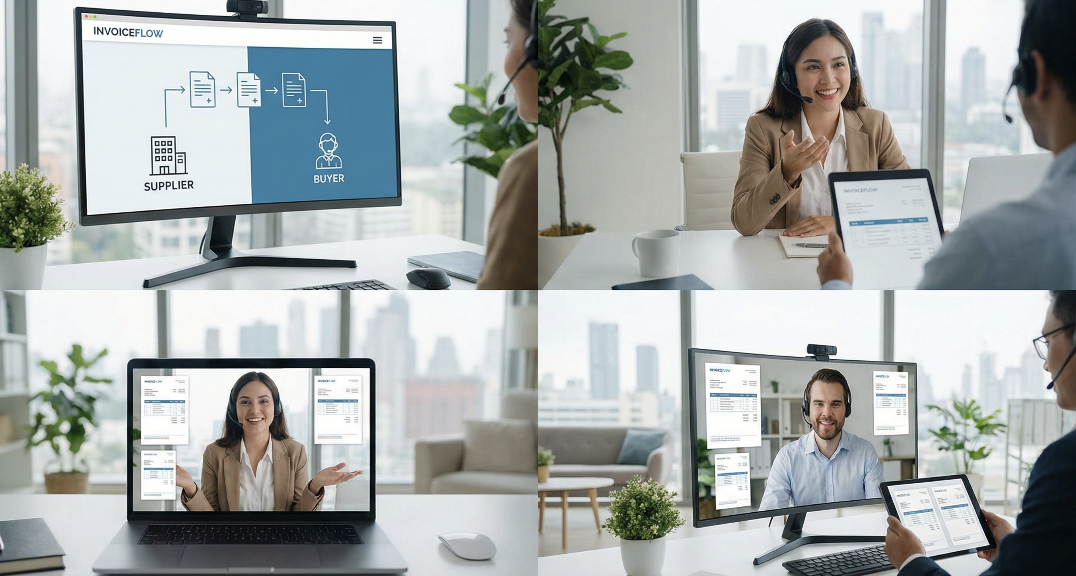
A supplier invoice is not merely an accounting document. It represents a central operational proof of procurement decisions: who buys, from whom, under which conditions and through which process. From this perspective, an electronic invoicing platform clearly goes beyond the finance perimeter.
In many organizations, inconsistencies between purchase orders, contracts and invoices reveal weaknesses in procurement practices. Structuring supplier invoices makes it possible to reconcile these data points and strengthen the consistency of information used for procurement performance management .
A well-integrated platform therefore helps connect invoicing flows to existing procurement processes, providing the level of traceability required in case of audits or controls.
When the choice of an electronic invoicing platform is driven solely by finance or IT, a structural risk emerges: compliance may be addressed without reflecting the operational reality of procurement. Yet procurement teams are the ones who understand supplier relationships, categories and real invoice volumes.
Involving procurement in the selection process makes it possible to:
This approach aligns with a broader procurement management logic, where the platform becomes a securing tool rather than an additional constraint.
C-class purchasing concentrates a high volume of supplier invoices, often issued by small or less mature suppliers in terms of electronic invoicing capabilities. Without an appropriate platform, these flows quickly generate:
Insights from C-class purchasing audits show that most compliance gaps and operational issues are concentrated precisely within these dispersed flows.
The value delivered by an electronic invoicing platform directly depends on the level of procurement structuring. Two companies using the same solution can experience very different outcomes depending on their internal practices.
| Procurement practices | Impact on electronic invoicing | Operational consequence |
|---|---|---|
| Structured procurement | Invoices consistent with orders and contracts | Smooth processing and controlled compliance |
| Partially structured procurement | Frequent manual checks | Increased operational workload |
| Unstructured procurement | Heterogeneous invoices and recurring errors | High non-compliance risk |
Involving procurement from the very beginning of the platform selection process makes it possible to turn a regulatory obligation into a lever for reliability and performance, particularly for complex C-class purchasing flows.
Before selecting an electronic invoicing platform, it is essential to clearly distinguish regulatory obligations from organizational choices. The French reform defines a strict framework, while leaving companies significant flexibility in how they comply.
In practice, companies must be able to issue and receive structured electronic invoices, transmit specific invoicing data to the tax authorities and ensure full traceability of invoice flows. These requirements are detailed by the tax administration on official public resources such as economie.gouv.fr .
The electronic invoicing platform acts as an interface: it ensures that invoices comply with expected formats, that data is properly transmitted and that exchanges are secured. From a procurement standpoint, this directly affects how supplier invoices are processed and validated within procure-to-pay cycles .
The reform introduces several technical notions that can quickly appear complex. The key is to understand their roles without getting lost in details.
The choice between these options depends on company maturity, invoice volumes and the desired level of integration with internal processes, especially procurement and ERP systems .
Contrary to common misconceptions, regulation does not impose a single tool or a standardized operating model. Several aspects remain at the discretion of companies.
For example, there is no obligation to replace an existing ERP or to centralize all processes within a single solution. An electronic invoicing platform can integrate with existing tools, provided that invoice and purchasing flows remain consistent.
This is where procurement process structuring becomes critical. Well-defined procure-to-pay practices significantly simplify compliance without multiplying tools.
| Element | Mandatory by regulation | Company choice |
|---|---|---|
| Structured electronic invoices | Yes | No |
| Transmission of data to tax authorities | Yes | No |
| Platform choice (PDP or PPF) | No | Yes |
| ERP and procurement tool integration | No | Yes |
| Internal process organization | No | Yes |
Understanding this distinction helps avoid a frequent mistake: over-investing in tools to meet regulatory requirements, while the main performance levers lie in procurement organization and flow control, especially for high-volume C-class purchasing.

Regulatory compliance is the first selection criterion. An electronic invoicing platform must be able to operate sustainably within the framework defined by tax authorities, without requiring a complete redesign at each regulatory change.
Beyond immediate compliance, companies should assess the platform’s ability to evolve over time. Rigid solutions or those relying on heavy custom developments can quickly become constraints, especially as invoice volumes increase or scopes expand.
An electronic invoicing platform should never operate in isolation. Its value largely depends on its ability to integrate with existing processes, particularly the procure-to-pay cycle .
Seamless integration makes it possible to match purchase orders, goods receipts and invoices, reduce manual controls and improve end-to-end traceability. Poor integration, on the other hand, creates process breaks and increases operational workload.
Not all platforms are equally suited to supplier management. Some perform well with a limited number of structured partners, while others are designed to absorb large volumes of invoices coming from highly heterogeneous suppliers.
This dimension is particularly critical for C-class purchasing, where high volumes and supplier diversity quickly put overly rigid solutions under strain. Structured supplier management practices significantly ease platform adoption and reduce deployment risks.
A high-performing electronic invoicing platform must produce usable, consistent and auditable data. The objective is not only to transmit invoices, but to ensure the quality of all related information.
The ability to trace flows, store histories and reconstruct transactions becomes a decisive criterion, particularly during audits or controls. Companies already working on invoice process automation often have a clear advantage in this area.
Finally, platform selection must be assessed based on its real impact on teams. A compliant but complex solution leads to workarounds, errors and low user adoption.
The objective is to reduce manual workload, especially on dispersed flows, while improving data reliability. This requires intuitive user interfaces and clearly defined processes.
| Criterion | Key questions | Risk if neglected |
|---|---|---|
| Regulatory compliance | Is the solution aligned with current and future requirements? | Non-compliance and costly rework |
| P2P integration | Does the platform integrate with procurement processes? | Process breaks and manual controls |
| Supplier handling | Can it handle high volumes and heterogeneous suppliers? | Operational bottlenecks |
| Data quality | Are data consistent and auditable? | Unreliable information |
| Operational workload | Does the platform simplify daily work? | Workarounds and low adoption |
An informed choice therefore relies on a global assessment combining compliance, integration, data quality and operational impact. Under these conditions, the electronic invoicing platform becomes a true lever for securing and optimizing procurement, including for complex C-class purchasing flows.
The most frequent mistake is to approach the electronic invoicing platform as a pure compliance tool. While regulation is a trigger, it should never be the sole decision criterion. A solution selected only to “be compliant” often creates long-term operational debt.
The electronic invoicing reform aims to ensure data transmission to tax authorities, but it is also designed to improve process reliability. Official guidance published on economie.gouv.fr repeatedly emphasizes that data quality is a core objective, not just formal compliance.
An electronic invoicing platform directly impacts supplier relationships. Underestimating this dimension leads to adoption issues, especially when procurement volumes are high and supplier maturity levels vary.
Organizations that do not involve procurement early in the selection phase often face supplier resistance, invoicing errors and processing delays. Structured supplier management practices help anticipate these challenges and secure platform deployment.
Many projects are sized based on strategic suppliers only, overlooking dispersed purchasing flows. Yet these flows generate the highest invoice volumes and complexity.
C-class purchasing concentrates a large share of supplier invoices, often issued by suppliers with limited digital maturity. Without a platform capable of handling these volumes, the operational workload escalates quickly, as highlighted in tail spend management initiatives.
Another common mistake is layering an electronic invoicing platform on top of poorly structured existing processes. In this case, the tool masks underlying issues rather than solving them.
The platform must be part of a broader reflection on procurement and finance processes. Companies that first address common procurement management mistakes achieve far more sustainable results.
Avoiding these pitfalls allows the electronic invoicing platform to become a real lever for reliability and performance, rather than a compliance constraint imposed on the organization.
A well-selected electronic invoicing platform does more than ensure regulatory compliance. Its primary operational benefit lies in significantly reducing the manual workload associated with supplier invoice processing: data entry, checks, follow-ups and corrections.
This impact is especially visible when invoice flows are high and dispersed. Companies working on procurement optimization quickly observe fewer low-value-added tasks and better time allocation for procurement teams.
The electronic invoicing platform also becomes a key control point for data quality. By structuring information at invoice issuance or receipt, it directly improves the reliability of supplier and procurement data used for performance monitoring.
Reliable data is essential to produce consistent indicators over time. Mature purchasing performance approaches heavily rely on invoicing data to identify risks, dependencies and optimization levers.
For C-class purchasing, where supplier diversity makes consolidation complex, the platform plays a structuring role by harmonizing formats and key information across invoice flows.
Beyond invoice processing, the electronic invoicing platform directly feeds procurement and finance governance. It provides reliable data on volumes, amounts, lead times and deviations, which are critical for informed decision-making.
When combined with dashboards and KPIs, it enables a shift from reactive monitoring to a proactive approach. Organizations that structure purchasing dashboards use these data to anticipate risks and strengthen cost control.
Public authorities also emphasize this dimension: electronic invoicing aims to improve economic transparency and data quality, not only compliance.
| Platform contribution | Compliance-focused approach | Procurement performance approach |
|---|---|---|
| Invoice processing | Format and deadline compliance | Faster processing and reduced workload |
| Supplier data | Data transmission to authorities | Reliable data for procurement steering |
| Traceability | Evidence in case of audit | Clear visibility on purchasing flows |
| Governance | Minimum regulatory compliance | Continuous procurement optimization |
When integrated into a broader procurement organization, the electronic invoicing platform goes beyond compliance to become a structuring lever for performance, especially for complex C-class purchasing flows.
Electronic invoicing platforms are often approached as a regulatory constraint that must be absorbed quickly. In reality, they represent a structuring decision that has a long-term impact on organization, processes and data quality.
Choosing a platform solely to meet regulatory requirements exposes companies to hidden costs, increased operational workload and limited value creation. Conversely, when the platform is designed in close alignment with procurement organization , it becomes a powerful lever to secure flows, improve traceability and strengthen procurement steering.
The challenge is particularly critical for C-class purchasing, where high invoice volumes and supplier diversity amplify non-compliance risks and inefficiencies. A well-integrated platform allows these dispersed flows to be transformed into reliable, actionable data.
If you want to secure your electronic invoicing platform project, align compliance with procurement performance and avoid structural mistakes, you can rely on our procurement consulting services.

Yes. Ultimately, all VAT-registered companies will be impacted by the electronic invoicing reform. While implementation timelines differ depending on company size, the obligation to issue and receive structured electronic invoices will be generalized.
A Partner Dematerialization Platform (PDP) is a private solution accredited by the government, offering advanced services and deeper integration with internal systems. The Public Invoicing Portal provides a minimum compliance baseline for companies that do not use a PDP.
The choice depends on invoice volumes, integration needs and the level of procurement and financial steering required.
No. The electronic invoicing platform does not replace the ERP. It connects to existing systems to ensure invoice compliance and data transmission. The ERP remains the core system for procurement, accounting and financial processes.
Procurement teams manage supplier relationships, purchasing categories and invoice volumes. Without their involvement, the platform may not be adapted to real operational flows, particularly for C-class purchasing, leading to errors, disputes and process bypasses.
The first step is to map existing invoice flows, identify volumes, supplier profiles and pain points. It is then essential to align finance, procurement and IT teams on shared objectives before comparing solutions.
Structured approaches to procurement structuring significantly increase the chances of project success by establishing solid foundations before selecting the platform.



.svg)