Olivier Audino
Webinar
Comment 3 leaders de l'Auto ont fait économiser +1000 heures à leurs équipes Achats
Jeudi 02 Octobre à 11h00



In many industrial and service companies, sourcing still relies on scattered Excel files, supplier information hidden in inboxes, and informal knowledge that is difficult to share. As a result, procurement teams spend a considerable amount of time searching for suppliers, comparing offers, and securing decisions — tasks that a supplier sourcing tool could centralize and automate to deliver faster, more reliable outcomes.
In a context of strong pressure on procurement costs, supply chain disruptions, and increasing regulatory demands, having a structured sourcing process is no longer optional. A digital tool enables buyers to map their supplier base, track collaboration history, and accelerate the identification of new partners, as demonstrated in the approach presented in sourcing suppliers in B2B environments.
Beyond strategic spend, managing uncontrolled and fragmented purchases remains a significant challenge — especially within C-Class spend, where dispersed suppliers and requests create high hidden operating costs. A supplier sourcing tool helps standardize workflows, streamline evaluation criteria, and reduce risks linked to manual qualification efforts, complementing the structured assessment approach described in supplier evaluation and referencing.
Procurement departments also face increasing expectations regarding compliance, traceability, and sustainability. International standards promoted by organizations such as the OECD for due diligence or the ISO frameworks highlight the need for reliable and centralized supplier data. A sourcing tool provides buyers with a consistent, data-driven foundation for informed decisions aligned with the company’s operational and strategic goals.
The growing complexity of supply chains, increasing operational risks, and strong pressure on procurement costs make it difficult to manage sourcing with non-specialized tools such as spreadsheets or fragmented internal databases. Without a dedicated platform, supplier information remains dispersed, evaluations are inconsistent, and the ability to compare multiple partners reliably becomes limited. A supplier sourcing tool centralizes data, improves transparency, and brings structure to the entire sourcing process.
For procurement leaders, sourcing is no longer a simple operational task — it is now a strategic pillar of competitiveness. A digital solution helps identify new suppliers more efficiently, compare offers objectively, and build a more resilient supply strategy. This approach directly aligns with the principles of procurement performance management, where data quality and analytical capability play a crucial role.
Digital sourcing is also a powerful answer to the challenges posed by uncontrolled C-Class spend and low-value suppliers, which remain difficult to monitor without appropriate systems. A high-performance tool helps rationalize the supplier base and focus on reliable partners, complementing the insights shared in tail-spend optimization.
From a regulatory and sustainability perspective, organizations must increasingly demonstrate full traceability of their supplier decisions and integrate ESG criteria into procurement processes. Institutions such as the Chartered Institute of Procurement & Supply (CIPS) and the World Bank strongly recommend using digital platforms to ensure transparency, consistent evaluations, and improved risk control across the entire supply chain.
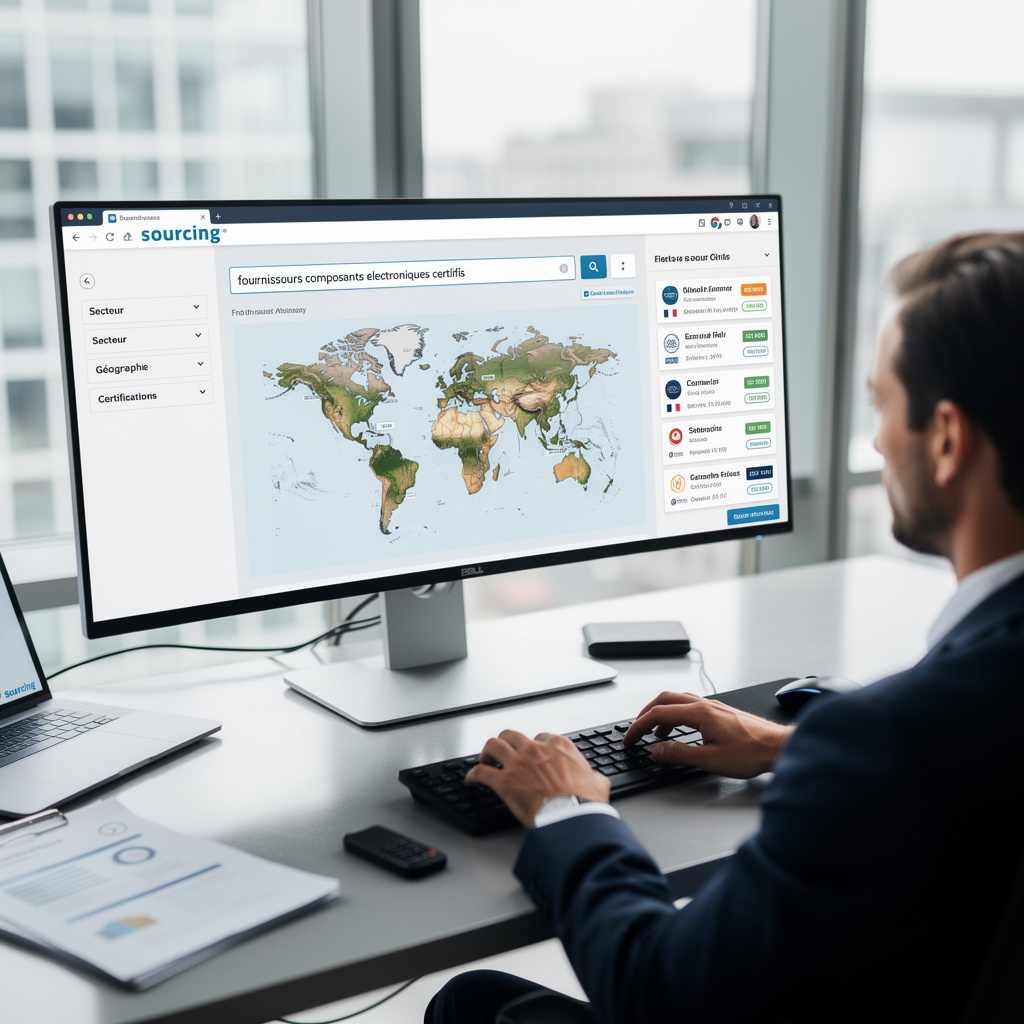
A supplier sourcing tool makes it significantly easier and faster to identify, compare, and qualify new suppliers. While manual research can take hours, a digital platform provides a centralized database with advanced filters, category-specific criteria, and automated data collection. This increases procurement agility and reduces operational workload, fully aligned with the structured approaches described in procurement organization best practices.
High-quality data is essential for informed decision-making. A sourcing tool consolidates critical information such as certifications, financial health, logistics performance, and non-compliance history. This enhances the accuracy of evaluations and reduces operational risks, reinforcing the principles outlined in supplier risk management.
Manual supplier qualification generates numerous hidden costs: time spent researching data, comparing offers, validating information, or coordinating with internal teams. A sourcing tool eliminates repetitive tasks, structures evaluations, and reduces the margin for error. This contributes directly to operational efficiency and financial savings, aligned with the strategies presented in the article on cost reduction levers.
The core strength of a supplier sourcing tool lies in its ability to centralize reliable, continuously updated supplier information. A structured database enables buyers to instantly access technical profiles, certifications, industry sectors, and geographical coverage. This centralization improves decision quality and supports standardized procurement operations, in line with the practices outlined in the article on procurement standardization.
A high-performing sourcing tool incorporates a customizable scoring system based on criteria such as delivery quality, on-time performance, financial stability, sustainability metrics, and compliance documentation. This scoring framework brings consistency to supplier assessments and improves panel management. It also reinforces transparency, echoing the principles discussed in the article on ethics and transparency in procurement.
Modern sourcing platforms automate RFI, RFQ, and full tender workflows. Buyers save valuable time with auto-generated documents, centralized supplier responses, and instant comparison tables. This boosts efficiency and shortens sourcing cycles — a decisive advantage aligned with the process improvements described in procurement request optimization.
A sourcing tool must integrate seamlessly with existing ERP and SRM systems, ensuring continuity between sourcing, contracting, and operational execution. Proper integration avoids duplicated entries, improves data quality, and facilitates collaboration across procurement, finance, and operational teams. These capabilities echo the strategic insights presented in the analysis of ESG integration in procurement.

A supplier sourcing tool allows procurement teams to define unified criteria for analyzing and comparing potential partners. Standardization eliminates subjective assessments, reduces internal inconsistencies, and strengthens governance. Companies can build structured evaluation frameworks around KPIs such as quality, cost, delivery performance, risk, and compliance. This approach aligns perfectly with the logic behind a structured procurement dashboard, where data consistency is essential.
Supplier risk management is a critical element of procurement performance. By centralizing certifications, compliance records, financial indicators, logistics results, and incident history, a sourcing tool provides full visibility into supplier reliability. This enables proactive risk mitigation and contributes to supply chain continuity. These principles echo the insights shared in risk management for suppliers.
A digital sourcing tool enhances spend analysis by providing a consolidated view of supplier segmentation, purchasing volumes, dependence ratios, and opportunities for consolidation. With better visibility, procurement teams can identify duplicate suppliers, non-strategic spend, and negotiation opportunities. This contributes directly to long-term performance, echoing the guidance shared in B2B procurement optimization strategies.
Solutions designed specifically for supplier sourcing offer advanced features such as sector-based filtering, detailed scoring systems, embedded document management, and automated consultation workflows. They are ideal for organizations that frequently qualify new suppliers or operate in technically demanding markets. Their level of specialization strengthens supplier analysis, aligning with the principles described in supplier analysis frameworks.
Broader procurement platforms integrate sourcing alongside contract management, procure-to-pay, and supplier performance modules. They are best suited for organizations that want to unify the entire procurement lifecycle in one collaborative environment. This brings consistency across departments — procurement, finance, and operations — and supports strong governance. It is fully aligned with best practices in procurement organization design.
To choose the right solution, companies must compare measurable criteria: database depth, scoring quality, automation capabilities, ERP/SRM integration, risk management features, usability, support services, and total cost of ownership. A structured evaluation prevents misalignment and implementation issues. This approach echoes the insights found in the article on common procurement management mistakes.
The success of any digital sourcing initiative depends primarily on the quality of the data imported into the tool. Before deployment, procurement teams must structure their supplier categories, standardize data formats, remove duplicates, and define the key attributes used in evaluations. Proper preparation simplifies future analyses and reduces operational errors, fully aligned with the foundations described in procurement organization best practices.
Even the most advanced sourcing tool fails if users do not adopt it. Training must cover supplier search, qualification, scoring, document management, and internal collaboration. Intuitive UI design and guided workflows facilitate adoption and reduce onboarding time. This is aligned with methodologies highlighted in the article about procurement training with sustainability focus.
After implementation, procurement teams must measure the first KPIs: reduced sourcing cycle time, improved documentation compliance rate, better supplier segmentation, and decreased administrative workload. These metrics help refine the tool configuration and optimize workflows. This mirrors the data-driven approach promoted in the article on building a high-performance procurement dashboard.
Industrial companies often need to quickly identify suppliers capable of meeting precise technical specifications. A supplier sourcing tool enables procurement teams to filter partners based on certifications, production capacity, industry expertise, location, and performance history. This accelerates qualification and strengthens supply reliability, consistent with the methodologies described in the article on sourcing in the mining sector.
For strategic projects — new product lines, client tenders, production expansion — procurement teams must qualify multiple suppliers quickly. A sourcing tool automates data collection, standardizes evaluation criteria, and generates instant comparison tables. This significantly speeds up decisions and reduces errors. Such methodology is especially valuable in technically demanding fields, as highlighted in the article on chemical sourcing.
When internal demand increases, procurement teams often face heavy workloads: follow-ups, offer collection, criteria analysis, and cross-department communication. A powerful sourcing tool automates a large portion of these activities and centralizes all supplier responses in a single interface. This boosts productivity, accelerates procurement cycles, and reduces administrative costs. This approach aligns fully with the principles of efficient supply strategy.
Before selecting a solution, procurement teams must clearly define their primary objectives: accelerating supplier discovery, improving documentation compliance, reducing administrative costs, or structuring evaluation processes. A supplier sourcing tool only creates value if it addresses real operational challenges. This logic aligns closely with the strategic guidance presented in procurement strategy for SMEs, where aligning priorities with available resources is essential.
The chosen solution must integrate smoothly with the company’s existing IT ecosystem: ERP, SRM, finance tools, quality management, and document repositories. Poor integration leads to duplication, errors, and slower processes. Conversely, a compatible platform ensures seamless continuity from sourcing to invoicing. This technical requirement aligns with the best practices highlighted in the analysis of effectively choosing an ERP solution.
To make an informed decision, companies must evaluate the expected ROI: reduced qualification time, decreased operational costs, improved compliance rates, and better supplier panel optimization. These measurable outcomes guide the final selection, echoing the insights shared in the guide on procurement ROI.
Adopting a supplier sourcing tool is a decisive step for any company that wants to improve competitiveness, reduce risks, and accelerate procurement decision-making. By centralizing supplier data, automating repetitive tasks, and standardizing evaluation methods, the tool becomes a genuine transformation driver for the procurement function.
Beyond operational efficiency, digital sourcing allows companies to build a more reliable, traceable, and compliant supplier base aligned with sustainability goals and regulatory expectations. Organizations that invest in this transformation quickly gain clearer spend visibility, faster decisions, and a significant reduction in hidden costs. This aligns with the strategic principles presented in industrial procurement strategy.
In a context marked by uncertainty, cost pressure, and volatile supply markets, adopting a high-performance sourcing tool strengthens resilience and prepares companies for future supply chain challenges. Digital sourcing is no longer a competitive advantage — it is a necessity to build a procurement model that is agile, efficient, and sustainable.
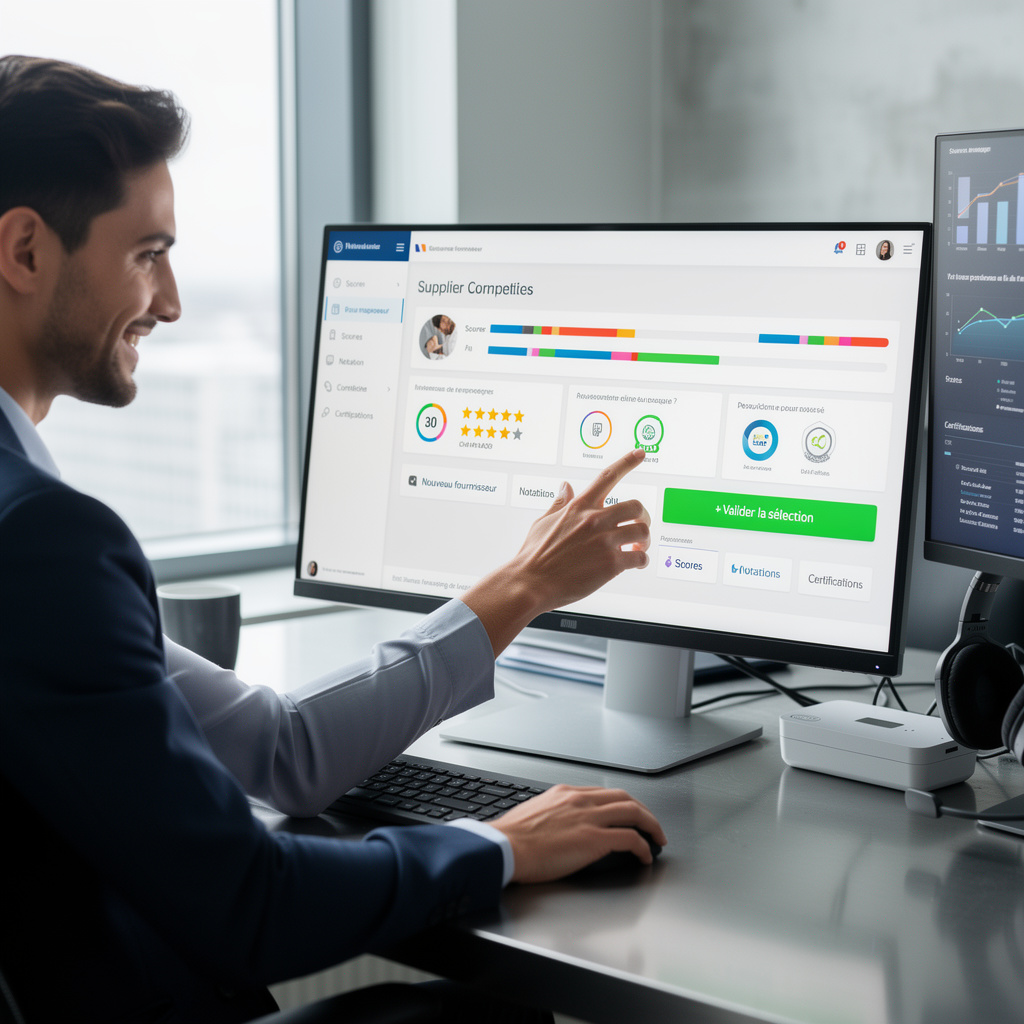
A supplier sourcing tool is a digital platform that helps procurement teams identify, qualify, and compare suppliers using a centralized database and structured evaluation criteria. It automates time-consuming tasks such as gathering information, issuing RFIs/RFQs, and compiling comparison tables, and can be integrated into a broader supplier relationship management approach like the one described in SRM (Supplier Relationship Management).
Any organization with a significant supplier base or recurring sourcing needs can benefit, but the impact is especially strong for:
A sourcing tool usually sits upstream of SRM and ERP systems:
When well integrated, these systems create a continuous data flow from supplier discovery to payment, limiting manual re-entries and improving data quality.
Yes. One of the strongest use cases for a sourcing tool is controlling C-Class spend, where numerous low-value purchases generate high processing costs and supplier proliferation. By centralizing needs and standardizing qualification rules, the tool helps reduce the number of occasional suppliers and redirect volumes towards better-qualified partners. This is perfectly aligned with the best practices outlined in C-Class spend optimization.
A supplier sourcing tool supports day-to-day operations by:



.svg)